 English
 русский
 Français
 Español
 Português
 Deutsch
 عربى
عربى Türk
Türk
What is a Steel Wire Rope Press Machine used for in manufacturing?
Content
- 1 Steel Wire Rope Press Machine: Industrial Applications, Working Principles, and Selection Guide
- 2 Termination Efficiency Comparison: Why Machine Pressing Wins
- 3 Key Types of Steel Wire Rope Press Machines
- 4 Industrial Applications Across Key Sectors
- 5 How a Hydraulic Wire Rope Crimping Machine Works: Step-by-Step
- 6 Critical Specifications to Evaluate When Selecting a Wire Rope Press Machine
- 7 Die Tooling: The Most Overlooked Factor in Wire Rope Press Performance
- 8 Maintenance Best Practices for Long Machine Service Life
- 9 Safety Considerations for Operating a Wire Rope Swaging Machine
- 10 Quality Assurance and Testing of Wire Rope Pressed Assemblies
- 11 Frequently Asked Questions About Steel Wire Rope Press Machines
Steel Wire Rope Press Machine: Industrial Applications, Working Principles, and Selection Guide
A Steel Wire Rope Press Machine is a specialized industrial device engineered to permanently attach fittings, ferrules, sleeves, or sockets onto steel wire ropes by applying controlled compressive force. The result is a mechanically secure, load-bearing termination that matches or exceeds the rated breaking strength of the rope itself. This machine is indispensable in sectors such as construction, marine, mining, oil and gas, aerospace, and rigging — anywhere that wire rope assemblies must sustain high tension loads with zero tolerance for failure.
Unlike manual swaging or knotting methods, a modern wire rope swaging machine or hydraulic wire rope crimping machine delivers consistent, repeatable results across every termination cycle. The process eliminates operator-dependent variability, reduces assembly time, and ensures compliance with international load-rating standards such as ISO 2408, EN 13411, and ASME B30.26. Understanding how these machines work, what types are available, and how to select the right model is essential for procurement engineers, rigging specialists, and production managers.
Termination Efficiency Comparison: Why Machine Pressing Wins
One of the most critical performance indicators for any wire rope termination is its efficiency — the percentage of the rope's minimum breaking force (MBF) that the termination can transmit. The chart below compares five common termination methods against this benchmark.
Termination Efficiency by Method (% of Rope MBF)
Fig. 1 — Comparison of termination efficiencies as a percentage of rope minimum breaking force (MBF). Data based on EN 13411 and ASME B30.9 test references.
A properly swaged or crimped termination achieves 90% to 100% of the wire rope's MBF — substantially higher than manual methods. This is the primary engineering justification for investing in a dedicated steel wire rope press machine, particularly in safety-critical applications where termination failure is not an acceptable outcome.
Key Types of Steel Wire Rope Press Machines
The market offers several distinct machine architectures, each optimized for specific rope diameters, fitting types, production volumes, and work environments. The radar chart below visualizes the relative strengths of each major machine type across six performance dimensions.
Machine Type Performance Profile (Score out of 10)
Fig. 2 — Performance profile radar chart for three major machine types across six dimensions (scored 1–10).
Hydraulic Wire Rope Crimping Machine
The hydraulic wire rope crimping machine is the most widely deployed type in industrial production environments. It uses a hydraulic power unit — either electric-driven or manually operated — to generate the high compressive forces needed for secure terminations. Electric-hydraulic models can apply up to 600 tonnes of force and are capable of processing rope diameters from 2 mm up to 100 mm or more.
These machines typically feature interchangeable die sets, programmable stroke depth, and pressure gauges that allow operators to verify that the correct crimping force has been applied. Many modern units include digital displays showing real-time hydraulic pressure, die position, and cycle count — enabling quality assurance records to be maintained for each assembly.
Wire Rope Swaging Machine
A wire rope swaging machine uses a rotary or radial die mechanism to progressively reduce the diameter of a swage fitting as it is drawn through or pressed around the rope end. Swaging machines are preferred when dimensional precision matters — for example, in stainless steel wire rope assemblies used in architectural cable systems, where the finished fitting must fit precisely into a pre-drilled hole or connector body. They are also standard in marine rigging for shrouds, stays, and lifelines.
Portable and Field-Use Press Units
For maintenance, emergency repair, or work sites where transporting rope assemblies to a fixed machine is impractical, portable hydraulic crimping tools exist for rope diameters up to approximately 26 mm. These battery-powered or hand-pump units weigh as little as 8 kg and can complete a crimp in under 30 seconds.
Bench-Top and Workshop Presses
Smaller workshops producing slings, lanyards, and light rigging in rope diameters from 2 mm to 20 mm typically use bench-top presses with crimping forces generally in the range of 10 to 80 tonnes. They are common in wire rope assembly shops serving the agriculture, automotive, and fitness equipment sectors.
Industrial Applications Across Key Sectors
The steel wire rope press machine supports a wide range of industries, each with its own performance requirements and regulatory environment. The table below summarizes primary application sectors alongside a visual force-range indicator.
| Industry | Typical Application | Common Rope Diameter | Required Press Force | Force Range |
|---|---|---|---|---|
| Construction & Lifting | Crane slings, hoist lines, fall arrest | 10 – 52 mm | 100 – 400 t |
|
| Marine & Offshore | Mooring lines, rigging, anchor systems | 16 – 100 mm | 200 – 600 t |
|
| Mining | Haulage ropes, shaft guide ropes | 20 – 80 mm | 150 – 500 t |
|
| Architectural / Civil | Façade cables, suspension bridges | 6 – 40 mm | 50 – 300 t |
|
| Oil & Gas | Downhole tools, platform tethers | 12 – 60 mm | 100 – 450 t |
|
| Automotive / Aerospace | Control cables, safety tethers | 2 – 12 mm | 10 – 80 t |
|
Maximum Press Force Required by Industry (Tonnes)
Fig. 3 — Minimum and maximum press force requirements by industry sector (tonnes). Taller bars indicate heavier-duty applications.
How a Hydraulic Wire Rope Crimping Machine Works: Step-by-Step
Understanding the operational sequence of a hydraulic wire rope crimping machine helps operators achieve consistent results and avoid common errors. The process flow below illustrates the five critical stages of every successful termination.
Crimping Process Flow
Selection
Preparation
Crimp
Verification
Traceability
Fig. 4 — Standard five-stage operational sequence for hydraulic wire rope crimping. Each stage must be completed correctly before proceeding.
Step 1 — Die Selection and Setup
The correct die set must be selected based on the fitting outer diameter (OD) before crimping, not the rope diameter. Die sets are typically color-coded or numerically stamped. Installing the wrong die leads to an incorrect final OD, which directly affects the mechanical efficiency of the termination. Most manufacturers publish die selection charts that specify the required pre-crimp OD and post-crimp OD for every fitting size in their product range.
Step 2 — Rope Preparation
The wire rope end must be cut cleanly and the cut end seized with wire or tape to prevent strand splaying. The rope is then inserted into the fitting to the correct depth — usually marked by a depth indicator or measured against a reference gauge. Insufficient insertion depth is one of the leading causes of termination failure in field-assembled assemblies.
Step 3 — Positioning and Crimping
The prepared assembly is placed in the machine's die pocket. The operator initiates the hydraulic cycle, and the machine applies force until it reaches either the programmed pressure setpoint or the mechanical stop position. For multi-crimp fittings, the fitting must be repositioned between strokes — a process sometimes requiring 3–6 individual press cycles per fitting.
Step 4 — Dimensional Verification
After crimping, the final OD must be measured with a calibrated vernier caliper. The measured dimension must fall within the tolerance band — typically ±0.1 mm to ±0.3 mm. Assemblies outside tolerance must be scrapped; a crimped fitting cannot be re-pressed without risking material cracking.
Step 5 — Marking and Traceability
Completed assemblies are stamped, tagged, or labeled with the assembly date, operator ID, rope specification, and working load limit (WLL). Proof-load testing to typically 2× the WLL is required in most regulated applications.
Critical Specifications to Evaluate When Selecting a Wire Rope Press Machine
Choosing the right machine requires matching its technical parameters to actual production requirements. The specification scorecard below provides a visual guide to help procurement engineers prioritize key machine parameters.
Specification Priority Matrix for Machine Selection
| Specification | Production Volume |
Heavy Industrial |
Precision Assembly |
Field / Portable |
|---|---|---|---|---|
| Max Crimping Force | ||||
| Cycle Time | ||||
| Die Change Speed | ||||
| PLC / Data Logging | ||||
| Portability |
Fig. 5 — Priority matrix: filled dots indicate high importance for each use case. Three filled = critical; one = low priority; none = not applicable.
- Maximum crimping force: Determines the maximum rope and fitting diameter processable. Allow at least 20% headroom above your current maximum rope diameter to accommodate future requirements.
- Die capacity range: Confirm that the manufacturer offers dies for every fitting size and material (carbon steel, stainless steel, aluminum) in your product range.
- Stroke length and throat depth: Stroke length determines the maximum reduction possible in a single press cycle. Throat depth determines the maximum fitting length accommodated without repositioning.
- Hydraulic system pressure: Most industrial machines operate at 700 bar (10,000 psi). Higher system pressures allow more compact cylinder designs for a given force output.
- Cycle time: High-volume shops need machines completing a full press cycle in under 15 seconds for the majority of fitting sizes.
- Die change time: Quick-change die systems reduce changeover from 10–15 minutes to under 3 minutes, significantly improving overall equipment effectiveness (OEE).
- Control system: PLC-based machines with stored crimp programs and data logging are increasingly required for ISO 9001-compliant quality management.
Die Tooling: The Most Overlooked Factor in Wire Rope Press Performance
The mechanical performance of a wire rope assembly is only as good as the dies used to produce it. Die tooling is frequently under-specified or poorly maintained, leading to gradual quality degradation. The chart below illustrates how die wear affects final crimp OD over accumulated cycles for different material combinations.
Die Wear: Crimp OD Drift Over Production Cycles
Fig. 6 — Illustrative OD drift curve by material/die combination. The dashed red line represents the maximum allowable tolerance (0.3 mm). Stainless steel on standard dies hits this limit approximately 2–3× faster than carbon steel work.
Dies for steel wire rope press machines are typically manufactured from tool steel hardened to 58–62 HRC. As dies wear, the bore diameter increases, resulting in a final crimp OD larger than specified — and a corresponding reduction in termination efficiency. A responsible quality management program should include periodic dimensional inspection of dies, typically every 500–1,000 cycles for production environments.
Stainless steel is harder and more abrasive than carbon steel, accelerating die wear by a factor of 2 to 4×. Titanium nitride (TiN) coated dies offer an effective middle ground, extending service life on stainless steel work by approximately 60–80% compared to uncoated tool steel.
Maintenance Best Practices for Long Machine Service Life
A well-maintained steel wire rope press machine should provide reliable service for 15 to 25 years. The maintenance schedule below organizes required tasks by frequency.
| Frequency | Task | Critical Parameter | Consequence if Missed |
|---|---|---|---|
| Daily | Check hydraulic oil level; clean die pockets | Oil at min. mark; no swarf in die seats | Pump cavitation; die scoring |
| Daily | Inspect hydraulic hose connections | No visible seepage or weeping | Progressive leak, pressure loss |
| Monthly | Replace hydraulic oil filter element | Filter within service life | Contaminated oil, valve wear |
| Monthly | Test pressure relief valve setting | Opens at ±2% of rated setpoint | Frame overload risk |
| Every 500–1,000 cycles | Measure die bore diameter | Within ±0.1 mm of nominal | Under-crimped assemblies |
| Annual | Full hydraulic oil drain, flush and refill | ISO VG 46 or per OEM spec | Pump wear, seal degradation |
| Annual | Calibrate pressure gauge against traceable standard | Within ±1% of true pressure | Incorrect crimp force records |
Safety Considerations for Operating a Wire Rope Swaging Machine
Wire rope press machines operate at forces that are immediately and severely injurious to personnel if safety procedures are not followed. The infographic below summarizes the five non-negotiable safety zones in any compliant workshop.
Non-Negotiable Safety Requirements at a Glance
Fig. 7 — Five non-negotiable safety requirements for wire rope press machine operation. All must be in place before any production run begins.
Quality Assurance and Testing of Wire Rope Pressed Assemblies
Producing a geometrically correct crimp is necessary but not sufficient to demonstrate assembly safety. The quality pyramid below illustrates the layered approach — from 100% dimensional inspection at base level to periodic destructive testing at the top.
Quality Assurance Pyramid for Pressed Wire Rope Assemblies
100% of assembliesFig. 8 — Three-tier quality assurance pyramid. Wider base layers are applied to every assembly; narrower top layers are used for validation and new product qualification.
Dimensional Inspection
The post-crimp OD of every fitting must be measured and recorded. Statistical process control (SPC) — specifically X-bar and R charts — can track crimp OD trends across production batches, providing early warning of die wear before it produces non-conforming assemblies.
Proof Load Testing
Most standards require a percentage of assemblies from each production batch to be proof-load tested to a multiple of WLL — commonly 2× WLL for lifting slings and up to 2.5× WLL for safety-critical applications. The assembly must sustain the proof load for 2–3 minutes without deformation, slip, or failure.
Destructive Testing
For new die qualifications or product range extensions, destructive break-load testing is required to verify termination efficiency of ≥90% of the rope's MBF. A well-made termination should fail by wire rope fracture in the free length, confirming the fitting was not the limiting factor.
Frequently Asked Questions About Steel Wire Rope Press Machines
Q1: What is the difference between a wire rope swaging machine and a wire rope crimping machine?
A1: The terms are often used interchangeably, but technically they refer to slightly different forming processes. Swaging typically involves a rotary or progressive die system that reduces fitting diameter by cold-working around the rope, producing a smooth external finish — common for stainless steel terminal fittings used in marine and architectural applications. Crimping usually refers to a direct radial compression performed in a single hydraulic press stroke, more efficient for high-volume production of ferrule and sleeve terminations. In practice, most modern hydraulic wire rope crimping machines can perform both functions with the appropriate die tooling.
Q2: How do I know which press force rating I need for my application?
A2: The required press force is determined primarily by the fitting outer diameter and wall thickness. Fitting manufacturers publish crimp force tables specifying the minimum hydraulic tonnage required for each fitting size and material. As a guideline, carbon steel ferrules up to 20 mm OD generally require presses in the 50–150 tonne range, while large stainless steel swage sockets for ropes above 40 mm may require 400 tonnes or more. Always consult the fitting manufacturer's technical data sheet and allow 20% headroom for future production needs.
Q3: Can a steel wire rope press machine be used for fiber rope or synthetic slings?
A3: No. Steel wire rope press machines are engineered for metal-to-metal crimping of steel or stainless steel wire rope with metal fittings. Synthetic fiber ropes require different termination methods — including aluminum oval sleeves pressed at much lower forces, or stitched and spliced terminations. Attempting to use a wire rope press machine on fiber rope assemblies will crush and destroy the rope fibers, producing a termination with near-zero strength.
Q4: How often should dies be replaced on a hydraulic wire rope crimping machine?
A4: Die service life varies with material processed, lubrication practice, and die steel grade. Standard tool steel dies used on carbon steel fittings typically last 2,000–5,000 cycles before dimensional wear causes post-crimp OD values to drift outside tolerance. Dies used on stainless steel fittings may require replacement after 500–1,500 cycles. The only reliable way to determine when dies need replacement is through regular dimensional measurement of completed assemblies — not by elapsed time or cycle count alone.
Q5: What certifications or standards should a wire rope press machine comply with?
A5: For machines sold into European markets, compliance with the EU Machinery Directive 2006/42/EC and CE marking is required. Relevant harmonized standards include EN ISO 12100 (risk assessment), EN ISO 13857 (safeguarding), and EN 60204-1 (electrical equipment of machines). In North America, machinery should comply with OSHA 29 CFR 1910 and relevant ANSI standards. For the produced assemblies, compliance is required with EN 13411 for wire rope terminations or ASME B30.9 for slings, depending on the end application.
Q6: Is it necessary to proof-load test every pressed wire rope assembly?
A6: This depends on the applicable standard and risk level of the end application. For lifting slings covered by EN 13414 or ASME B30.9, 100% proof-load testing at 2× WLL is standard practice in most professional assembly shops, and is required by many end-user specifications in construction, oil and gas, and mining sectors. For lower-risk applications, batch sampling at lower frequency may be acceptable. However, from a liability and quality management perspective, 100% proof testing is always recommended as it detects not only termination defects but also rope material defects that would otherwise go undetected until field deployment.
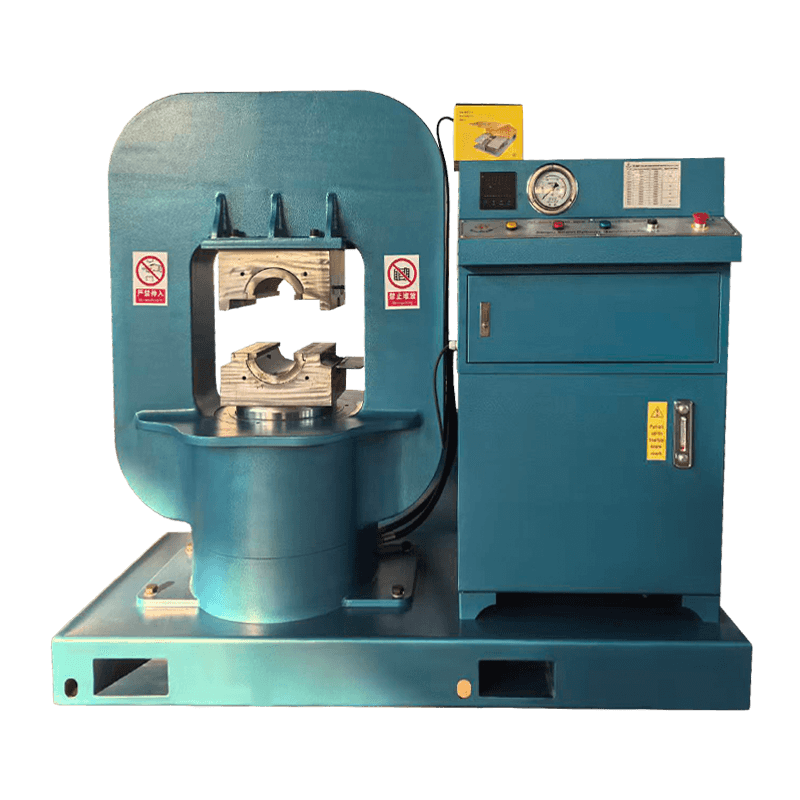
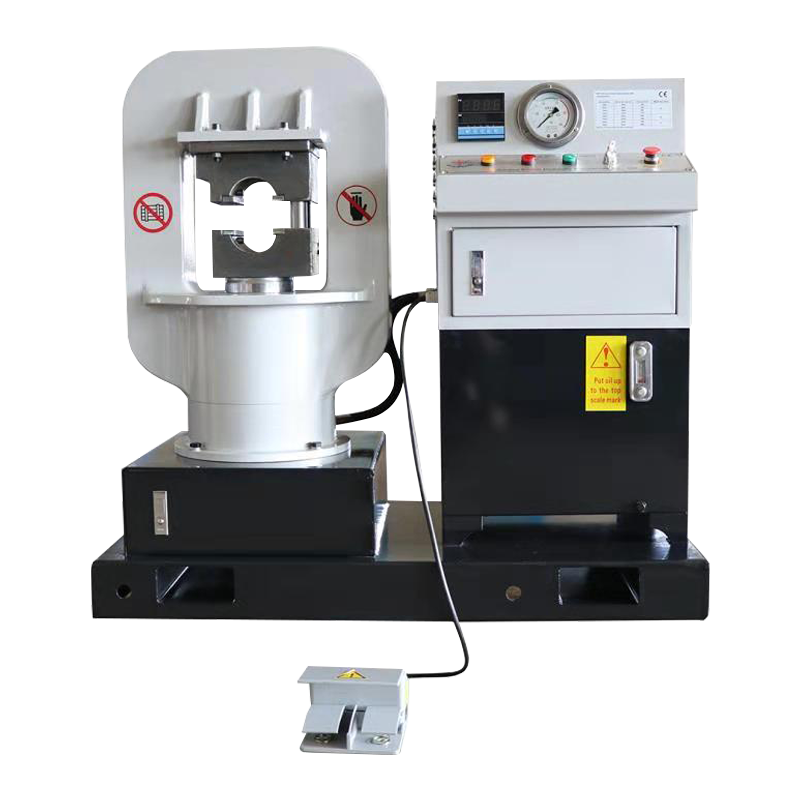
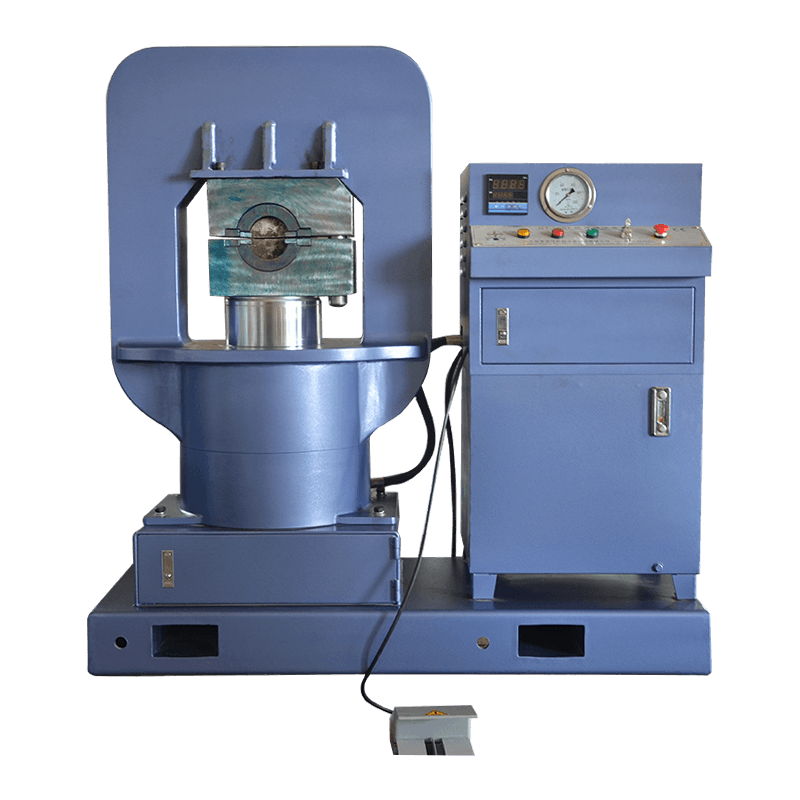
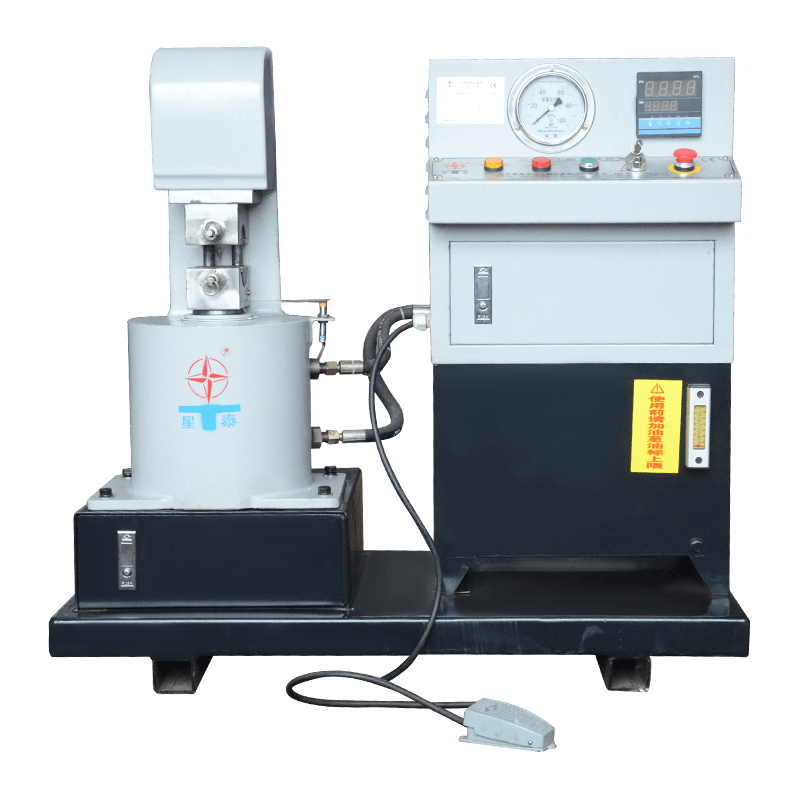

If you require custom hydraulic equipment or technical consultation, please feel free to contact the Xingtai Sales and Engineering Team.
-
 +86-523-86934677
+86-15896002505 -
 [email protected]
-
 +86-15896002505
-
 No. 3 Longgang Road, Gaogang Port Street, Taizhou City, China.
Copyright © Jiangsu Xingtai Hydraulic Manufacturing Co., Ltd. All Rights Reserved. Custom hydraulic machinery manufacturers Wholesale wire rope swagers Factory

