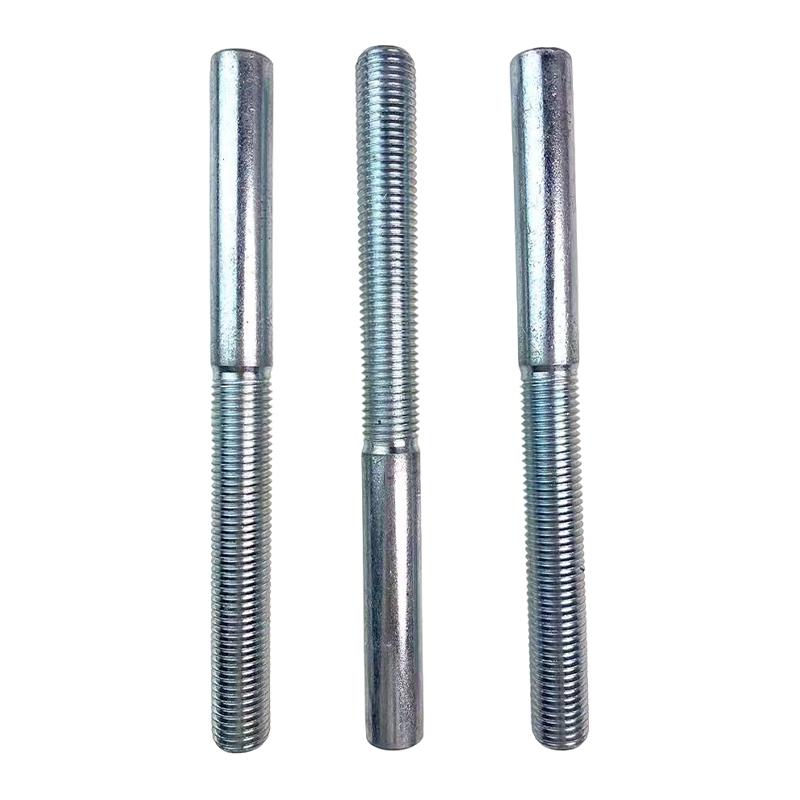
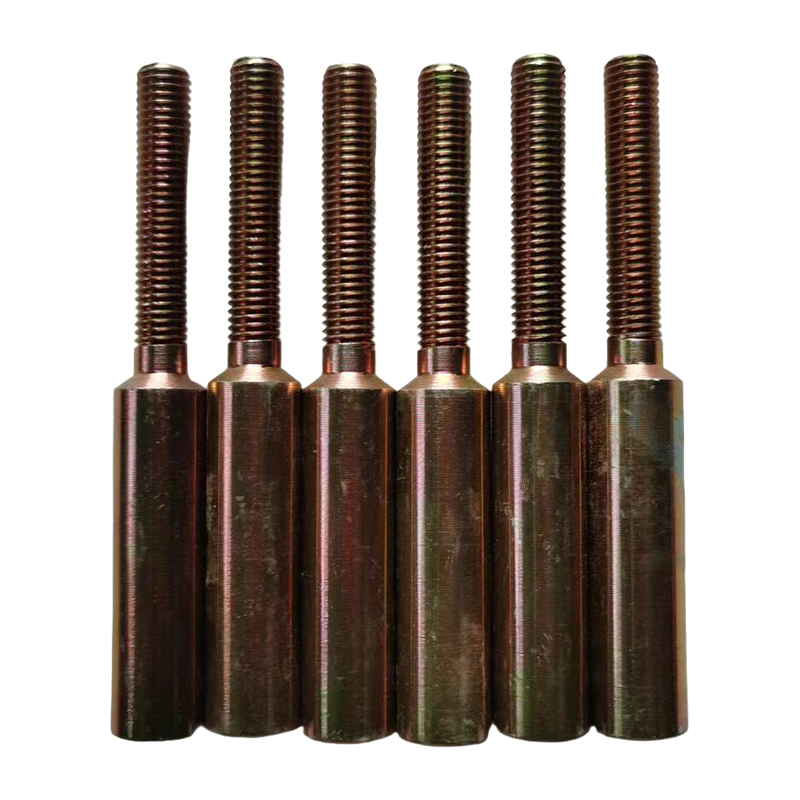
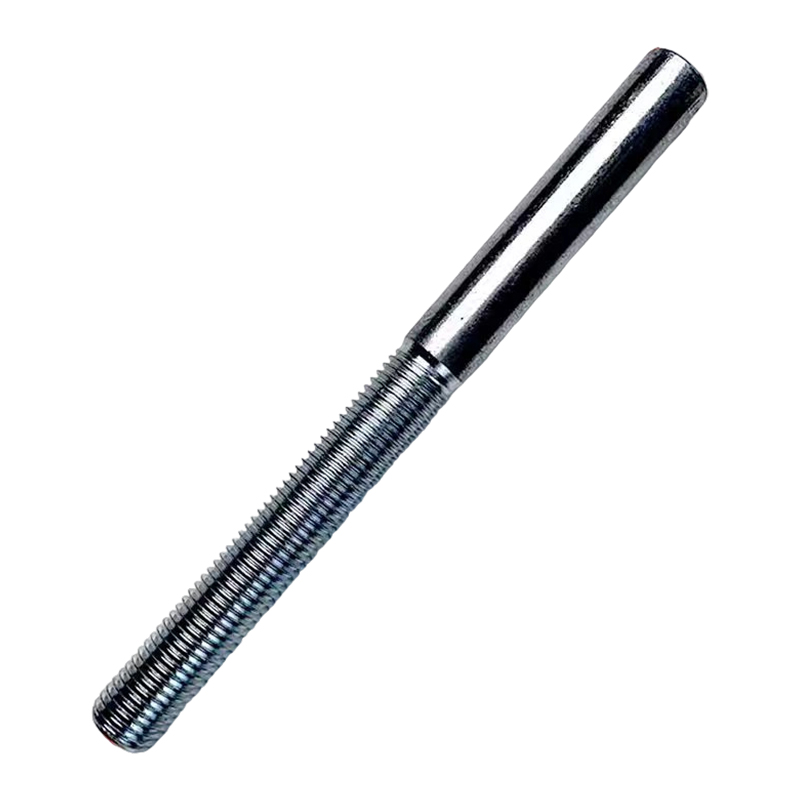
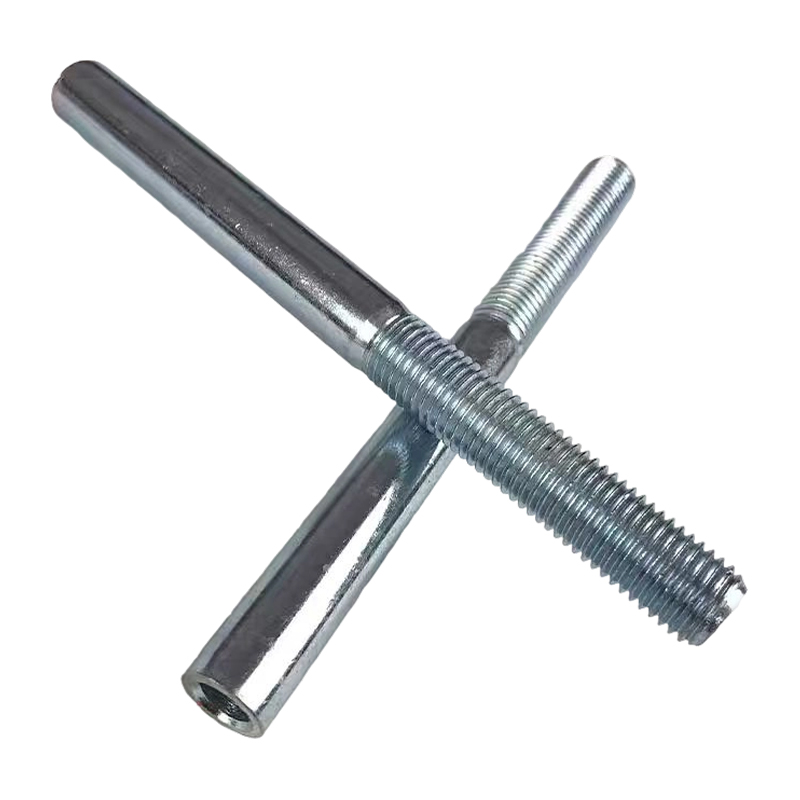
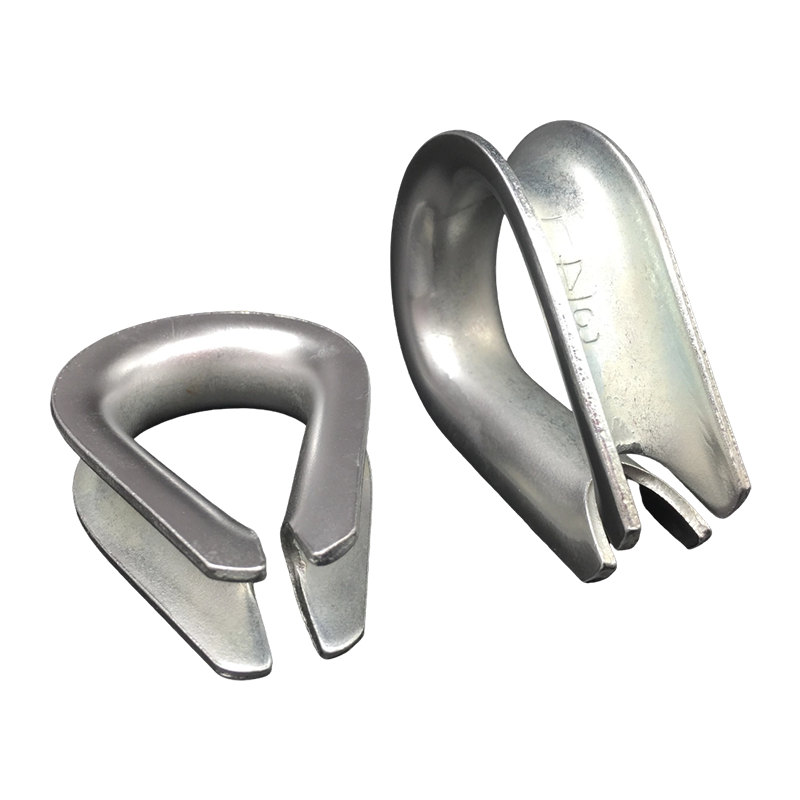
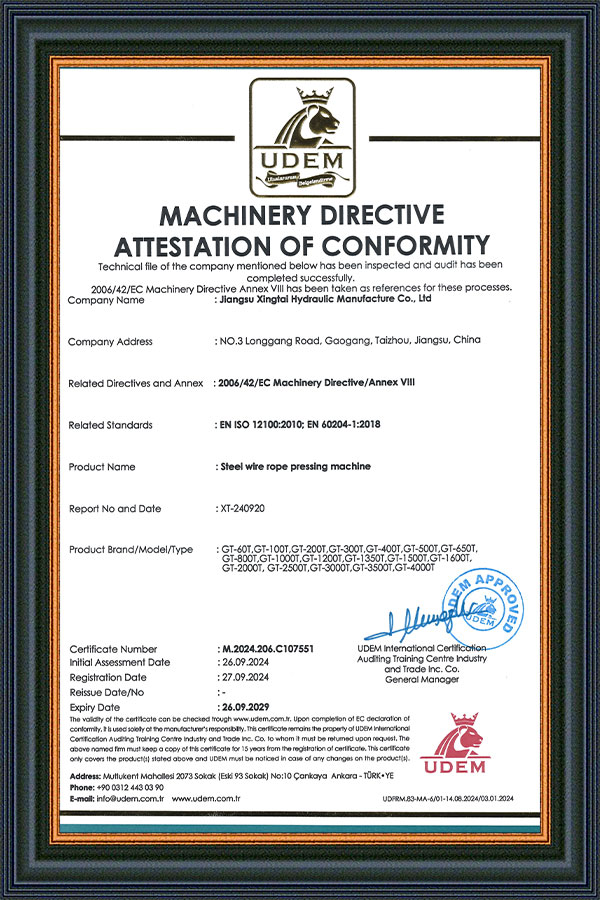
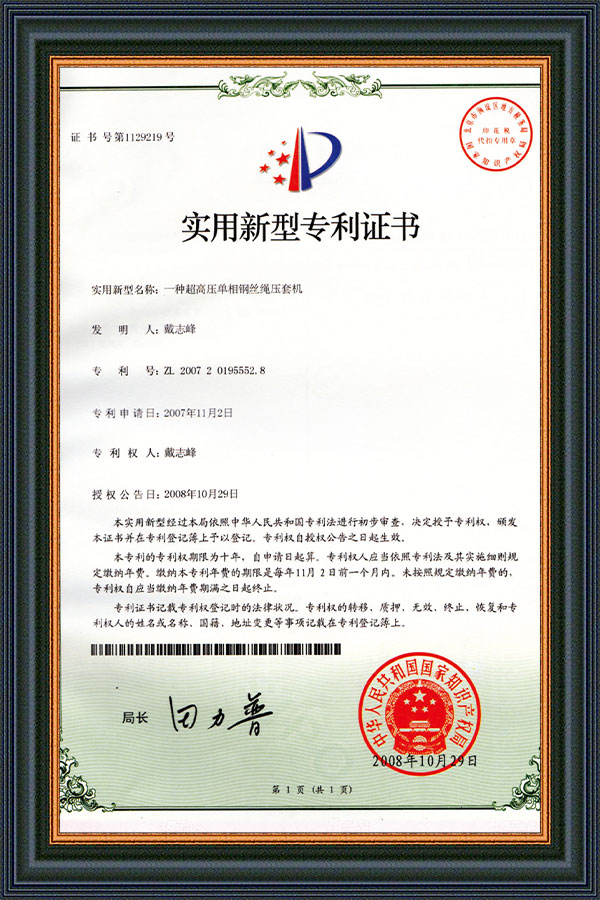
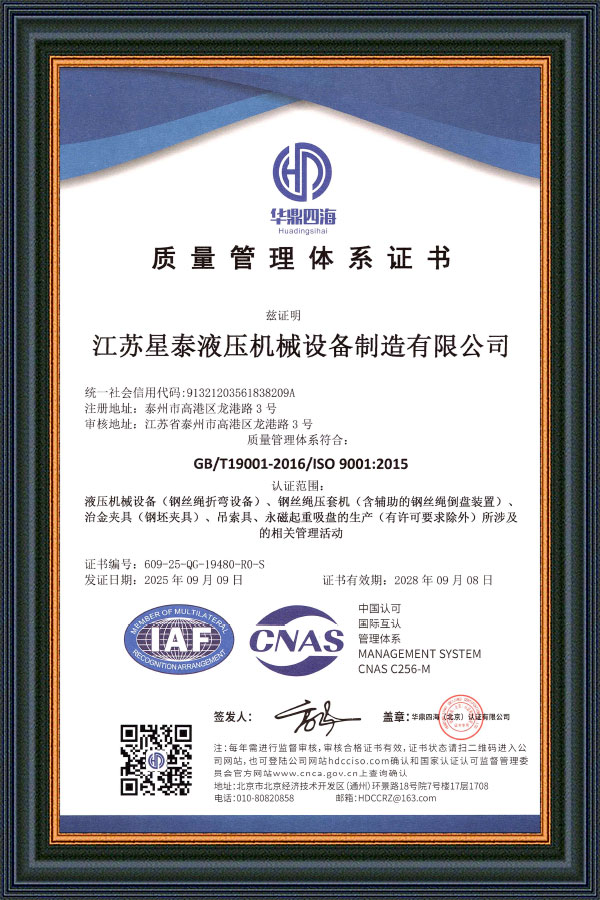
Our Steel Wire Rope Swage Terminals are high-strength connectors designed to secure steel wire ropes, ensuring reliable load-bearing and anti-loosening performance for industrial, marine, and construction applications.
A key advantage is that size can be customized—we tailor terminal dimensions (including inner diameter, length, and swage area) to match your specific wire rope gauge and usage scenario, eliminating mismatches between standard terminals and non-standard ropes.
Crafted from corrosion-resistant alloy steel, they undergo precision swaging to enhance tensile strength and durability, suitable for both indoor lifting and outdoor harsh environments. Easy to install with professional swaging tools, they deliver long-term stability for lifting, rigging, or suspension tasks.
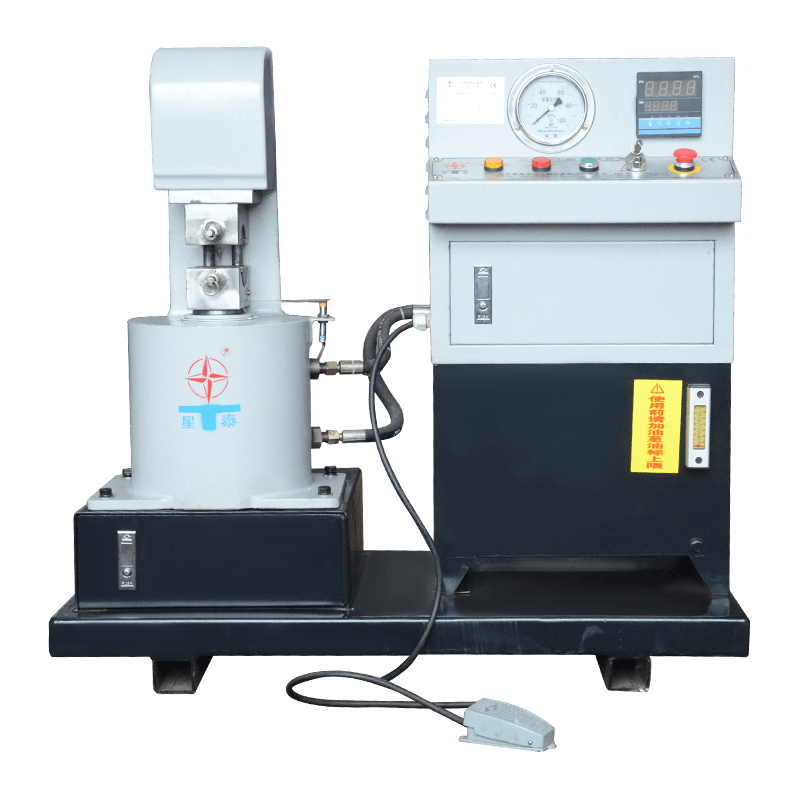
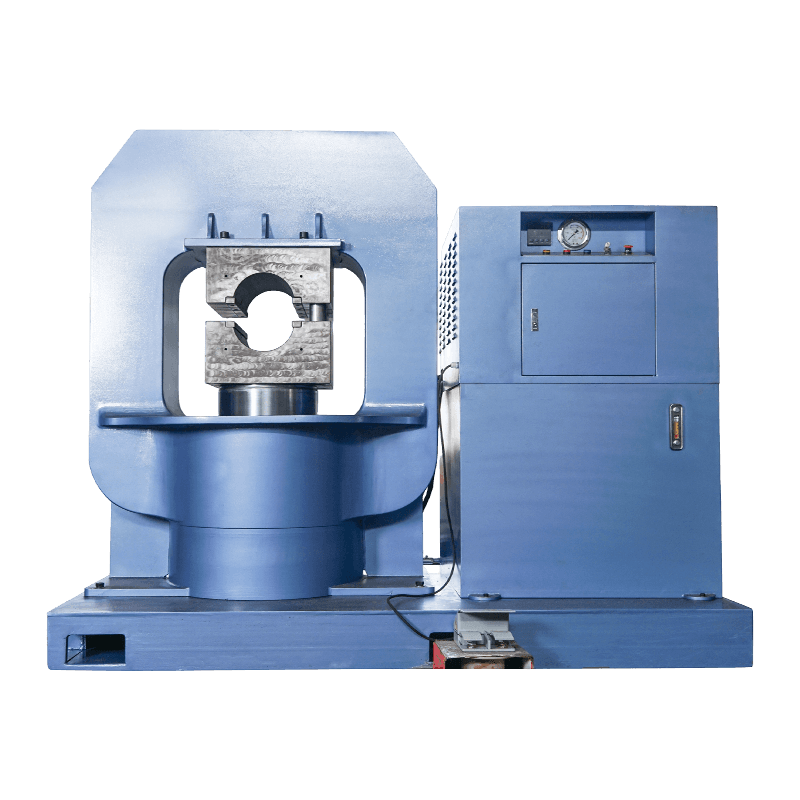
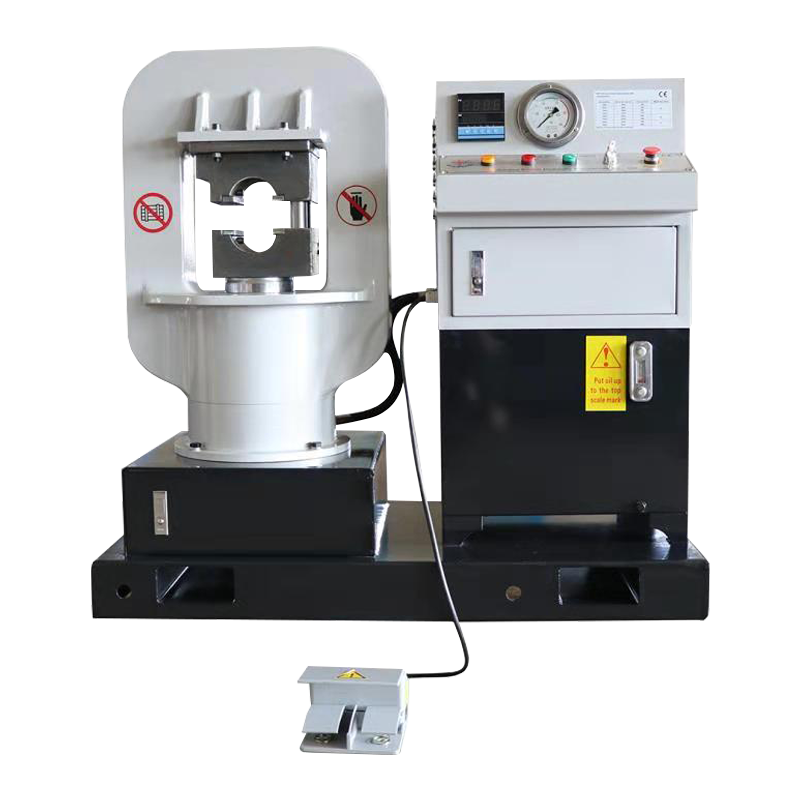
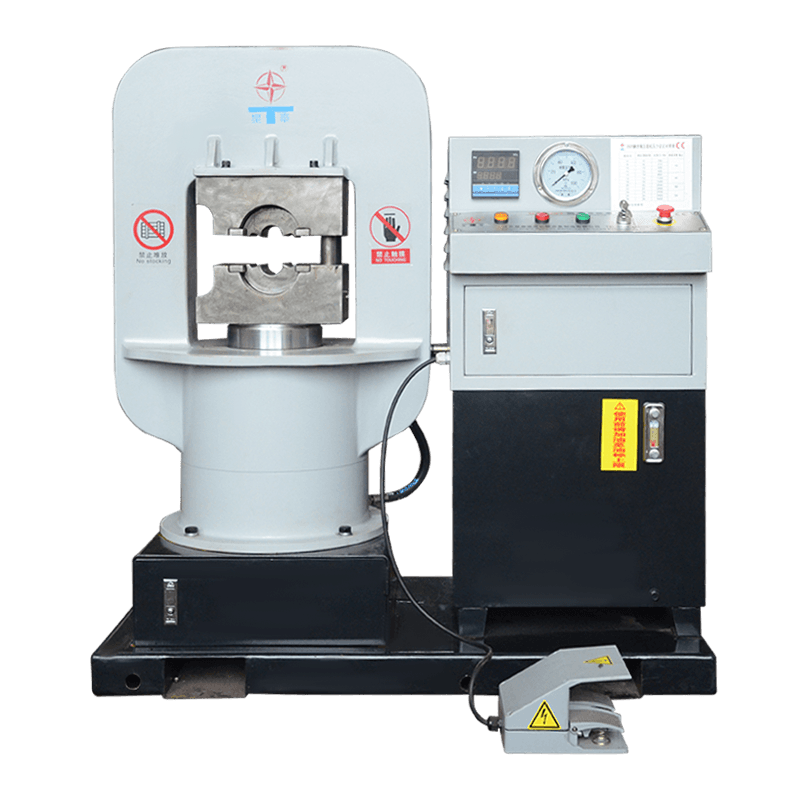
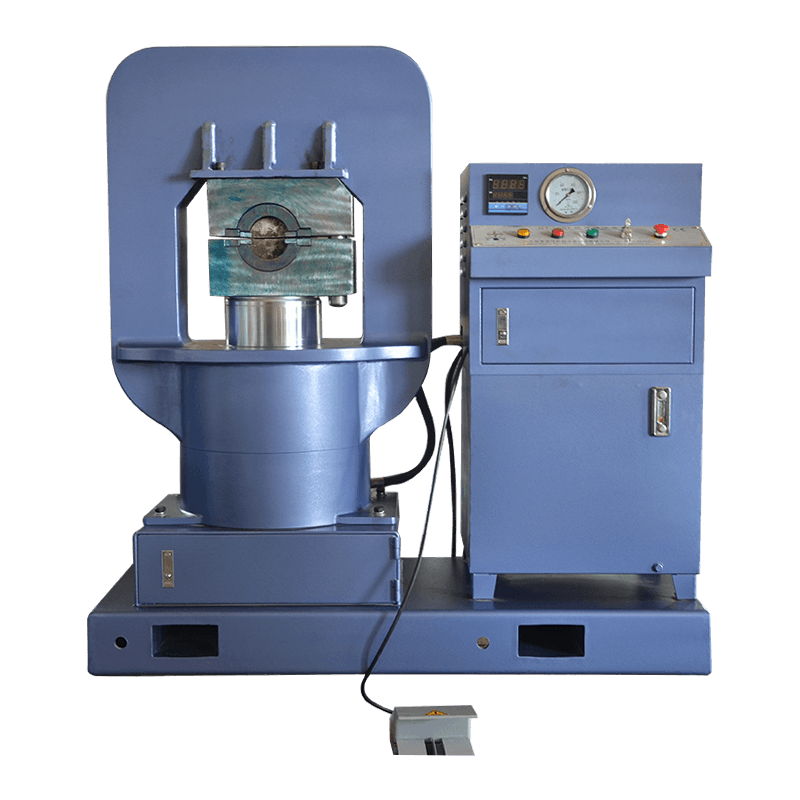
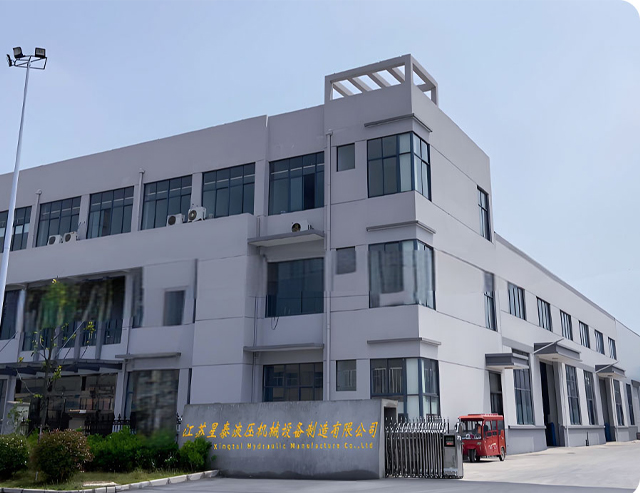
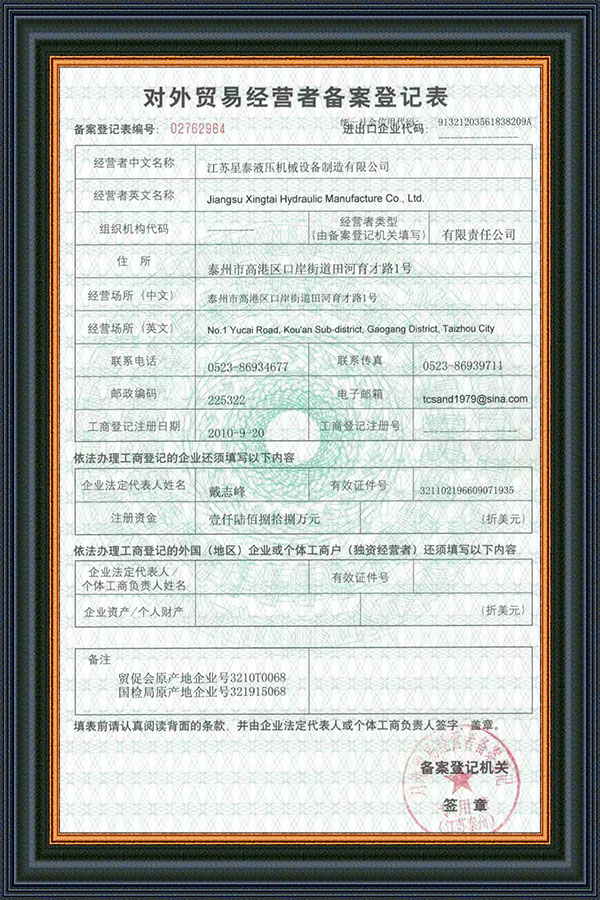
As Steel Terminal Manufacturers and Steel Terminal Company, Jiangsu Xingtai Hydraulic Manufacturing Co., Ltd. was founded in 1992 and is located in Taizhou City, Jiangsu Province, China. The company specializes in manufacturing hydraulic wire rope pressing machines, wire rope annealing and tapering machines, aluminum sleeves, and lifting clamps. Xingtai Hydraulic is equipped with advanced production facilities, strong technical capabilities, authoritative testing equipment, and a comprehensive quality management system.
The swaging components of Xingtai Hydraulic machines are forged from high-strength alloy steel. The machine body is manufactured from a single block of material, ensuring structural integrity and long service life. Our hydraulic systems utilize a dual-pressure pump oil supply system, which enables fast upward and downward movement while ensuring a smooth pressing process. This design significantly improves pressing quality and production efficiency.
Xingtai Hydraulic machines have been exported to numerous countries, including the UK, Australia, the Netherlands, Latvia, Malaysia, Thailand, India, Russia, Botswana, Poland, and others.
Guided by the philosophy of "high quality, competitive price, and lasting commitment," we strive to meet our customers' needs and provide them with the best service. We remain dedicated to serving both existing and new clients with the same level of excellence as we work together to build a successful future.
A 10 mm endless sling comes back from a construction site with a hairline crack running lengthwise along its aluminium ferrule. The rope is clean, the loop measures correctly, and the tag claims a full working load limit. The joint is the problem, and the joint is where almost every endless sling f...
Twelve millimetres of wire rope, a 4.5 metre finished sling, and a 10 mm error at the cut. That is the sequence many sling shops meet on a Monday morning: the eye does not land where the drawing says it should, the ferrule has to be cut off, and a piece of rope that took three minutes to prepare go...
Imagine a workshop that has just won a contract to produce 120 identical wire rope slings, each 3.75 metres long with a swaged aluminium sleeve at one end. The operator sets up a cut-off wheel and measures the first rope by hand. The second piece is a few millimetres longer. The third is shorter ag...
What Is a Steel Terminal in Wire Rope Applications? A Complete Guide
A steel terminal is a hardware fitting permanently attached to the end of a wire rope to enable connection to anchors, turnbuckles, shackles, or structural elements. In wire rope engineering, terminals are the critical interface between the rope and the load-bearing structure — and they are often the weakest point in the system if incorrectly selected or installed. Industry data shows that over 30% of wire rope assembly failures originate at the terminal, not along the rope body itself. Understanding terminal types, efficiency ratings, and correct installation is therefore essential for any rigging, architectural, or marine wire rope application.
1. Types of Steel Terminals Used in Wire Rope Applications
Steel terminals fall into several distinct categories, each suited to different load requirements, installation methods, and end-use environments. Selecting the correct type directly determines the mechanical efficiency of the connection.
(1) Swaged (Swageless) Terminals
Swaged terminals are cold-formed onto the rope end using a hydraulic press, creating a permanent, high-efficiency connection. When correctly applied, they achieve 95–100% of the wire rope's minimum breaking load (MBL), making them the preferred choice for structural, architectural, and lifting applications. Common body forms include fork, eye, stud, and threaded rod ends.
(2) Spelter (Resin or Zinc-Poured) Sockets
Spelter sockets are potted terminals in which the opened wire ends are set in molten zinc or epoxy resin inside a conical socket body. This method delivers the highest possible efficiency — up to 100% MBL — and is standard for crane hoist ropes, mine hoists, and bridge cable applications where detachability and re-termination in the field are required.
(3) Wire Rope Clips (U-Bolt Type)
U-bolt clips are the most field-accessible terminal method but also the most prone to misuse. Correctly applied per ASME B30.26, they achieve approximately 80% of MBL. A common error — the "saddle on the dead end" mistake — can reduce efficiency to as low as 60%. The number of clips required increases with rope diameter: a 20 mm rope requires a minimum of 4 clips spaced at the correct interval.
(4) Wedge Sockets
Wedge sockets allow fast field installation and replacement without special tools. They are widely used on construction cranes and dragline ropes. Their typical efficiency is 75–90% of MBL depending on design, and they require the dead end to be secured to prevent accidental disengagement under load reversal.
Wire Rope Terminal Efficiency (% of Minimum Breaking Load)
Spelter Socket (Zinc / Resin Poured)
100%
Swaged Terminal (Hydraulic Press)
95–100%
Wedge Socket
75–90%
U-Bolt Wire Rope Clips (Correct Installation)
80%
Fig. 1 — Terminal efficiency as a percentage of wire rope MBL. Higher efficiency means the terminal is less likely to be the limiting factor in the assembly's rated capacity.
2. Steel Terminal Materials and Corrosion Resistance
Terminal body material must be matched to the operating environment. The three most common options in professional wire rope assemblies are:
Carbon steel (zinc-plated or hot-dip galvanized) — standard for construction, mining, and general lifting. Cost-effective and available in the widest range of sizes. Galvanized coating provides adequate protection in moderate environments.
Stainless steel (316-grade) — mandatory in marine, food processing, architectural, and coastal environments. Delivers superior pitting resistance and a service life up to 3× longer than galvanized carbon steel in salt-spray conditions.
High-tensile alloy steel — used in heavy lifting and mining applications where compactness and maximum strength-to-weight ratio are priorities. Typically available in Grade 80 and Grade 100 designations.
Steel Terminal Material Comparison — Performance Score (1–10)
Fig. 2 — Radar comparison of steel terminal materials across five performance dimensions.
3. Terminal Selection by Application — Reference Table
Different industries impose different requirements on steel terminals. The table below summarises typical terminal choices by application to assist specifiers and rigging engineers.
Table 1: Recommended Steel Terminal Types by Wire Rope Application
The chart below illustrates how the effective breaking load of a complete wire rope assembly changes with terminal type for a 16 mm diameter, 6×19 IWRC rope with an MBL of approximately 15.0 tonnes. The terminal becomes the limiting component whenever its efficiency falls below 100%.
Effective Assembly Breaking Load by Terminal Type — 16mm Wire Rope, MBL 15.0 t
Fig. 3 — Effective assembly MBL by terminal type for 16 mm wire rope (nominal MBL 15.0 t). Incorrect clip installation reduces capacity by 40% versus a spelter socket.
5. Frequently Asked Questions
Q1: What is the difference between a swaged terminal and a spelter socket, and which is stronger?
Both achieve near-identical efficiency levels when correctly applied — spelter sockets reach 100% MBL, while swaged terminals reach 95–100% MBL. The key difference is installation and re-use: swaged terminals are permanent, compact, and ideal for factory-made assemblies, while spelter sockets can be field-poured and re-poured, making them preferred for mine hoist ropes and crane applications where periodic re-termination is required. For most lifting and rigging purposes, either type is acceptable when the assembly is correctly engineered and proof-tested.
Q2: How do I determine how many U-bolt wire rope clips are needed for a given rope diameter?
The required number of U-bolt clips increases with rope diameter and is specified in ASME B30.26 and manufacturer torque tables. As a general guide: ropes up to 10 mm require 3 clips, 12–16 mm require 4 clips, 18–22 mm require 5 clips, and ropes above 25 mm require 6 or more clips. Clips must always be installed with the saddle on the live (load-bearing) end and the U-bolt on the dead end — reversing this reduces efficiency by up to 25%.
Q3: When should stainless steel terminals be used instead of galvanized steel terminals?
Stainless steel (316-grade) terminals should always be specified when the assembly will be exposed to salt water, chloride-laden atmospheres, or high-humidity coastal environments — typical of marine rigging, offshore platforms, swimming pool enclosures, and coastal architectural installations. In salt-spray testing, 316 stainless terminals show no significant corrosion after 1,000+ hours, versus galvanized steel which may exhibit red rust breakthrough within 500 hours in aggressive environments. Stainless terminals also eliminate the galvanic corrosion risk that arises when carbon steel fittings are used with stainless wire rope — a combination that accelerates corrosion of the less-noble metal at the contact interface.

 English
 русский
 Français
 Español
 Português
 Deutsch
 عربى
عربى Türk
Türk