 English
 русский
 Français
 Español
 Português
 Deutsch
 عربى
عربى Türk
Türk
Eye Slings Explained: Wire Rope Types, Ferrules, Press Tonnage and Safe Selection
Content
- 1 Eye Slings at a Glance: Types, Materials and Where Each One Fits
- 2 Inside a Wire Rope Eye Sling: Rope, Ferrule, Thimble and Terminal
- 3 How an Eye Sling Is Made: From Reel to Proof Load
- 4 Comparing Termination Efficiency: Where an Eye Sling Loses Strength
- 5 C-Frame or Basket Frame: Picking the Press Behind the Sling
- 6 What to Confirm Before You Buy Eye Slings or Build Them In-House
- 7 Inspection, Tolerances and the Failure Modes That Matter
- 8 Maintenance and Shop Discipline
- 9 FAQ: Eye Slings, Ferrules and Press Selection
- 9.1 What is an eye sling used for?
- 9.2 How is the eye formed on a wire rope sling?
- 9.3 What determines the working load limit of an eye sling?
- 9.4 What is the difference between a return eye sling and a wire rope eye sling?
- 9.5 Does an eye sling need a thimble?
- 9.6 What press tonnage is needed to press a ferrule?
- 9.7 How often should eye slings be inspected?
- 9.8 Can a damaged eye sling be repaired?
An eye sling can look perfect and still be a liability. A 16 mm ferrule-secured wire rope eye sling pressed with a matched die at full tonnage, using a hardness-certified aluminium ferrule, is simply not the same product as one squeezed in a shop press that never reached the tonnage its ferrule required, even though the two sit side by side on the same rack. The difference appears in a proof test or on the job, and by then the argument has become expensive.
The short answer is this: the working load limit of an eye sling is not decided by the rope. It is decided at the termination, where the rope, the ferrule and the pressing force come together. Every other element, including rope construction, thimble and identification tag, exists mainly to protect that junction.
What follows covers the eye sling types you will meet in lifting, rigging, towing and marine work, how a wire rope eye is actually formed and pressed, how to match press tonnage to rope diameter, what to verify on delivery, and the failure modes that point to a pressing problem rather than ordinary wear.
Eye Slings at a Glance: Types, Materials and Where Each One Fits
An eye sling is any sling whose end is closed into a loop. That loop can be produced by pressing a ferrule onto a turned-back rope end, by splitting and re-laying strands to form a Flemish eye, by tucking strands back into the rope body, by seating the rope in a socket, or by folding and sewing webbing. The construction method, not the material alone, sets the strength and the inspection rules.
| Eye sling type | How the eye is formed | Typical material | Where it is normally used |
|---|---|---|---|
| Ferrule-secured wire rope eye sling | Rope end turned back into an aluminium or steel ferrule and pressed hydraulically | Galvanised or bright steel rope, 6x19 or 6x36 class | General lifting, lashing, towing, marine deck work |
| Flemish eye wire rope sling | Rope split into two halves, re-laid around a steel ferrule, then closed | Multi-strand steel rope | Heavy lifting where high termination efficiency is required |
| Hand-spliced wire rope eye | Strands tucked back into the rope body in a traditional splice | Steel rope, often galvanised | Long-established terminations, field repairs, mooring |
| Socketed termination | Rope end opened and anchored in a socket with poured metal or resin | Steel rope with steel socket | Structural guys, crane pendants, permanent installations |
| Flat web return eye sling | Webbing folded back on itself and sewn | Nylon or polyester webbing | Loads sensitive to scratching, light to medium duty |
When you compare a wire rope eye sling with a web sling, the trade-off is rarely about price alone. A wire rope eye sling tolerates abrasion, heat and sharp edges far better, but it is heavier and less forgiving on painted or polished surfaces. A return eye webbing sling is soft and light, yet its strength depends on stitch pattern and on keeping the fabric away from cuts and chemical attack.
Three variables decide which construction suits a job:
- Rope or webbing size against the load, expressed as the working load limit rather than the breaking force.
- The environment, including salt spray, acids, UV exposure and operating temperature.
- The number of load cycles, since fatigue at the ferrule mouth is the usual reason an eye sling is retired.
An eye sling carries its rated load through the eye, so the loop is a termination rather than a bend. Inspect and specify the termination first, and treat the rope as the supporting element.
Inside a Wire Rope Eye Sling: Rope, Ferrule, Thimble and Terminal
Four components decide how a wire rope eye sling behaves under load. Each one has a specification that can be checked, and each one can be specified badly without anyone noticing until a proof test exposes it.
The rope
Rope class controls how tightly the strands fill the cross-section, and that in turn affects how much the ferrule has to compress. A 6x19 class rope with a fibre core is the common starting point for general slings, while 6x36 class rope, with more and finer wires, bends more easily around small diameters. Independent wire rope core (IWRC) constructions give higher breaking force for the same outside diameter but a stiffer rope that demands more press force. Rope must be clean and free of broken wires in the zone that will sit inside the ferrule, because a corroded or damaged section is a poor foundation for any press.
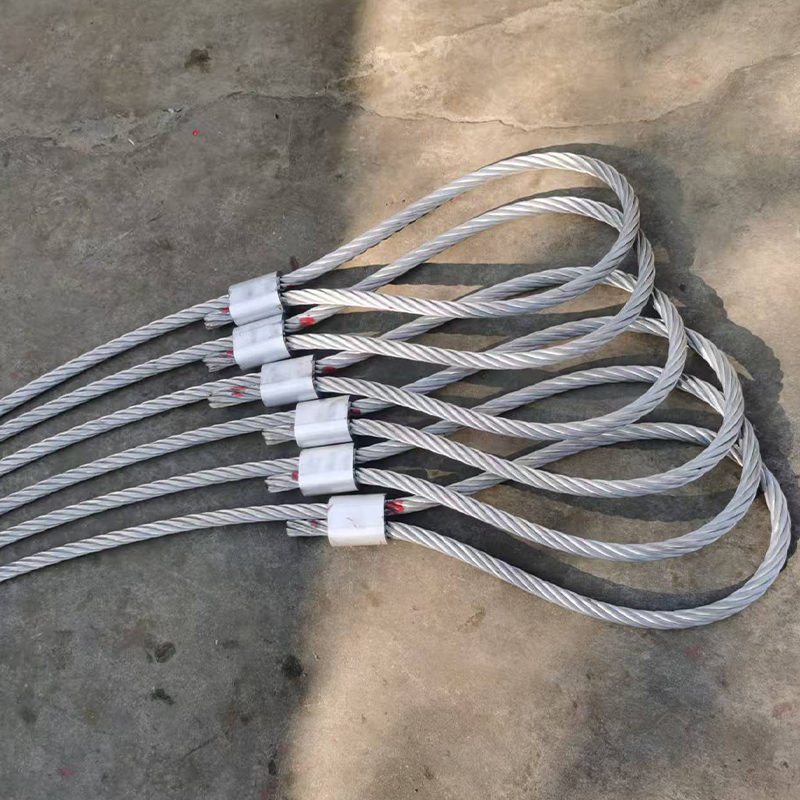 Aluminum Ferrule/Aluminum Sleeve DIN3093The Aluminum Ferrule/Aluminum Sleeve DIN3093 is a precision-engineered cable termination component, strictly manufactured to comply with the DIN3093 standard—the Europ...View Product →
Ferrules and sleeves
The ferrule is where the load is transferred from the rope to the fitting. Aluminium ferrules produced to a recognised specification, such as those made to DIN 3093 dimensions, are drawn from a controlled alloy and heat treated to a defined hardness range. Soft, unspecified aluminium will deform under the die and never develop the grip it needs, even on a press that reaches full tonnage. Hourglass sleeves use a shaped bore that separates the two rope parts inside the fitting and controls how the metal flows during pressing, which reduces the risk of the rope cutting into itself.
Thimbles
A thimble is not decoration. It sets the minimum radius the rope sees inside the eye, spreads the bearing pressure against a hook or shackle, and shields the rope from abrasion. A sling that is rated with a thimble is being rated on the assumption that the thimble is present.
Swage terminals
When the end of an assembly must be bolted, threaded or pinned rather than hooked, a swage terminal replaces the eye. The pressing principle is the same: a steel body is compressed onto the rope end, and the quality of that press decides the efficiency of the whole assembly.
A ferrule of unknown alloy and hardness is the single most common hidden defect in a low-cost eye sling, because the fitting looks correct while offering no reliable grip.
How an Eye Sling Is Made: From Reel to Proof Load
Most pressing faults are process faults, not equipment faults. The sequence below reflects how a properly organised sling shop handles ferrule-secured eye slings, and every step exists to protect the termination.
- Reel out and cut to length. A reeling machine keeps the rope straight and untwisted while it is measured and cut, so no residual rotation is stored in the assembly. Rope that arrives at the press with a twist will often bird-cage inside the ferrule.
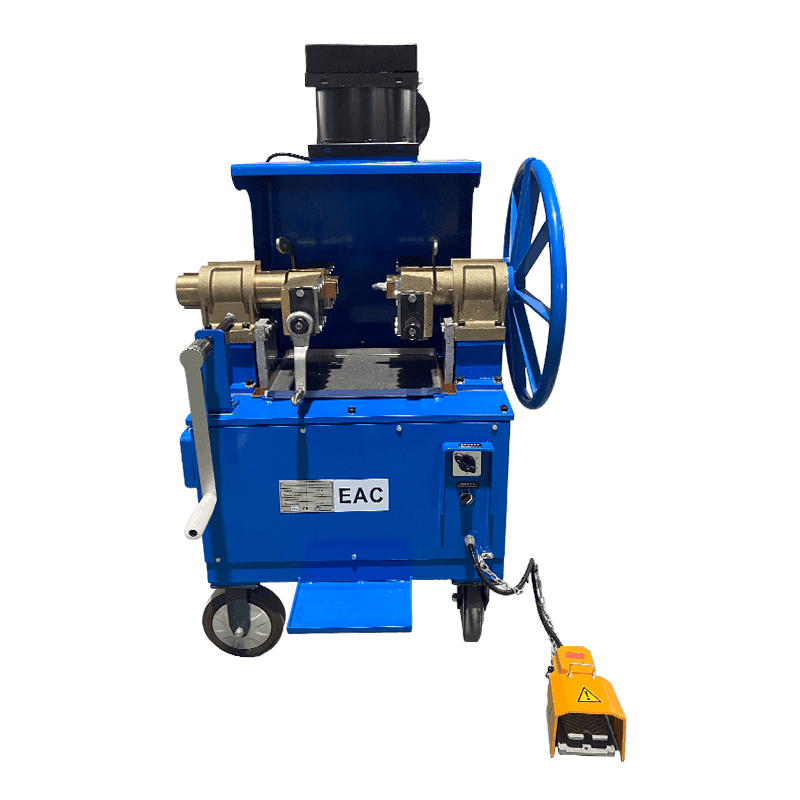
- Taper and anneal the rope end. Annealing relaxes the wire, removes residual stress and burns off surplus lubricant at the end, while tapering compacts the strands so the end enters the ferrule cleanly and seats fully. Depending on the shop, this is done with a dedicated annealing machine, an annealing and tapering machine, a cutting and tapering machine or a fusing and tapering machine, since cutting alone leaves a splayed end that never seats properly.
- Insert the rope into the ferrule and position it in the die. The rope must be fully home against the end stop. If it stops short, the ferrule will hold less rope than the design assumes, and the shortfall will not be visible from the outside.
- Press in one continuous stroke to full tonnage. Partial strokes, re-pressing and stopping mid-stroke all produce uneven metal flow. The die profile must match the ferrule, and the press must be able to hold its rated force through the whole stroke rather than only at the top of the cycle.
- Measure the ferrule after pressing. Ferrule length and across-flats dimensions are the practical shop check. A ferrule that has deformed outside the expected window has either been under-pressed or over-pressed, and both conditions are reasons to reject the assembly.
- Proof load the finished sling. A proof load is applied at the level required by the governing standard, which for wire rope slings is typically twice the working load limit, though the applicable standard and application should always be confirmed.
- Mark and tag. Working load limit, sling type, length, manufacturer identification and the date of manufacture belong on a durable tag attached to the assembly.
Full tonnage held through the entire stroke is what converts a ferrule from a fitting into a termination, and no amount of visual inspection afterwards can substitute for it.
Comparing Termination Efficiency: Where an Eye Sling Loses Strength
The efficiency figures quoted for different eye terminations are not identical, and the gap explains why two slings made from the same rope can behave very differently at the same load. The chart below compares typical values that are widely cited for the main termination methods.
The pattern is consistent across published rigging references: terminations that develop their grip gradually, such as a poured socket or a split-strand Flemish eye, tend to approach the full strength of the rope itself, while terminations that depend on mechanical compression of a fitting concentrate stress at a shorter section of rope. That concentration is the reason a pressed aluminium ferrule is normally treated as a slightly lower efficiency termination than a socket, even when it is made correctly.
Two practical conclusions follow. First, the design factor applied to a sling is calculated on the rope breaking force, then adjusted for termination efficiency, which is why an eye sling made with wire rope clips should never be treated as equivalent to a pressed sling of the same rope size. Second, the numbers above are typical values rather than guarantees, and the governing standard, the ferrule geometry, the die condition and the competence of the operator all shift the result. A well-run shop that verifies its pressing on a sample basis can usually demonstrate consistently better results than a poorly controlled shop using nominally the same components.
Termination efficiency sets the real ceiling on an eye sling, so upgrading the rope while keeping a weak termination method buys almost nothing.
C-Frame or Basket Frame: Picking the Press Behind the Sling
If you build eye slings rather than buy them, the frame style of your press determines which assemblies you can press, how quickly you can load them, and how much deflection you will see at high tonnage. Both styles do the same job, but they suit different working conditions.
C-frame presses
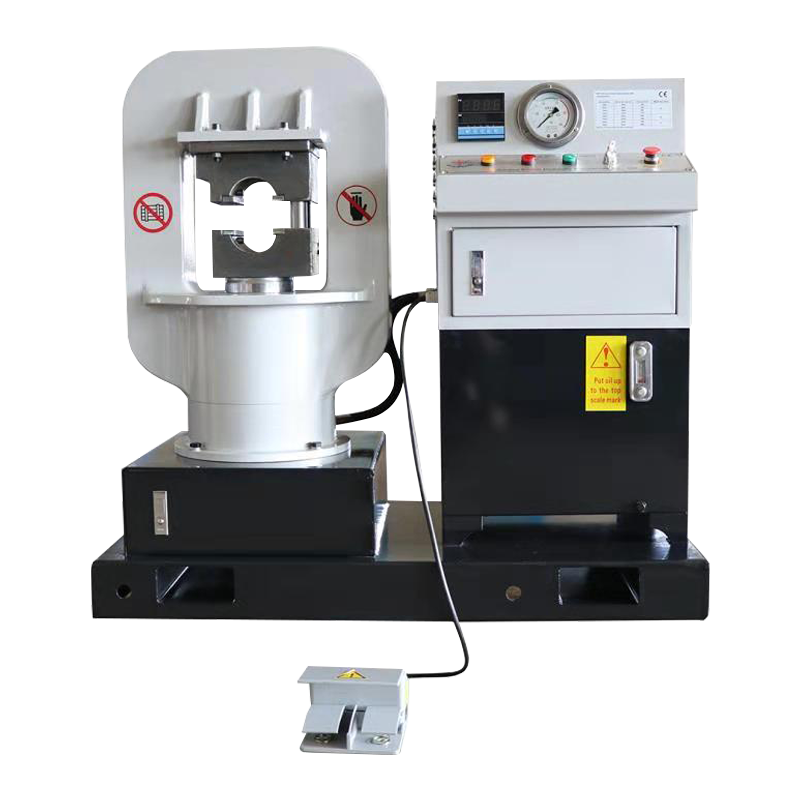
A C-frame press has an open throat that is accessible from three sides, which makes loading a long finished assembly straightforward and keeps the operator away from an enclosing structure. Machines in this class, such as the smaller hydraulic wire rope press machines, are normally used for smaller ropes and for work where the assembly cannot be rotated freely.
Basket-frame presses
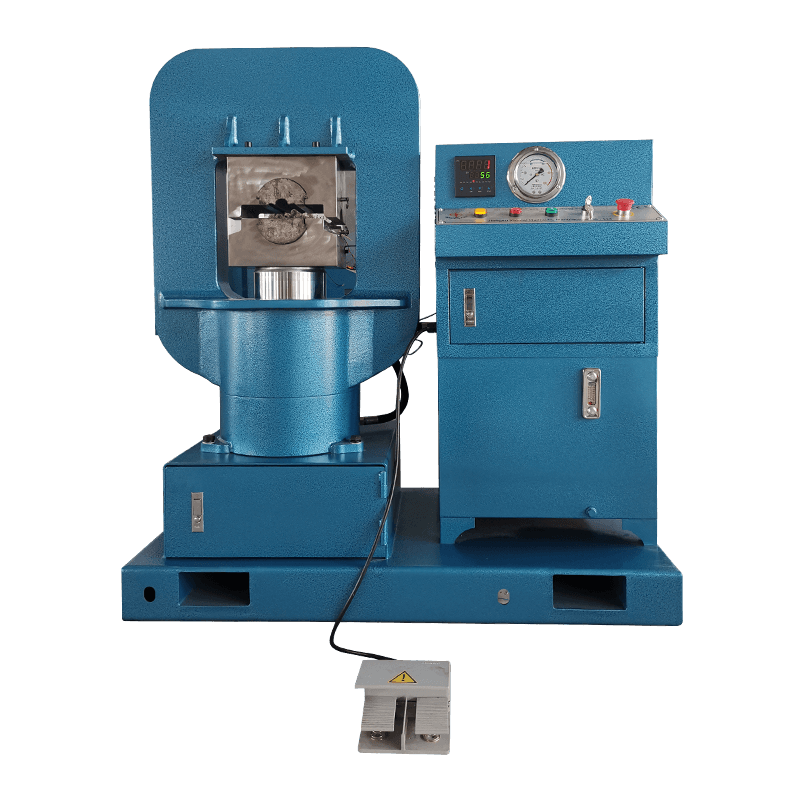
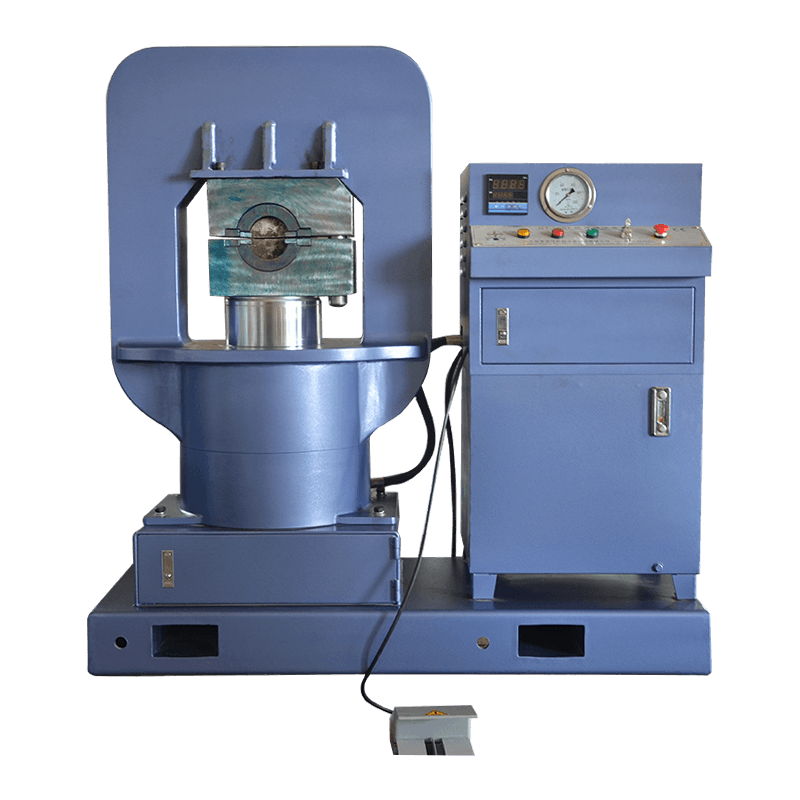
A basket frame or closed frame surrounds the pressing zone. The closed geometry is much stiffer, so deflection under load is reduced and the die stays aligned through the stroke. That matters most as tonnage rises, because a frame that flexes will not deliver the same compression at the die that the pressure gauge suggests. Larger machines, including dedicated sling presses, use this design for exactly that reason.
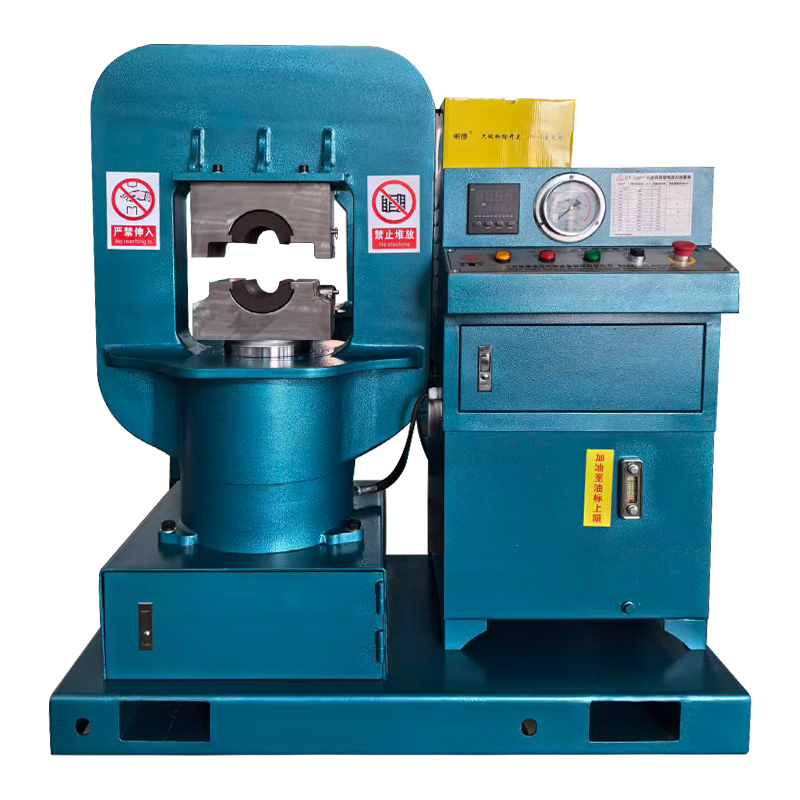 GT-300 Press Machine For Wire Rope Sling(Basket Frame)GT-300 wire rope press machine is to press small size of wire rope from 6 mm to 30mm.View Product →
| Factor | C-frame press | Basket-frame press |
|---|---|---|
| Frame stiffness | Lower, open structure flexes more | Higher, closed structure resists deflection |
| Typical tonnage band | Small to medium rope sizes | Medium to large rope sizes and heavy fittings |
| Loading access | Three sides open, long assemblies easy to position | Loading through the frame opening, better for repeated short work |
| Best suited to | Mixed, low-volume and repair work | Production sling making and high-tonnage ferrules |
| Die alignment under load | Requires careful maintenance | More stable through the stroke |
Hydraulic supply matters as much as frame geometry. A dual-pump system gives fast approach with the low-pressure stage and then switches to the high-pressure stage for the actual compression, which keeps cycle times reasonable without sacrificing the final force. If the high-pressure stage cannot hold its rated value through the full stroke, the ferrule will be under-formed in the middle even though the stroke completes.
Frame deflection turns a tonnage rating into an optimistic number, so closed-frame presses are the safer choice once ferrule sizes and rope diameters grow.
What to Confirm Before You Buy Eye Slings or Build Them In-House
As a purchaser, you are buying a documented process rather than a length of rope with a loop at the end. As a manufacturer or wholesaler, you are selling the same thing, and the buyers who understand this will ask for evidence. A short verification list removes most of the uncertainty.
For buyers of finished slings
- The standard the sling is made to, stated on the tag or certificate rather than in conversation.
- Working load limit, sling length and the design factor applied to the rope breaking force.
- The ferrule specification, including alloy type and hardness range, not just the outside dimensions.
- Proof load records where the standard or the application requires them.
- Traceability linking the ferrule batch, the rope batch and the pressing record.
For shops building slings in-house
- A press whose rated tonnage actually covers the largest ferrule you intend to close, with margin rather than at the limit.
- A matching set of dies for each ferrule family you use, kept in good condition and replaced when worn.
- A tonnage or pressure indicator that the operator can read at the moment of the stroke.
- A tapering or annealing step, not just a cut, so rope ends seat fully inside the ferrule.
- A written acceptance window for ferrule dimensions after pressing, and a rejection rule when it is exceeded.
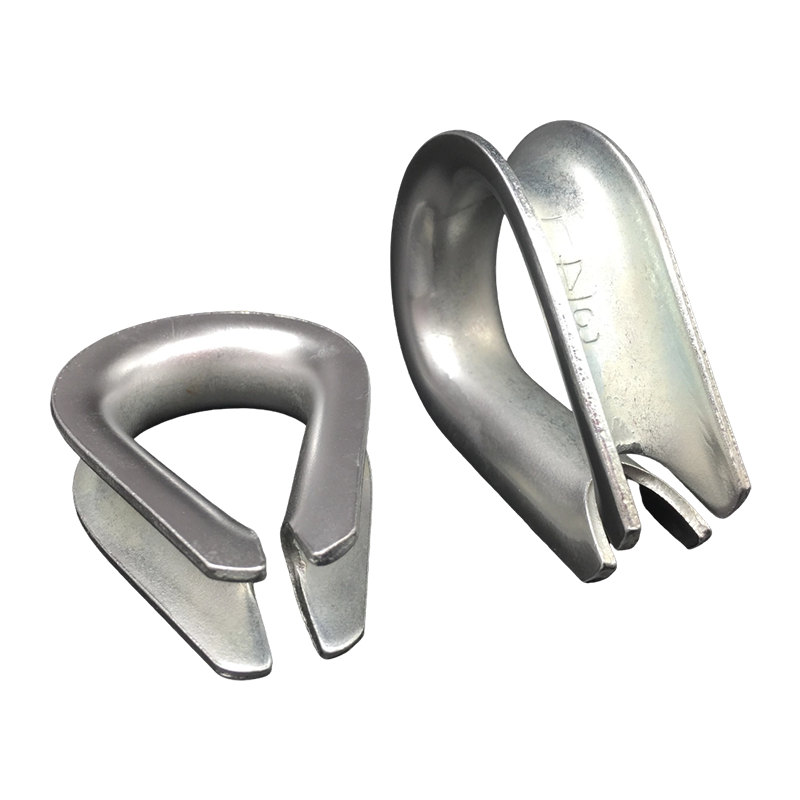
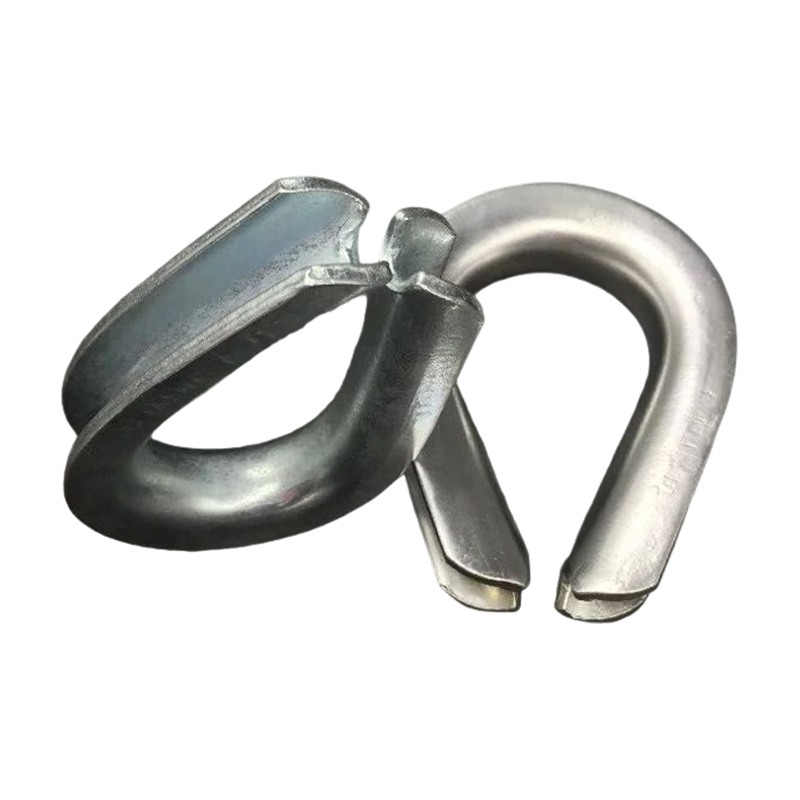 Wire Rope ThimblesWire rope thimbles are small, durable fittings designed to reinforce the eyes (loops) of wire ropes, preventing wear, kinking, and premature failure at connection poin...View Product →
Thimbles deserve a place on both lists. A sling rated with a thimble and then used without one is being loaded in a way its rating never anticipated, and the rope inside the eye will see a much tighter radius than the design intended. Matching thimble size to rope diameter is a small detail with a large effect on service life.
Where a single manufacturer supplies both the press and the ferrules, the tonnage, die profile and ferrule geometry are developed together rather than assembled from unrelated catalogues. That combination removes a whole category of mismatch, and it is often the practical reason a production line settles on one supplier rather than three.
If the ferrule alloy, the die and the press tonnage were never specified as one system, the sling has no defensible rating no matter how good the rope is.
Inspection, Tolerances and the Failure Modes That Matter
Eye sling inspection is mostly about reading the termination. Rope wear is easy to see and easy to measure, while ferrule problems are subtle and progress quickly once started. The table below covers the checks that actually predict failure.
| Inspection point | What to look for | Remove from service when |
|---|---|---|
| Ferrule body | Cracks, deep scoring, corrosion pitting, uneven deformation | Any crack, or deformation outside the recorded acceptance window |
| Rope at the ferrule mouth | Broken wires concentrated at the entry point, kinks, necking | Broken wire count exceeds the limit set by the governing standard |
| Eye and thimble | Thimble missing, worn through, or rotating freely in a distorted eye | Thimble worn, cracked or absent |
| Rope body | Corrosion, flattening, bird-caging, heat damage, discolouration | Severe corrosion, distortion or any heat-affected section |
| Tag and marking | Missing, illegible or mismatched working load limit | Identification cannot be confirmed |
Rope pulled out of a ferrule is almost never a rope problem. It points to under-pressing, an oversized ferrule bore, a mismatched die, or a rope that was not fully inserted before the stroke. Ferrule cracking points the other way, towards over-pressing, a worn die or a fitting with hardness outside specification. Bird-caging inside or just outside the ferrule usually indicates that the rope was twisted during assembly or that the end was cut rather than tapered.
Corrosion behaves differently in an aluminium ferrule than in the surrounding rope. In salt or chemical environments, the fitting can deteriorate from the inside while the rope looks acceptable, so assemblies used in marine work deserve closer attention at the ferrule than at mid-span.
Rope slipping out of a ferrule is a pressing defect rather than wear, which means it should trigger a review of the process, not just the scrapping of one sling.
Maintenance and Shop Discipline
Presses that make eye slings live in a harsh environment. Metal particles, lubricant mist and repeated high-force cycles wear dies, seals and hydraulic components, and a press that has quietly lost tonnage will keep producing slings that look correct. Daily checks on die condition, oil level and pressure readings are cheap; a rejected batch of slings is not.
Two habits separate reliable shops from the rest. The first is a pressing record: ferrule batch, rope batch, die number, press setting, operator and date. The second is a periodic verification of press output against a known reference, so a drifting gauge is caught before it reaches the customer. Practical guidance on keeping hydraulic wire rope presses in usable condition covers most of the routine tasks a sling shop needs.
Storage matters as well. Slings kept on damp concrete, exposed to acid fumes or left in direct sun will age faster than their working records suggest, and aluminium ferrules are particularly sensitive to prolonged contact with aggressive chemicals.
A press that has lost tonnage will not announce itself, so scheduled verification of force output protects the whole production run.
FAQ: Eye Slings, Ferrules and Press Selection
What is an eye sling used for?
An eye sling is used to connect a load to a hook, shackle or master link. The loop at each end spreads the connection over a radius and gives the rigger a stable attachment point, which is why eye slings are common in lifting, towing, lashing, mooring and general rigging work.
How is the eye formed on a wire rope sling?
The most common production method is to turn the rope end back and close it with a hydraulically pressed ferrule, either aluminium or steel. Split-strand Flemish eyes, hand-tucked splices and poured sockets are alternatives, each with its own efficiency and inspection characteristics.
What determines the working load limit of an eye sling?
The working load limit is derived from the rope breaking force divided by the design factor, then adjusted for the efficiency of the termination. Because the termination is usually the limiting element, two slings made from identical rope can carry different rated loads.
What is the difference between a return eye sling and a wire rope eye sling?
A return eye sling is normally a webbing sling whose fabric has been folded back and sewn to create the loop. A wire rope eye sling uses steel rope and a mechanical termination, which makes it far more resistant to abrasion, heat and sharp edges but heavier and less gentle on finished surfaces.
Does an eye sling need a thimble?
If the sling is rated on the assumption that a thimble is fitted, then yes. The thimble maintains the eye shape, spreads bearing pressure and protects the rope against the shackle or hook, and its absence changes the loading conditions inside the eye.
What press tonnage is needed to press a ferrule?
Tonnage depends on ferrule size, rope diameter and rope construction rather than on a single rule of thumb. As a general direction, small ropes are handled in the lower tonnage band and larger sling assemblies move into the several-hundred-tonne range, which is why frame stiffness becomes a deciding factor. The ferrule and press manufacturer should confirm the setting for each combination.
How often should eye slings be inspected?
Most workplace regimes require a documented periodic inspection, commonly at intervals of six months or less, with more frequent checks where slings are used in severe conditions. Any sling involved in an incident or an overload should be inspected and proof tested before it returns to service.
Can a damaged eye sling be repaired?
Ferrules and terminations should not be field repaired. A damaged sling is normally removed from service, and if a replacement eye is required it should be produced with the correct die, tonnage and ferrule specification by a competent workshop.
Almost every question about eye sling ratings resolves to the same point: the termination, not the rope, decides what the sling can safely carry.
Eye slings sit at the end of a long supply chain, and the last few seconds of that chain, when the ferrule is pressed, decide whether the product deserves its tag. A controlled ferrule alloy, a die that matches the fitting, a press that holds full tonnage through the stroke, a tapered rope end and a documented proof load are not optional refinements. They are the difference between a sling that passes a test and a sling that survives a season.
For buyers, that means asking uncomfortable questions about certification and traceability rather than comparing price lists. For manufacturers and wholesale suppliers building slings in volume, it means treating the press, the dies and the ferrules as one matched system, since a chain of individually acceptable components does not automatically produce an acceptable termination. Xingtai has been building hydraulic wire rope presses, annealing and tapering machines, reeling machines and matched ferrules since 1992, which is the practical reason the pressing variables on these assemblies are specified together rather than assembled piece by piece.
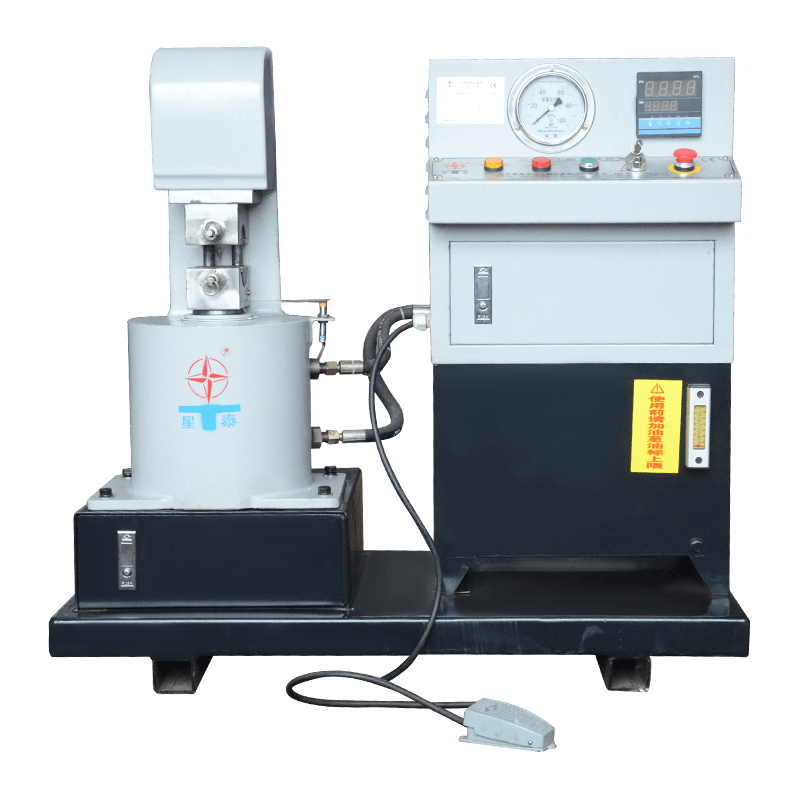

If you require custom hydraulic equipment or technical consultation, please feel free to contact the Xingtai Sales and Engineering Team.
-
 +86-523-86934677
+86-15896002505 -
 [email protected]
-
 +86-15896002505
-
 No. 3 Longgang Road, Gaogang Port Street, Taizhou City, China.
Copyright © Jiangsu Xingtai Hydraulic Manufacturing Co., Ltd. All Rights Reserved. Custom hydraulic machinery manufacturers Wholesale wire rope swagers Factory

