 English
 русский
 Français
 Español
 Português
 Deutsch
 عربى
عربى Türk
Türk
Content
- 1 What an Endless Sling Actually Is
- 2 How an Endless Sling Is Manufactured, Step by Step
- 3 Endless Sling Press Capacity: Reading the Tonnage Numbers
- 4 Ferrules and Sleeves: The Component That Sets the Endless Sling Rating
- 5 Choosing a Press for Endless Sling Production
- 6 Tolerances and What to Put in an Endless Sling Purchase Specification
- 7 Endless Sling vs Other Sling Types
- 8 Inspection and Maintenance of Endless Slings in Service
- 9 FAQ: Endless Sling Questions Buyers Ask Most
- 9.1 What is an endless sling used for?
- 9.2 Is an endless sling the same as a grommet sling?
- 9.3 Can an endless sling be used in a choker hitch?
- 9.4 What press tonnage do I need to make endless slings?
- 9.5 How do I calculate the rope length for an endless sling?
- 9.6 Why do my rope ends broom open when I press them?
- 9.7 Are aluminium sleeves or steel ferrules better for endless slings?
- 9.8 How often should endless slings be inspected?
- 9.9 Can endless slings be made without a hydraulic press?
- 9.10 Where can I buy endless sling presses and ferrules as a wholesale buyer?
- 10 Where to Go Next on This Site
A 10 mm endless sling comes back from a construction site with a hairline crack running lengthwise along its aluminium ferrule. The rope is clean, the loop measures correctly, and the tag claims a full working load limit. The joint is the problem, and the joint is where almost every endless sling failure begins.
An endless sling, also called a grommet sling or endless loop sling, is a continuous loop of wire rope with no hooks, no thimbles and no free ends. Its capacity is decided almost entirely by how well a ferrule, sleeve or splice closes that loop. That single operation determines whether the finished sling reaches its catalogue strength or quietly loses a large share of it before it ever leaves the workshop.
This guide speaks to two readers at once. The first is a sling maker or rigging shop deciding which press, dies and ferrules to buy. The second is a buyer or technical engineer who orders endless slings and wants to know which questions separate a reliable wire rope press manufacturer from a cheap one. Both groups need the same four facts: how the loop is closed, how much force that closure requires, how the ferrule and the die must match, and how the finished length is controlled.
The conclusions come first, because they are the ones that cost money when they are ignored. A press that is large enough but fitted with the wrong die produces slings that fail at the ferrule. Rope ends that are cut and pressed without annealing broom open and fill the sleeve unevenly. Length errors are the most expensive mistake of all, because wire rope cannot be un-cut. And a press running at 100 percent of its nominal force on every cycle wears seals, hoses and cylinder walls far faster than one running at 70 percent.
What an Endless Sling Actually Is
Strip away the catalogue language and an endless sling is a loop of wire rope whose two ends have been joined so the loop never opens. There is no eye at each end, no hook, and no shackle. The whole sling is the load-bearing element, which is exactly why it is popular in lifting frames, choker applications and confined spaces where fittings would get in the way or add weight.
The loop itself can be closed in four different ways, and the differences matter far more than most buyers expect.
- Hand-tucked grommet. The classic grommet sling. Six strands are unlaid, re-laid around the loop and tucked back into the rope body. No hardware is used at all. It is slow to make, it relies entirely on the skill of the splicer, and it is still found in small sizes and in markets where spliced slings are traditional.
- Flemish eye with a steel ferrule. The rope end is unlaid and re-laid to form a tapered eye, then a steel ferrule is pressed over the splice to lock it. This is the construction used when a high rating and a long service life are required.
- Two ends joined inside an aluminium hourglass sleeve. Both rope ends meet in a single sleeve with an hourglass profile. This is fast, repeatable and well suited to volume production of small and medium slings.
- Two ends joined inside a standard aluminium ferrule. A DIN 3093 style ferrule with a tapered bore is pressed onto the doubled rope. It is the most common pressed construction in general rigging workshops.
Terminology causes real confusion here. In the textile lifting world, an "endless round sling" is a polyester sleeve over a core of continuous filament yarn, and it has nothing in common with wire rope. When a specifier writes "endless sling" on a purchase order and the supplier reads "round sling", the result is a soft sling arriving where a wire rope grommet was needed. Always write the material, the rope construction, the diameter and the termination method.
One practical rule applies to every endless sling, whatever the construction. The ferrule or splice should sit away from the load path in service. On a properly made grommet sling, the joint is positioned on the crown of the loop so the working legs carry the load, not the joint. If a rigger routinely lands the ferrule directly on a hook or a sharp corner, the sling will fail at the joint long before the rope itself is worn out.
How an Endless Sling Is Manufactured, Step by Step
Production follows the same six steps whether the workshop makes ten slings a week or ten thousand. Skipping any one of them shows up later as a rejected batch, a claim or a failed proof test.
- Rope selection. Six-strand ropes such as 6x19, 6x36WS and 6x37 with an independent wire rope core are the usual choices. The rope class controls flexibility, fatigue resistance and the size of ferrule that will fit. Galvanised rope is specified for outdoor and marine work, bright rope for general industrial use.
- Cut length calculation. This is where most money is lost. The finished loop circumference is not the cut length. A loop must be formed from both legs of the rope, and the splice or ferrule also consumes length. A finished loop of 2.0 m circumference typically requires roughly double that in rope, plus an allowance for the tuck or the ferrule take-up. Measure a sample, press it, measure the result, and only then set the cut length for the batch.
- End preparation and annealing. Cut rope ends broom open. Loose wires do not distribute evenly inside a ferrule, so the pressed joint ends up with voids and inconsistent grip. Annealing softens the wire ends so they can be tapered into a compact, rounded point that enters the ferrule cleanly. A dedicated annealing and tapering machine performs the heating, the forming and, in some models, the cutting in one cycle.
- Forming the loop. For a Flemish eye, the strands are unlaid and re-laid to form a tapered eye that is then locked by a ferrule. For a pressed loop, the two prepared ends are brought together and inserted into the sleeve or ferrule side by side, with the tapered points fully inside the metal.
- Pressing. The ferrule is placed in the die and pressed in overlapping bites. The general workshop sequence is to press from the throat of the splice towards the free end, then return with a second pass that overlaps the first by a set proportion so no un-pressed band is left between bites. The number of bites, the overlap and the die profile should come from the ferrule supplier, not from habit.
- Inspection and proof testing. The finished sling is measured, the ferrule is checked for cracks, flash and misalignment, the pressed length is compared with the die length, and the sling is proof loaded if the contract requires it. Marking, tagging and certification close the job.
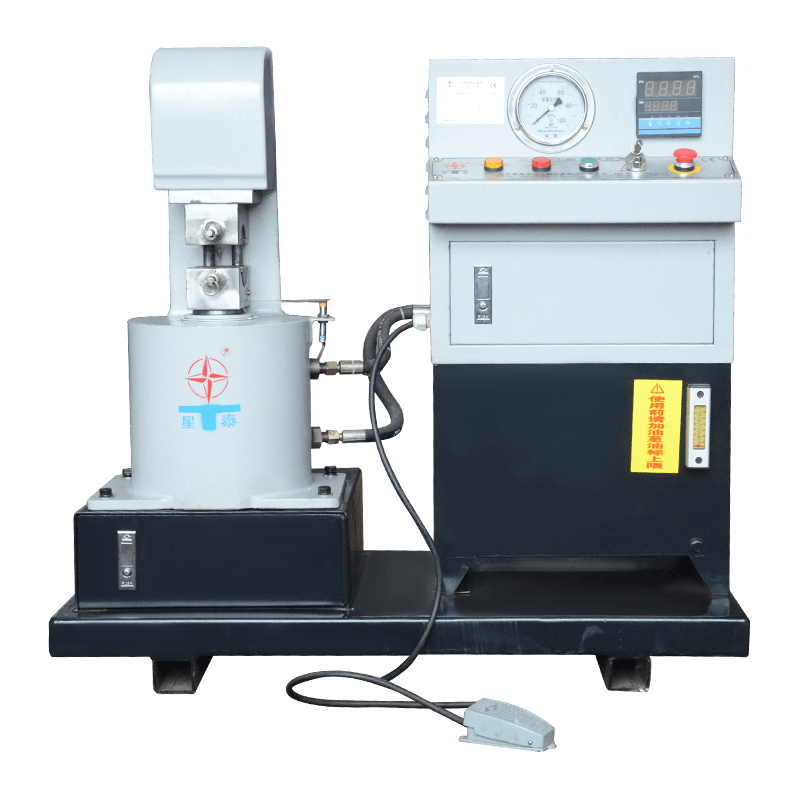
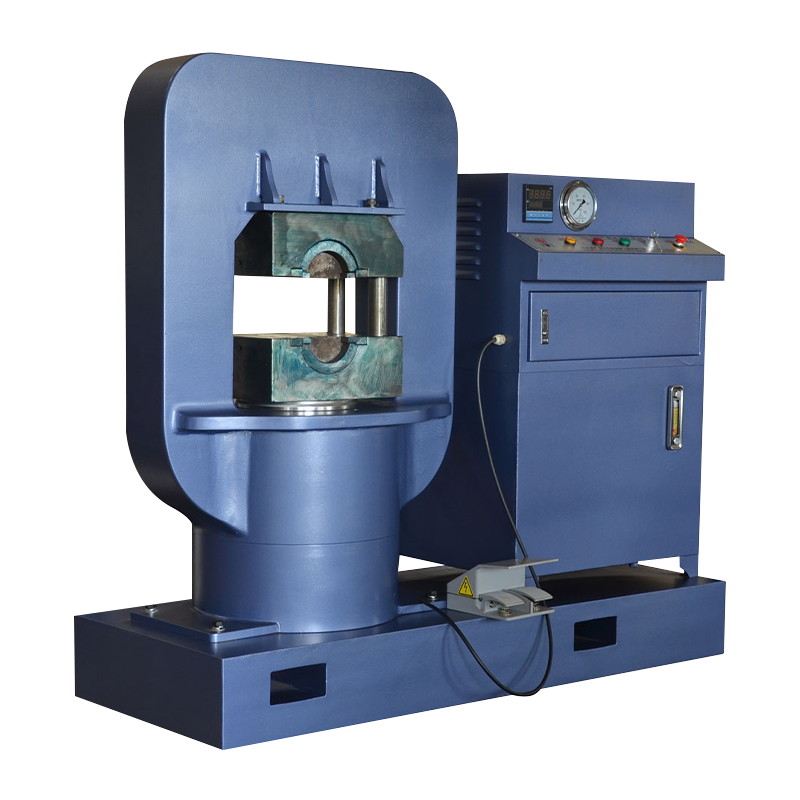
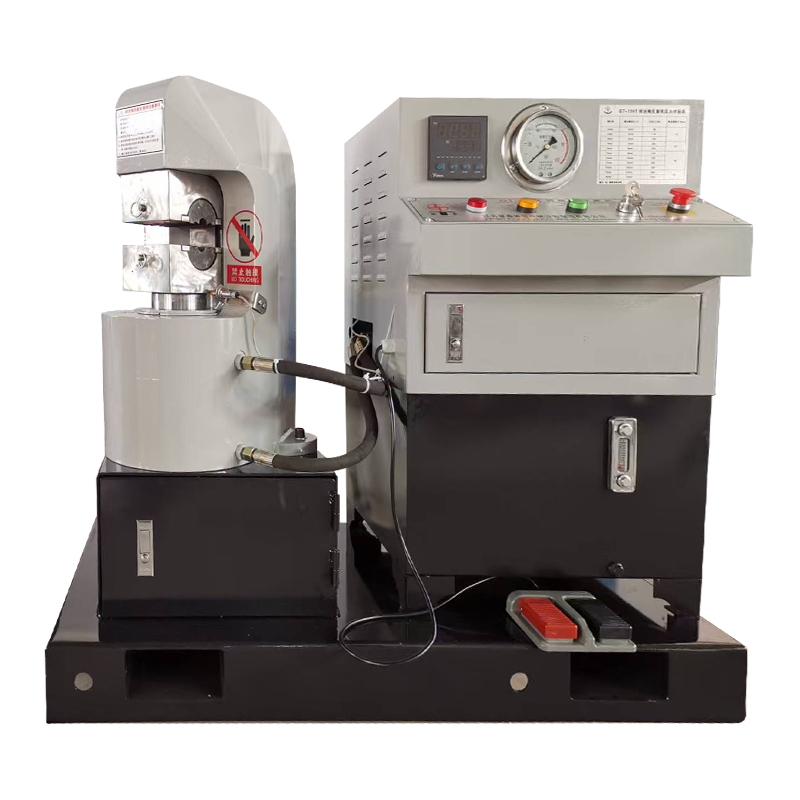
Step five is where the equipment decision is made. Hydraulic presses built for wire rope work are rated by nominal pressing force and by frame type. The machine must be able to deform the ferrule fully in a reasonable number of bites without running at the top of its range on every stroke.
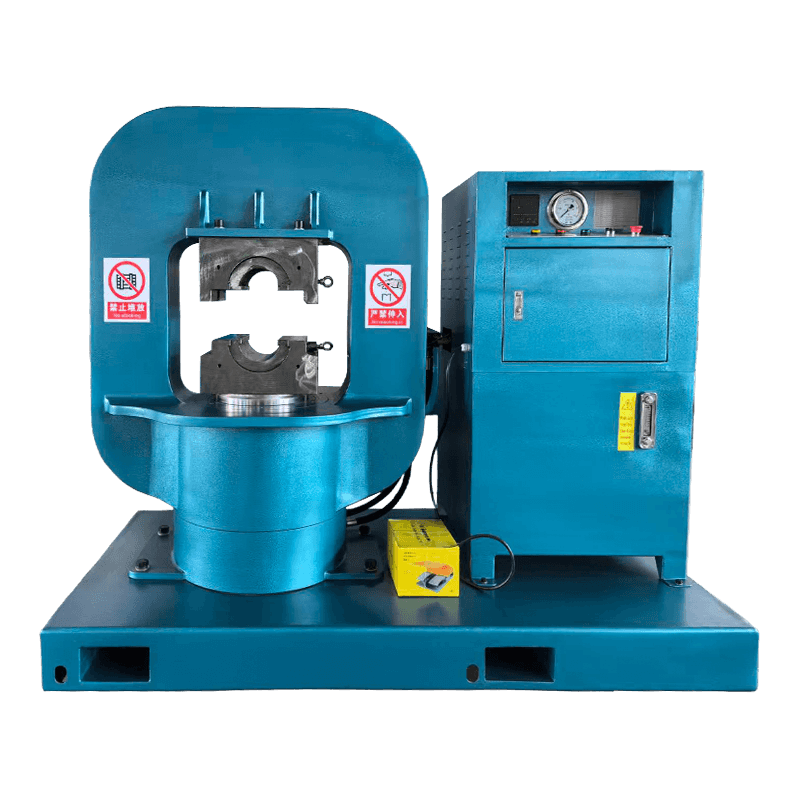
A mid-range basket-frame machine such as the GT200 covers a large part of the general sling market, including aluminium sleeves and standard ferrules on common rope diameters. It is a sensible first press for a shop that wants to move from outsourcing to in-house production without overcapitalising.
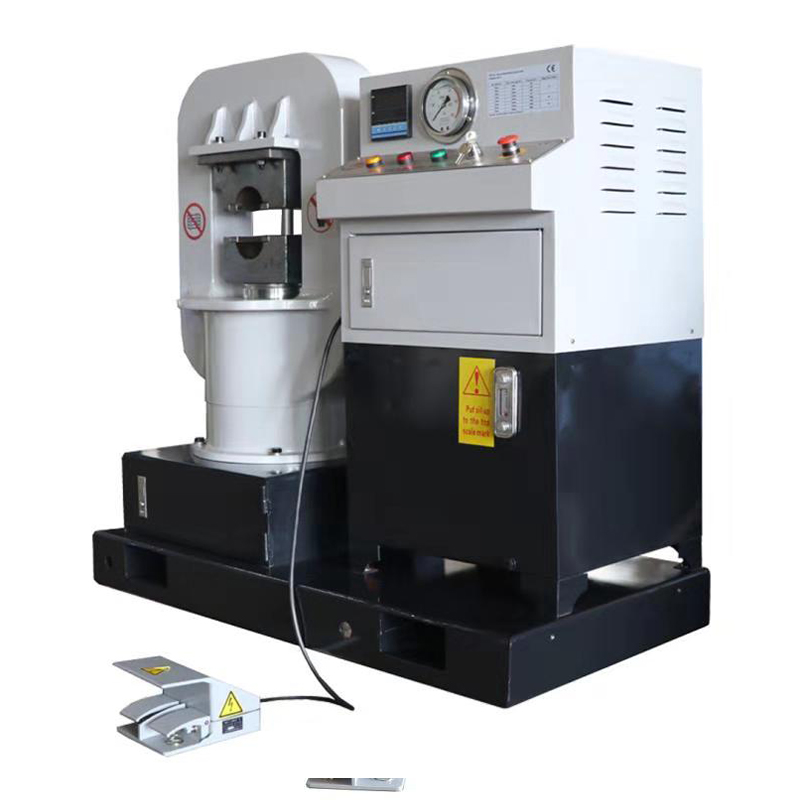 GT-200 Steel Wire Rope Press Machine(Basket Frame)GT-200 wire rope press machine is to press small size of wire rope from 2 mm to 24mm. GT-200 press machine is widely used in wire rope industry. GT-200 press machine i...View Product →
The pressing force is not the only variable. Frame stiffness matters because the frame has to absorb the reaction force of the cylinder without deflecting. A single-piece forged body deforms less than a welded fabrication, and that difference shows up in die alignment over thousands of cycles. Hydraulic flow rate matters too: a dual-pump system that delivers a fast approach stroke and a slow, controlled pressing stroke keeps cycle times short without sacrificing the quality of the joint.
Endless Sling Press Capacity: Reading the Tonnage Numbers
The most common question from a workshop starting endless sling production is what tonnage to buy. Tonnage alone does not answer the question, because the force a ferrule needs depends on its cross-section, the rope construction and the die profile, not only on rope diameter. Even so, the nominal pressing force of the machine sets the ceiling for what a shop can realistically produce, and the ceiling is easy to read from a model range. The chart below plots nominal pressing force for a representative selection of machines from a 60 tonne C-frame unit up to a 2000 tonne basket-frame unit. It shows where a typical general-purpose workshop sits and where heavy grommet and swage terminal work begins. Use it as a map of the market rather than a substitute for a die and ferrule recommendation.
C-frame
C-frame
Basket frame
Basket frame
Basket frame
Basket frame
Basket frame
Basket frame
The first thing the chart shows is how steeply pressing force rises across the range. The GT60 sits at three percent of the scale, while the GT2000 fills it completely. That spread exists because the metal cross-section a press has to deform grows with the square of the ferrule size, not in a straight line. Move from a small sleeve on 8 mm rope to a heavy ferrule on 20 mm rope and the force requirement does not double; it multiplies several times over. This is the single most useful lesson for anyone budgeting equipment, because it explains why the jump from a small C-frame machine to a serious basket-frame press is so large.
The second observation is that the low end of the range is genuinely useful. A 60 tonne or 100 tonne machine handles small-diameter endless slings, light aluminium sleeves and short, repetitive production runs. Workshops that make a wide mix of small slings for general industry, retail and agricultural customers can stay in that band for years and never need more force. The C-frame layout gives open access to the die area, which makes short loops and awkward assemblies easier to position.
The third point concerns the middle of the chart, where most commercial sling production actually happens. The 200 tonne to 650 tonne band covers the bulk of standard aluminium ferrules and hourglass sleeves on common rope diameters, and it is where a general rigging shop should aim if it intends to make rather than buy. Below that band, operators spend too many bites per ferrule and cycle times suffer. Above it, capital is tied up in capacity that sits idle for most of the working week.
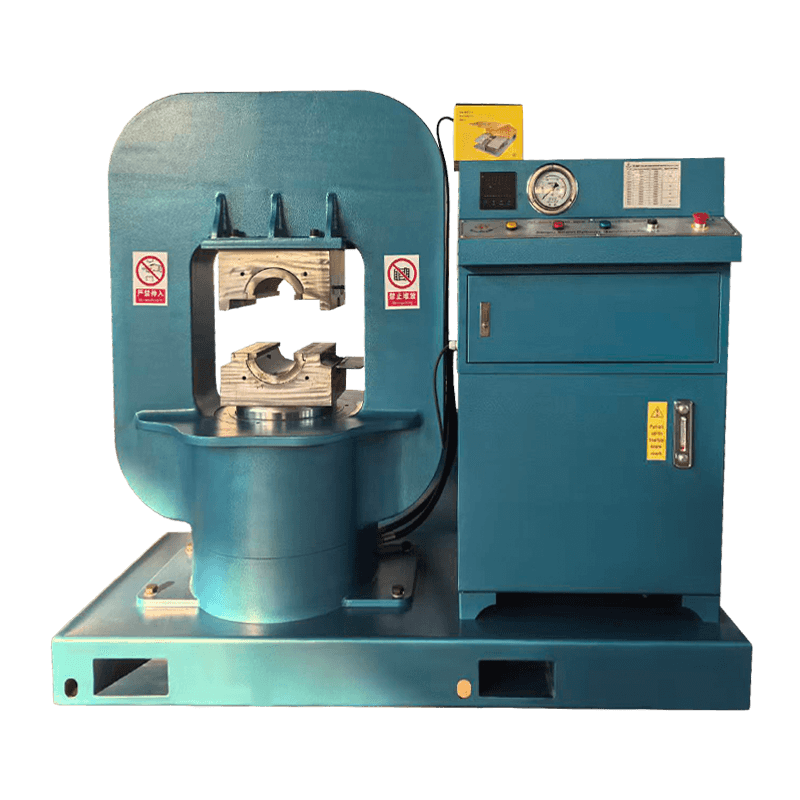
The fourth point is that frame type changes at roughly the same place the tonnage climbs. C-frame machines dominate the small end because their open throat is convenient. From around 200 tonnes and upwards, basket frames take over, and the reason is mechanical rather than commercial. A closed frame carries the reaction force in a stiff loop, which keeps the die faces aligned under heavy load and protects the cylinder from side loading. On high-tonnage work, frame deflection is not a comfort issue; it is a quality issue, because a die that tilts under load presses an uneven ferrule.
The fifth observation is about how the presses are used, not just how they are rated. A 1000 tonne machine does not have to press a ferrule in one stroke to be worth its price. Its real advantage is that it can close a large ferrule in fewer, better-controlled bites while running well below its maximum, which extends seal life, reduces hydraulic shock and produces a more consistent pressed length from sling to sling. A smaller machine can sometimes reach the same ferrule, but it will do so at the top of its range, cycle after cycle, and that is where maintenance costs begin to climb.
The sixth point concerns the relationship between tonnage and dies. Buying more force without matching dies and ferrules is a waste. The die cavity has to match the ferrule profile, including the taper and the closed height, and a press is only as accurate as the tooling sitting in it. When a workshop reports inconsistent ferrule dimensions, the cause is more often a worn or mismatched die than an underpowered press.
Seventh, the chart is a reminder that the tonnage label says nothing about speed. Two machines with the same nominal force can differ by a factor of two in cycle time, depending on whether the hydraulic system uses a single pump or a dual-pump arrangement with a fast approach stroke. For a shop quoting on volume sling production, the cycle time often matters more than the last hundred tonnes of capacity.
Eighth, there is a practical safety margin to respect. Running a press at 100 percent of nominal force on every stroke is a shortcut to premature failure of seals, hoses and cylinder components. A workshop that regularly needs the maximum should be buying the next size up, not pushing the machine it already owns.
Ninth, the model range itself is a useful planning tool. A manufacturer that offers a continuous ladder of tonnages, from small C-frame units through to 2000 tonne basket frames, also tends to offer the dies, ferrules and sleeves that match each step. Buying press and consumables from one supplier removes the guesswork about which die goes with which sleeve.
Tenth, and most importantly, the chart should be read together with the ferrule, not instead of it. The correct purchasing sequence is to define the largest ferrule and rope combination the shop intends to press, ask the ferrule supplier for the recommended pressing force and die, and then choose the machine with enough headroom to run that job comfortably.
Ferrules and Sleeves: The Component That Sets the Endless Sling Rating
Every pressed endless sling is a system of three parts: rope, ferrule and die. Change any one of them and the rating changes. This is why experienced buyers ask for the ferrule specification before they discuss price per sling.
The most widely used component for endless loops is the aluminium hourglass sleeve. Its waisted profile holds two rope ends side by side and its external shape gives the die a clear reference surface, so the pressed result is easy to inspect. Standard aluminium ferrules such as the DIN 3093 pattern are the other common choice. They use a tapered bore that is pressed down onto the doubled rope, and they are available in a range of sizes matched to common rope diameters.
Steel ferrules take over where aluminium stops being the sensible answer. A Flemish eye steel ferrule closes around a hand-tucked eye and produces a joint with a higher rating and better resistance to impact and abrasion. Steel swage terminals serve a different purpose: they terminate a single rope end for connection to a fitting rather than closing a loop, and they are common on stayed structures, guying and machine assemblies.
Thimbles are not a termination at all, but they belong in the same conversation because they decide how long an endless sling lasts in service. A thimble fitted into a loop protects the rope from the hook or shackle bearing on it, and it also spreads the bearing pressure so the rope is not crushed at the contact point. In heavy lifting, the difference between a thimble-protected sling and a bare loop can be measured in months of service life.
Material choice is a trade-off rather than a ranking. Aluminium sleeves deform at lower force, are lighter and are easier to press on smaller machines. Steel ferrules need considerably more force, weigh more and cost more, but they tolerate higher loads and rougher handling. A workshop that presses both will usually keep one machine sized for the steel work and run the aluminium jobs well below its ceiling.
Matching the ferrule to the rope is the last and most frequently skipped step. The ferrule bore has to suit the rope diameter and the rope construction, since a compacted or a galvanised rope occupies a different volume than a bright rope of the same nominal size. Pressing a slightly oversized rope into a ferrule that is too small produces a joint that looks acceptable and tests badly.
Standard aluminium ferrules in the DIN 3093 pattern are a good illustration of how a single consumable can standardise a workshop. Because the dimensions are fixed, the dies are known, the pressing force is predictable and the finished joint can be inspected against a drawing rather than against a technician's judgement.
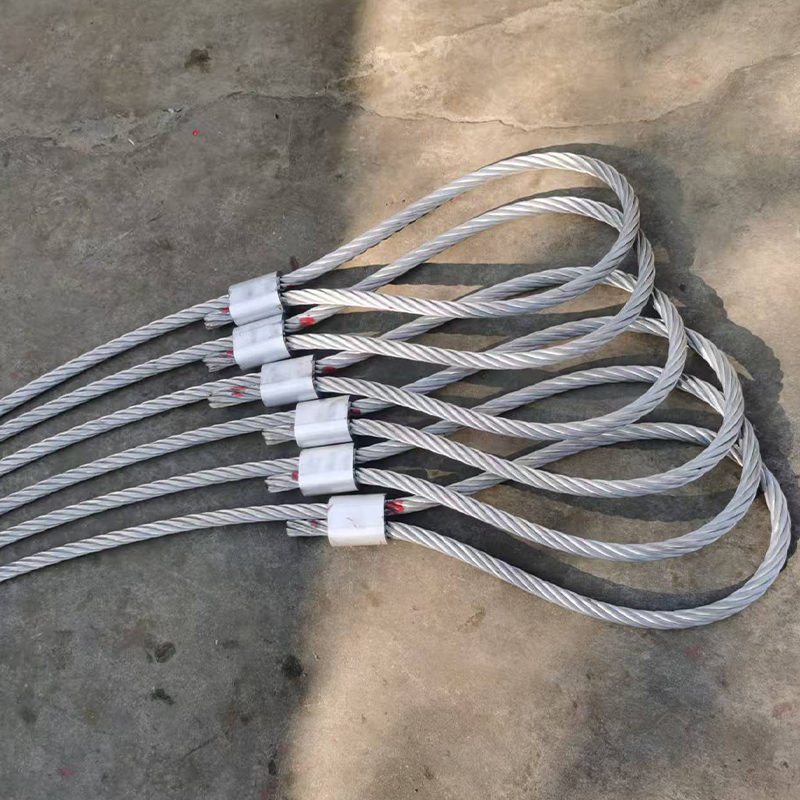 Aluminum Ferrule/Aluminum Sleeve DIN3093The Aluminum Ferrule/Aluminum Sleeve DIN3093 is a precision-engineered cable termination component, strictly manufactured to comply with the DIN3093 standard—the Europ...View Product →
| Component | Material | Role in the sling | What to check when ordering |
|---|---|---|---|
| Aluminium hourglass sleeve | Aluminium alloy | Joins two rope ends to close an endless loop | Sleeve size against rope diameter and matching die profile |
| DIN 3093 aluminium ferrule | Aluminium alloy | Pressed over a folded loop to form a standard joint | Standard reference, bore size, batch traceability |
| Flemish eye steel ferrule | Steel | Locks a hand-tucked Flemish eye splice | Higher pressing force, die wear, surface treatment |
| Steel swage terminal | Steel | Terminates a single rope end for a fitting or anchor | Thread or pin detail, orientation, pressed length |
| Wire rope thimble | Steel or galvanised steel | Protects the loop at the bearing point | Groove size matched to rope diameter |
Choosing a Press for Endless Sling Production
Once the ferrule range is known, the machine decision becomes straightforward. Five factors decide it: frame type, nominal force, hydraulic system, tooling changeover and service support.
- Frame type. C-frame machines give open access for short loops and awkward assemblies, and they suit small to medium ferrules. Basket-frame machines enclose the force path, hold die alignment under heavy load and dominate from roughly 200 tonnes upwards.
- Nominal force with headroom. Size the press so the majority of production runs at around 70 percent of the rated force. That margin covers harder rope constructions, worn dies and occasional heavier jobs without stressing the hydraulic system every cycle.
- Hydraulic system. A dual-pump arrangement provides a fast approach stroke and a slower, controlled pressing stroke. This shortens cycle time without making the pressing stage unstable, which is exactly what repetitive sling production needs.
- Tooling changeover. If the shop makes more than one sling size, dies will be swapped several times a day. Quick, repeatable die mounting with positive location reduces both downtime and the risk of pressing with a partly seated die.
- Frame construction and service. A forged, single-piece body resists deflection better than a welded frame and holds alignment longer. Ask about seal and die availability, spare parts lead time and operator training before signing, not after.
For workshops moving into heavier work, the decision usually lands in the upper-middle of the range, where the press can handle steel ferrules and large aluminium sleeves on substantial rope diameters while still being productive on everyday slings. A basket-frame machine in the 1000 tonne class is a typical answer for a shop that wants one press to cover both general production and heavier rigging work.
It is worth being blunt about the alternative. Buying two small presses instead of one correctly sized machine looks cheaper on the quotation and usually is not, because two operators, two die inventories and two maintenance schedules cost more than the difference in capital. Unless the shop genuinely runs two independent production lines, one properly sized press with spare dies is the better investment.
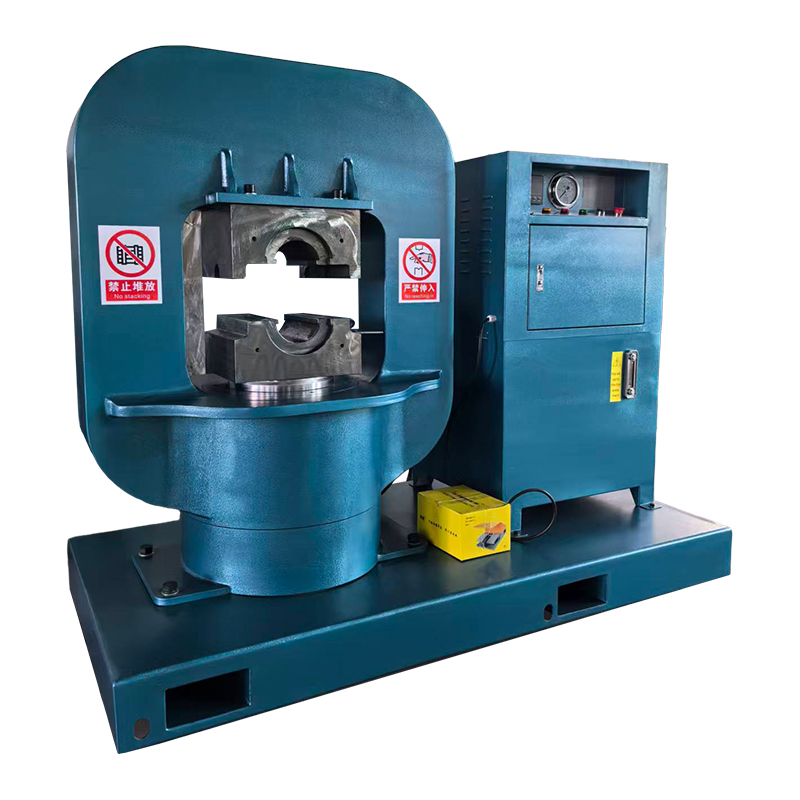 GT-1000 Hydraulic Wire Rope Sleeve Pressing Machine(Basket Frame)The hydraulic steel wire rope swage machine is equipped with a powerful two-stage hydraulic unit and has a safe design according to proven standards.View Product →
Installation also deserves early attention. High-tonnage presses need a level, load-bearing foundation because the reaction force passes into the floor, not only into the frame. Confirm the electrical supply, the hydraulic oil specification and the ambient temperature range of the workshop before delivery, and plan the die storage and ferrule stock next to the machine rather than across the building.
Tolerances and What to Put in an Endless Sling Purchase Specification
Most disputes between sling buyers and sling makers come down to a specification that never stated the tolerance. Length, ferrule dimensions and proof testing all need numbers, and the numbers need to be written down before the first sling is pressed.
Start with the finished loop circumference and the method used to measure it. A loop measured lying flat on a bench will read differently from one measured under light tension, and the difference can exceed the tolerance on a long sling. State the measuring method, the tension applied and the acceptable band. A practical working band for general industrial endless slings is on the order of one rope diameter on the finished circumference, but the contract value should come from the application, not from habit.
Next, define the ferrule. The pressed length after swaging should match the die length, because a joint that is visibly longer than the die indicates the press did not fully close. The ferrule diameter across the pressed faces should sit within the supplier's published range. Any flash, crack or misalignment is a reject, not a rework item.
Third, decide whether proof testing is required. A proof load applied at twice the rated working load, held for a defined period and then released, reveals a joint that was never properly closed. It also permanently elongates the sling slightly, so measure before and after and record both figures. Destructive testing on a sample from the batch gives the actual break load and is the only way to confirm that a production process is genuinely under control.
Fourth, require traceability. The certificate should identify the rope batch, the ferrule batch, the press used, the die identification and the date of manufacture. If a sling is returned from site, traceability is what allows a workshop to identify whether the problem is a single sling or a whole production run.
Fifth, agree the marking. Sling identification should include the working load limit, the length or loop circumference, the rope diameter and construction, the manufacturer and the date. Marking applied with a metal tag is more durable than a printed label, and it survives the washing and handling that slings receive in service.
| Fault seen at inspection | Most likely cause | Check that prevents it |
|---|---|---|
| Ferrule visibly longer than die length | Press did not reach full closure or die worn | Die condition log and cycle pressure record |
| Cracks or flash on ferrule edges | Wrong die profile or excessive force | Die and ferrule compatibility confirmation |
| Loop circumference out of tolerance | Cut length not derived from a pressed sample | Sample press and measurement before batch cutting |
| Loose wires protruding from ferrule ends | Rope ends not annealed or tapered | End preparation step in the work instruction |
| Uneven pressed faces | Die misalignment or frame deflection | Frame and die alignment inspection schedule |
| Sling fails proof load | Under-pressed joint or mismatched rope and ferrule | Batch sample destructive test |
Endless Sling vs Other Sling Types
Endless slings are not a universal answer, and a workshop that also supplies eye-and-eye slings and terminated assemblies will be asked to justify the choice. The comparison below is written from the standpoint of what each type does well and what it demands of the user.
| Sling type | How it is terminated | Handling characteristics | Where it fits best |
|---|---|---|---|
| Endless or grommet sling | Loop closed by splice or pressed ferrule | Flexible, no fittings to snag, joint must stay out of the load path | Choker and basket work, lifting frames, confined spaces |
| Eye-and-eye pressed sling | Pressed ferrule or swaged terminal at each end | Two defined bearing points, easy to inspect | General vertical and basket lifts with hooks and shackles |
| Hand-spliced Flemish eye with thimble | Mechanical splice plus thimble | Repairable, traditional, slower to produce | Heavy duty cycles where the eye takes the wear |
| Swage terminal assembly | Pressed terminal with thread or pin | Rigid termination, precise length control | Structures, guying, machine assemblies |
| Textile round sling | Continuous yarn core in a sleeve | Light, soft, non-marking | Finished surfaces and light loads |
| Chain sling | Mechanical links and hooks | Very abrasion resistant, heavy, rigid | Hot, sharp and rough loads |
Two conclusions follow from the table. First, an endless sling wins on flexibility and on the absence of fittings, which is why it dominates choker applications and any lift where a hook or shackle would foul the load. Second, it loses on inspectability at the joint, because the critical pressed area is inside the ferrule and cannot be seen.
That second point is the reason inspection procedures for endless slings concentrate so heavily on dimensional checks. For a textile sling, the inspector looks at the sleeve. For an endless wire rope sling, the inspector measures the ferrule and looks for cracks, because the internal condition of the joint can only be inferred from its external dimensions and from the process records behind it.
Inspection and Maintenance of Endless Slings in Service
A pressed endless sling does not fail suddenly under normal use. It degrades through broken wires, corrosion, abrasion and mechanical damage, and the joint degrades through cracking, elongation and loss of grip. A short inspection routine catches all of these before they become a lifting incident.
Before every use, check the rope along its whole length for broken wires, kinks, birdcaging and corrosion. Check the ferrule for cracks, deep scoring, corrosion pitting and any measurable change in pressed length. Check that the loop has not become distorted, and check that any thimble is still seated in the eye and not worn through.
On a periodic basis, record the loop circumference and the ferrule dimensions and compare them with the values recorded at manufacture. A sling that has grown measurably in loop circumference has been overloaded or has suffered internal wire breaks. A ferrule that has grown longer has lost grip. Both are grounds for withdrawal from service.
Storage and handling matter more than most workshops assume. Slings should be stored off the floor, away from acids, and away from the sharp edges and weld spatter that damage rope in a fabrication shop. Dragging a sling across concrete damages strands; pulling one over a sharp corner damages the rope at exactly the point where it later fails.
The press itself needs a maintenance routine as well, because a machine that has drifted out of alignment produces slings that pass a visual check and fail a proof test. Hydraulic oil condition, seal condition, die wear, die seating and frame alignment should all be on a scheduled inspection list rather than left to a breakdown.
Workshops that want a fuller checklist for the machine side can read the detailed guidance on maintenance precautions for wire rope hydraulic presses, which covers hydraulic checks, die care and the practical intervals that keep a press producing consistent joints.
FAQ: Endless Sling Questions Buyers Ask Most
What is an endless sling used for?
An endless sling is used for lifts where fittings would get in the way, including choker hitches, basket hitches, lifting frames and confined spaces. Because the loop has no ends and no hardware, it can be wrapped around a load and passed through itself, which many other sling types cannot do.
Is an endless sling the same as a grommet sling?
In wire rope practice the two terms describe the same product. A grommet sling is a continuous loop of wire rope, traditionally closed by hand-splicing and increasingly closed by pressing a ferrule or sleeve. The textile industry uses the term endless round sling for a completely different product, so always specify the material.
Can an endless sling be used in a choker hitch?
Yes, and it is one of the most common uses. Because the loop passes through itself, the sling grips the load and the choke point tightens under load. The working load limit in a choker configuration is lower than in a vertical configuration, so always use the ratings table for the specific hitch rather than the headline number.
What press tonnage do I need to make endless slings?
It depends on the largest ferrule and rope combination you intend to press, not on the rope diameter alone. A small C-frame machine from 60 to 100 tonnes covers light sleeve work, while general commercial production typically sits between 200 and 650 tonnes, and heavy steel ferrule and swage terminal work moves into the 1000 tonne class and above.
How do I calculate the rope length for an endless sling?
Start from the finished loop circumference, double it to account for both legs, and then add the length consumed by the splice or the ferrule take-up. The only reliable method is to press a sample, measure the finished loop, and adjust the cut length from that measurement before cutting a batch.
Why do my rope ends broom open when I press them?
Because they were cut and pressed without annealing or tapering. Cutting strands releases tension and the wires spread. Annealing softens the wire ends so they can be formed into a compact tapered point that enters the ferrule without trapping loose wires between the rope and the bore.
Are aluminium sleeves or steel ferrules better for endless slings?
Aluminium sleeves are lighter, need less pressing force and suit general industrial slings. Steel ferrules need considerably more force but deliver a higher rating, better impact resistance and longer life in rough service. The correct answer follows the application and the machine available, not a general preference.
How often should endless slings be inspected?
Formally, before every use, with a documented periodic inspection at an interval set by the application and local regulation. In practice, the periodic inspection should include measurement of the loop circumference and the pressed ferrule length, recorded and compared against the values taken at manufacture.
Can endless slings be made without a hydraulic press?
Small hand-spliced grommets can be made with hand tools alone, but the process is slow and depends entirely on the splicer. Any pressed construction requires a hydraulic press with the correct die, because the ferrule has to be deformed uniformly to grip the rope along its full contact length.
Where can I buy endless sling presses and ferrules as a wholesale buyer?
Look for a manufacturer that supplies both the machine and the consumables, so the die, the ferrule and the pressing force recommendations come from one source. A wire rope press manufacturer with an export record and a documented testing process is a safer wholesale partner than a trading company that resells equipment it does not build.
Where to Go Next on This Site
Two pages are worth reading next, depending on whether your interest is the sling or the machine that makes it.
- Precautions for lifting slings and lifting appliances covers the field-side rules that decide how a finished sling should and should not be used.
- Jiangsu Xingtai Hydraulic Manufacturing Co., Ltd. builds wire rope presses, annealing and tapering machines, reeling machines and the ferrules, sleeves and thimbles that go with them, and supplies sling makers and rigging workshops internationally.
Whether you are buying an endless sling or building a production line to make them, the same discipline applies: define the assembly, match the components, press with control, and measure the result. That is what separates a sling that holds its rating from one that only looks like it does.
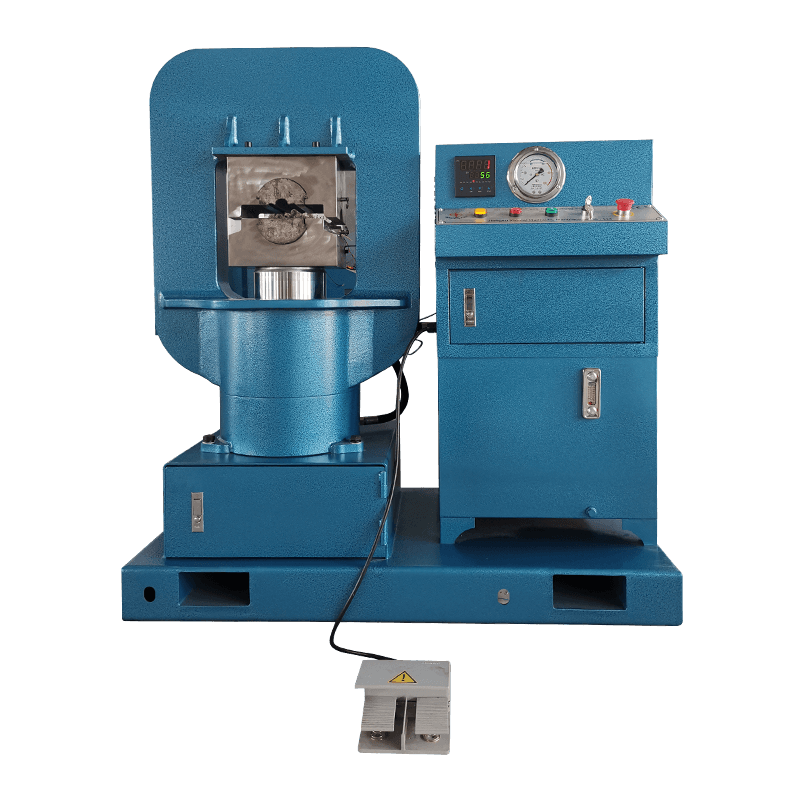

If you require custom hydraulic equipment or technical consultation, please feel free to contact the Xingtai Sales and Engineering Team.
-
 +86-523-86934677
+86-15896002505 -
 [email protected]
-
 +86-15896002505
-
 No. 3 Longgang Road, Gaogang Port Street, Taizhou City, China.
Copyright © Jiangsu Xingtai Hydraulic Manufacturing Co., Ltd. All Rights Reserved. Custom hydraulic machinery manufacturers Wholesale wire rope swagers Factory

