 English
 русский
 Français
 Español
 Português
 Deutsch
 عربى
عربى Türk
Türk
Content
- 1 The Swaging Process: Step-by-Step Mechanics
- 2 Machine Architecture: What Separates an Industrial-Grade Press from an Entry-Level Unit
- 3 Technical Specifications: What to Look For When Selecting a Wire Rope Machine
- 4 Wire Rope Ferrule Pressing: Standards Compliance and Joint Quality
- 5 Applications: Industries That Rely on Pressed Wire Rope Slings
- 6 Automatic vs Manual: Why Automation Matters for Sling Production Quality
- 7 About Jiangsu Xingtai Hydraulic Manufacturing Co., Ltd.
- 8 Frequently Asked Questions
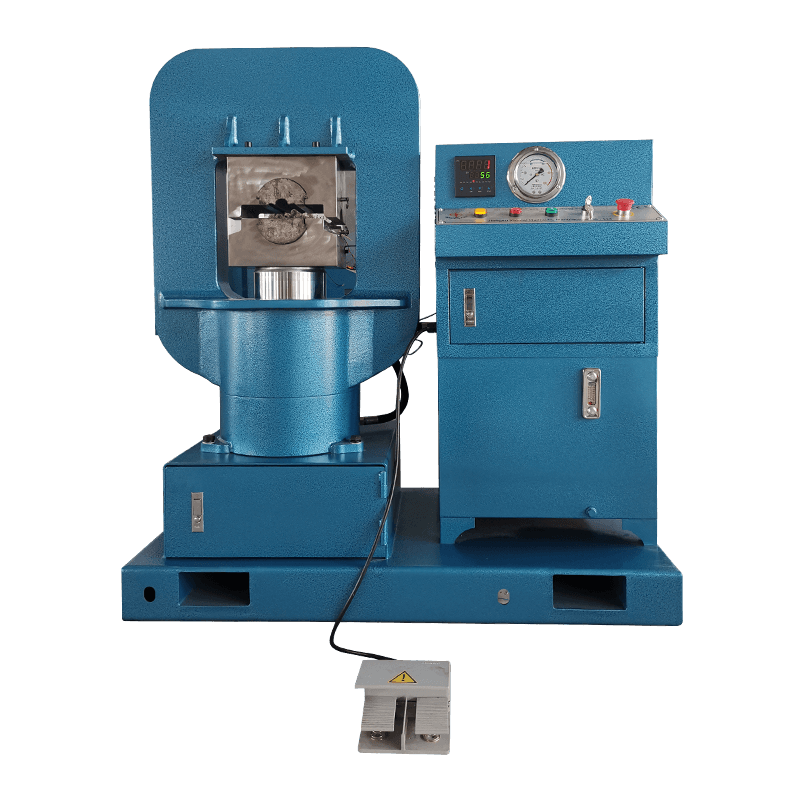
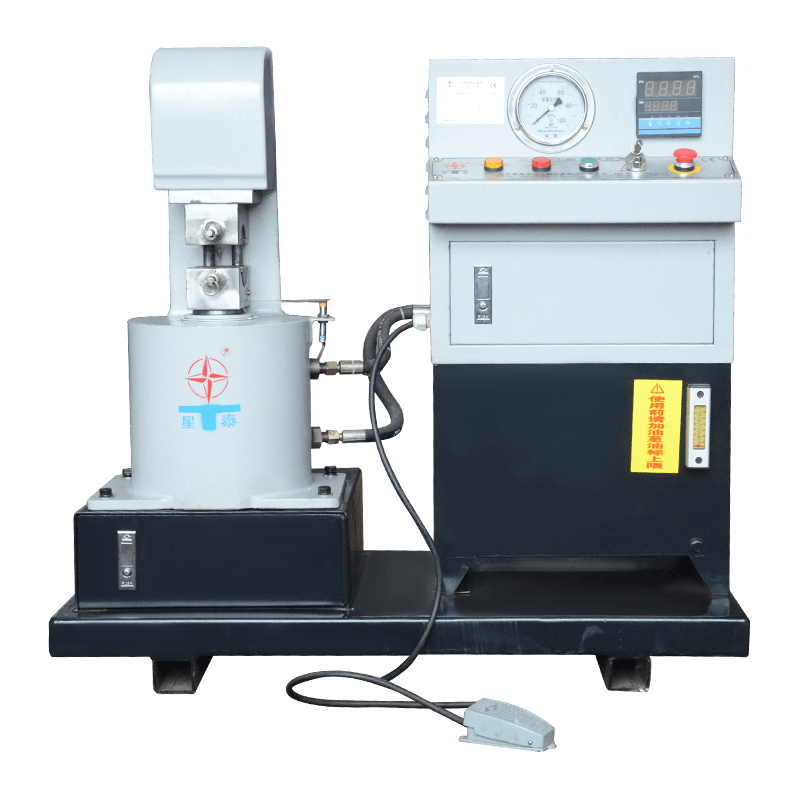
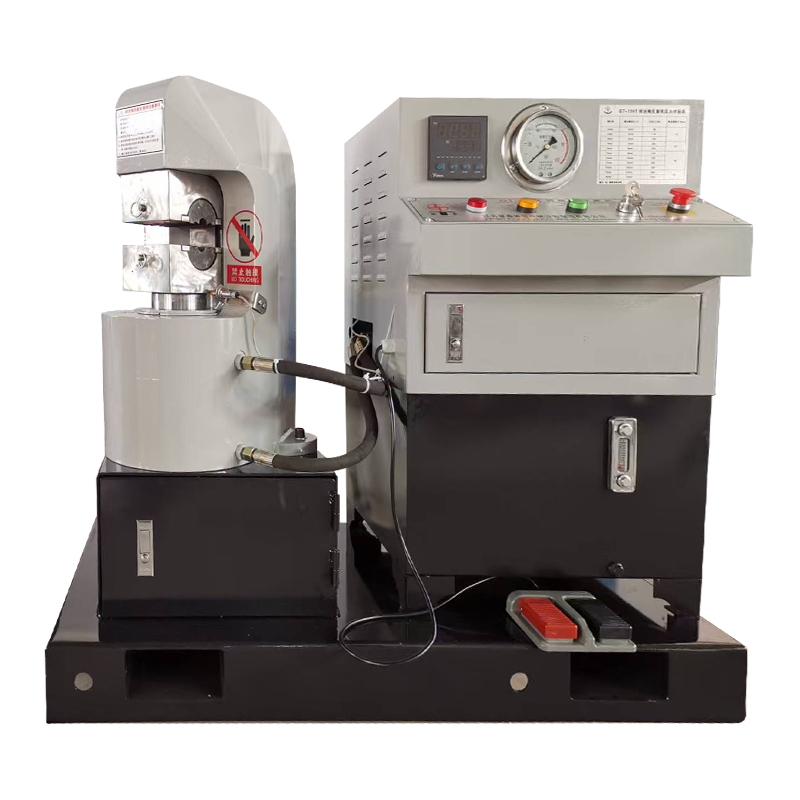
A wire rope sling making machine works by using controlled hydraulic force to permanently compress a metal ferrule (sleeve) around the looped end of a steel wire rope — a process known as swaging or crimping. The result is a lifting sling with a mechanical joint that, when properly made, develops the full rated breaking strength of the rope itself. The machine applies pressures ranging from 100 to 650 tonnes depending on rope diameter and sleeve material, deforming the ferrule until it cold-flows around every strand of the rope and locks in place permanently.
Unlike hand-spliced or mechanically clamped terminations, a hydraulically pressed ferrule connection requires no skill-dependent manual operations after machine setup. This makes the hydraulic wire rope press the dominant production tool in rigging shops, crane manufacturing facilities, offshore equipment suppliers, and lifting gear distributors worldwide. This article explains the mechanical process in detail, covers equipment selection criteria, and provides the specification data that procurement engineers need to evaluate an automatic sling making machine for industrial or heavy-duty applications.
The Swaging Process: Step-by-Step Mechanics
The core operating principle of a wire rope sling pressing machine is straightforward but mechanically precise. The process begins with threading the wire rope end through an aluminum or steel ferrule, forming a loop around a thimble or directly, and positioning both rope ends inside the sleeve. The loaded ferrule is then placed in the machine's swaging die — a precision-machined cavity shaped to the target finished profile of the pressed connection.
When the operator initiates the press cycle, the hydraulic crimper drives the die halves together under programmed force. The ferrule material — typically 6063-T5 aluminum alloy or low-carbon steel — yields under compression and flows radially inward, filling the interstitial spaces between wire rope strands. This cold-flow bonding creates a mechanical interlock at the microscopic level: the sleeve is not merely clamped around the rope, it is permanently deformed into it.
A quality steel wire rope crimping machine controls this process through die geometry and hydraulic pressure calibration. The dies are machined to produce a finished diameter that, for a given rope and sleeve specification, delivers the correct reduction ratio. Industry standards including EN 13411-3 and ASME B30.9 specify minimum swage ratios and pull-out force requirements; a properly calibrated machine running certified tooling will consistently produce terminations that meet or exceed these requirements. The pressing cycle itself typically takes 3 to 8 seconds for rope diameters up to 52 mm — making high-volume sling production practically achievable on a single shift.
Chart 1: Pressing cycle time vs wire rope diameter on a dual-pump hydraulic press. Even at 52 mm rope diameter the cycle completes in under 8 seconds, demonstrating the production efficiency advantage of hydraulic over mechanical or manual swaging methods.
Machine Architecture: What Separates an Industrial-Grade Press from an Entry-Level Unit
Not all sling press machines are built to equivalent standards. The differences between an entry-level unit and a genuinely heavy duty sling press machine designed for industrial production are found in four key components: the swaging head material and construction, the hydraulic system architecture, the machine body design, and the die system precision.
Swaging Head Construction
Industrial-grade machines use swaging heads forged from high-strength alloy steel, typically with Rockwell hardness ratings of HRC 50–58 at the die contact surfaces. Forging — rather than casting or machining from bar stock — aligns the grain structure of the steel, producing a head that can absorb the repeated shock loading of production pressing cycles without fatigue cracking. A forged alloy steel head is expected to remain dimensionally stable for hundreds of thousands of press cycles, maintaining die register accuracy throughout its service life.
Hydraulic System: Dual-Pump Architecture
The hydraulic system is the performance heart of a hydraulic wire rope press. Entry-level machines use single-pump circuits that must balance speed and force — high flow for rapid approach, high pressure for the press stroke — with a single pump, which creates either slow approach or pressure drop during the pressing phase. Industrial machines use a dual-pressure pump oil supply system: a high-flow low-pressure pump handles rapid approach and return strokes, while a high-pressure pump takes over for the pressing stroke itself. This architecture delivers fast cycle times with smooth, consistent pressing force — a critical combination for joint quality repeatability on a heavy duty sling press machine.
Machine Body: Monolithic vs Fabricated
The machine body of a production-grade wire rope sling pressing machine is manufactured from a single block of high-tensile steel rather than welded or bolted assemblies. A monolithic body eliminates the joint compliance, weld fatigue risk, and alignment drift that affect fabricated frames under cyclic high-load conditions. Frame deflection under full pressing load on a monolithic machine is measured in micrometers rather than the tenths of a millimeter that can affect fabricated designs — and this dimensional stability directly translates to consistent finished ferrule geometry across every cycle.
Chart 2: Indexed performance comparison — industrial heavy-duty sling press vs entry-level unit across four production-critical attributes. Industrial machines outperform entry-level equivalents by 2–3× on pressing force, cycle speed, and service life.
Technical Specifications: What to Look For When Selecting a Wire Rope Machine
Selecting the right hydraulic crimper or automatic sling making machine requires matching machine capacity to the full range of products your operation will produce — not just the most common current job. Undersizing a machine creates a production bottleneck the moment a larger-diameter rope order arrives. Oversizing adds unnecessary capital cost and floor space requirements. The table below provides representative specification benchmarks across three machine classes.
| Parameter | Light Duty | Medium Industrial | Heavy Duty |
|---|---|---|---|
| Rope Diameter Range | 6–28 mm | 6–40 mm | 6–52 mm |
| Maximum Pressing Force | 100–200 t | 200–400 t | 400–650 t |
| Hydraulic System | Single pump | Single / dual | Dual-pump |
| Cycle Time (Ø32 mm) | 8–12 s | 5–8 s | 3–5 s |
| Body Construction | Fabricated steel | Fabricated / monolithic | Monolithic block |
| CE Certified | Optional | Common | Standard |
| Typical Application | Workshop, repair shop | Rigging shop, rental | Industrial, offshore, crane mfg |
CE certification is increasingly a mandatory procurement requirement for machines destined for European markets and for any operation producing slings to EN or ISO standards. A CE certified machine has been assessed for conformity with EU Machinery Directive 2006/42/EC, which covers guarding, emergency stop systems, electrical safety, and residual risk documentation. For export-focused manufacturers and operations supplying to certified rigging contractors, CE certification of the pressing machine is a prerequisite, not an option.
Wire Rope Ferrule Pressing: Standards Compliance and Joint Quality
A wire rope ferrule pressing machine does not simply make a tight connection — it makes a connection that must be verified against engineering standards before the sling can be put into service. The two primary international frameworks governing pressed wire rope terminations are EN 13411-3 (European) and ASME B30.9 (North American), with equivalent national standards in Australia (AS 3569), China (GB/T), and other major markets.
Under EN 13411-3, a pressed ferrule termination must achieve a minimum efficiency of 90% of the rope's minimum breaking force (MBF) when tested to destruction. ASME B30.9 similarly requires that swaged terminations develop the full rated capacity of the sling assembly. Meeting these requirements consistently depends on three interrelated factors: the correct die set for the rope and sleeve specification, the correct pressing force applied by the machine, and the correct ferrule material and dimensional specification.
An automatic sling making machine with programmable force control eliminates the operator-dependent variation that affects manual or semi-automatic pressing. The machine's hydraulic system delivers a precisely defined press force for each die set, regardless of operator experience or attention level. This repeatability is what enables high-volume sling production to maintain consistent quality documentation — a requirement for slings supplied to offshore, mining, construction, and aerospace lifting applications where traceability and batch certification are contractually mandated.
Chart 3: Termination efficiency comparison across wire rope end-fitting methods as a percentage of rope minimum breaking force. Hydraulic pressed ferrule terminations achieve 95%+ efficiency — exceeding the EN 13411-3 minimum of 90% and outperforming rope clip methods. Only open spelter socket (a resin-filled system) achieves comparable efficiency, but at significantly higher labor cost and with no relocation capability.
Applications: Industries That Rely on Pressed Wire Rope Slings
The wire rope machine and the slings it produces are found wherever engineered lifting is required. The following sectors represent the primary industrial consumers of hydraulically pressed wire rope sling assemblies:
- Oil and Gas / Offshore: Crane slings, mooring pennants, tugger lines, and rigging assemblies for floating production and drilling platforms. Offshore specifications commonly require CE certified and third-party proof-tested slings with full traceability documentation.
- Construction and Civil Engineering: Tower crane rigging, pre-cast concrete lifting loops, bridge strand anchors, and formwork suspension systems. High-volume pressing capability on an automatic sling making machine supports just-in-time rigging supply for large construction sites.
- Marine and Port Operations: Mooring slings, towing pendants, cargo net lifting frames, and ship-to-shore crane rigging. Marine environments require corrosion-resistant ferrule materials and coating systems that a steel wire rope crimping machine must accommodate in its die tooling.
- Mining: Shaft rope splices, conveyor belt pull slings, dragline rigging, and underground haulage equipment. Mining applications typically demand the heaviest rope diameters — reinforcing the need for a genuine heavy duty sling press machine with 500+ tonne capacity.
- Crane and Hoist Manufacturing: OEM rope terminations for overhead traveling cranes, jib cranes, hoists, and winches. Crane manufacturers require consistent, documented termination quality that only a calibrated hydraulic wire rope press with controlled pressing force can reliably deliver.
- Entertainment and Architecture: Structural tension systems, feature rope installations, and stage fly rigging increasingly use pressed terminations for their clean appearance and certified load-bearing capability.
Chart 4: Radar suitability comparison — heavy-duty hydraulic sling press vs light-duty press across five key industrial sectors. The heavy-duty machine achieves near-maximum suitability ratings in all sectors, reflecting its capacity to handle the rope diameters, cycle volumes, and certification requirements that each industry demands. Light-duty presses are restricted to lower-diameter, lower-volume applications and are unsuitable for offshore, mining, and demanding crane manufacturing environments without supplementary equipment.
Automatic vs Manual: Why Automation Matters for Sling Production Quality
The distinction between an automatic sling making machine and a manually controlled press is not merely one of operator convenience — it is a fundamental difference in joint quality consistency. Manual pressing depends on the operator reading a pressure gauge and stopping the press at the correct point. Automatic machines use programmed force or position targets with electronic feedback, stopping at precisely the correct die gap regardless of operator variation.
In practice, manual operation introduces cycle-to-cycle variation of 5–15% in finished ferrule diameter across an operator shift as fatigue, distraction, or gauge misreading accumulates. On a production run of 200 slings, this means a measurable fraction of terminations may fall outside the die specification — creating joints that technically require re-pressing or rejection. Automatic control eliminates this variation: finished ferrule diameter repeatability on a well-configured automatic machine is typically within ±0.1 mm across thousands of cycles.
For operations supplying to industries that require lifting sling equipment with batch certificates and individual sling identification — including offshore, nuclear, and aerospace applications — automatic pressing is not optional. Traceable, consistent pressing force is a prerequisite of the quality management systems (ISO 9001, EN ISO 4309) that govern these sectors. An automatic sling making machine with data logging capability can generate pressing force records for each sling in a batch, providing the objective evidence of conformity that audits require.
About Jiangsu Xingtai Hydraulic Manufacturing Co., Ltd.
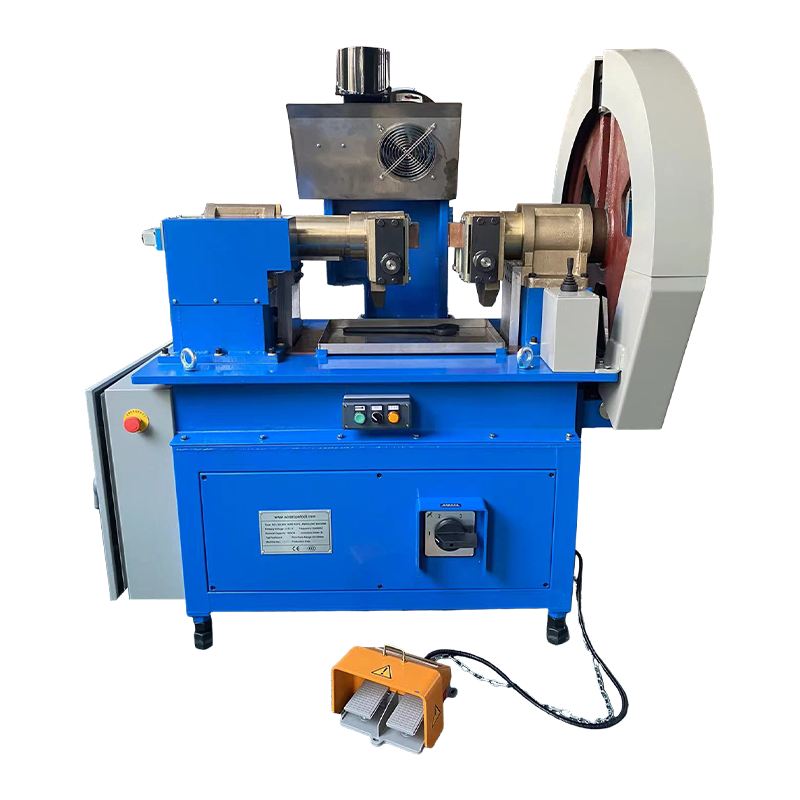
Jiangsu Xingtai Hydraulic Manufacturing Co., Ltd. was founded in 1992 and is located in Taizhou City, Jiangsu Province, China. The company specializes in manufacturing hydraulic wire rope pressing machines, wire rope annealing and tapering machines, aluminum sleeves, and lifting clamps. Xingtai Hydraulic is equipped with advanced production facilities, strong technical capabilities, authoritative testing equipment, and a comprehensive quality management system.
The swaging components of Xingtai Hydraulic machines are forged from high-strength alloy steel. The machine body is manufactured from a single block of material, ensuring structural integrity and long service life. Our hydraulic systems utilize a dual-pressure pump oil supply system, which enables fast upward and downward movement while ensuring a smooth pressing process — significantly improving pressing quality and production efficiency.
Xingtai Hydraulic machines have been exported to numerous countries, including the UK, Australia, the Netherlands, Latvia, Malaysia, Thailand, India, Russia, Botswana, Poland, and others. Guided by the philosophy of "high quality, competitive price, and lasting commitment," we strive to meet our customers' needs and provide them with the best service — serving both existing and new clients with the same level of excellence as we work together to build a successful future.
Frequently Asked Questions
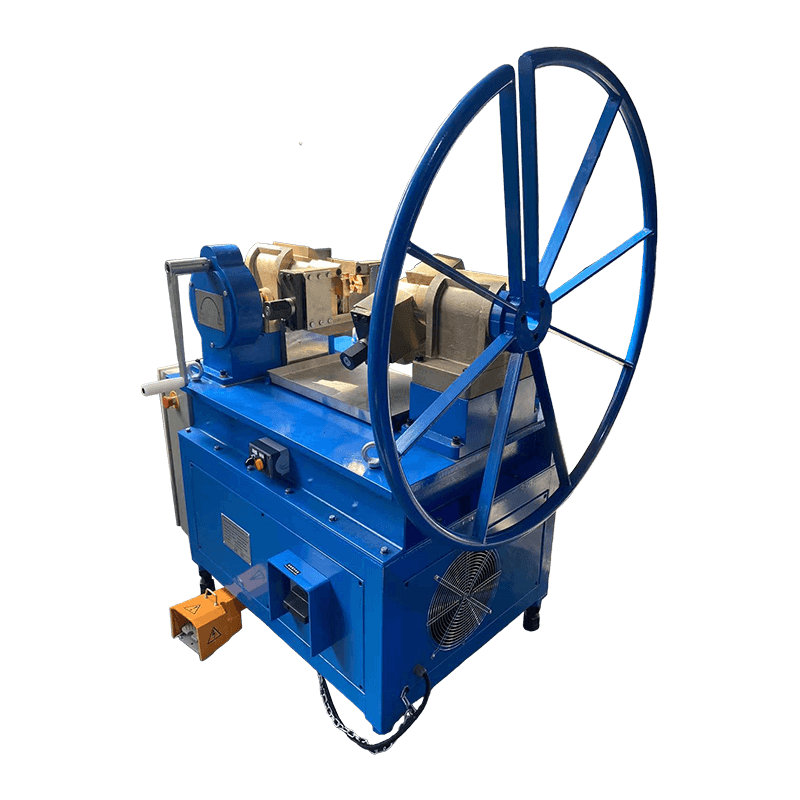
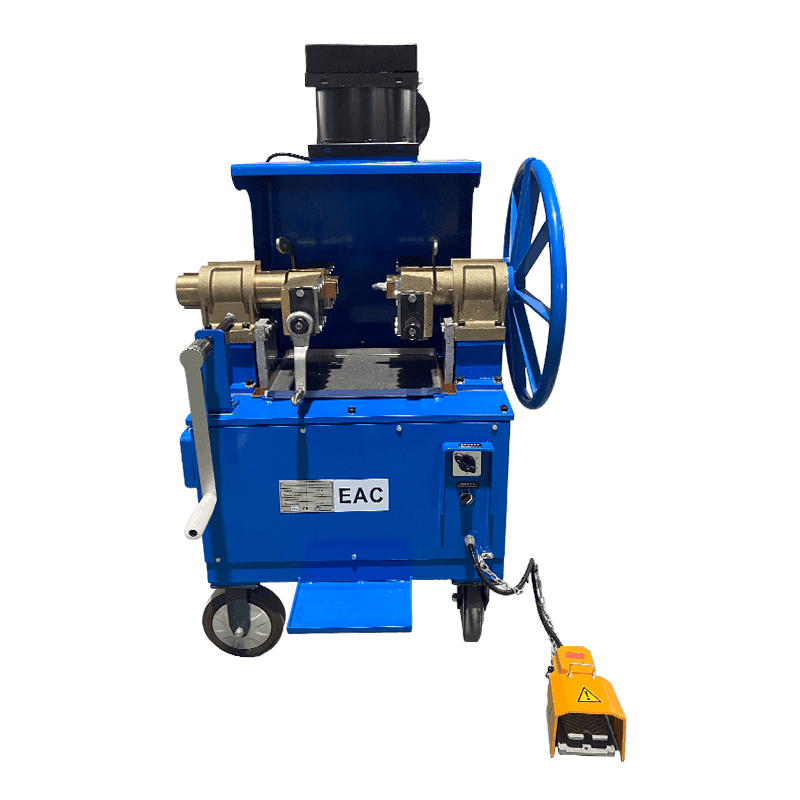

If you require custom hydraulic equipment or technical consultation, please feel free to contact the Xingtai Sales and Engineering Team.
-
 +86-523-86934677
+86-15896002505 -
 [email protected]
-
 +86-15896002505
-
 No. 3 Longgang Road, Gaogang Port Street, Taizhou City, China.
Copyright © Jiangsu Xingtai Hydraulic Manufacturing Co., Ltd. All Rights Reserved. Custom hydraulic machinery manufacturers Wholesale wire rope swagers Factory

