 English
 русский
 Français
 Español
 Português
 Deutsch
 عربى
عربى Türk
Türk
Content
- 1 What Is a Wire Rope Swaging Machine and How Does It Work
- 2 Core Components and Working Principle of a Hydraulic Wire Rope Swager
- 3 Capacity Tiers: Matching a Wire Rope Machine to Rope Diameter
- 4 Pneumatic Swaging Tools for Wire Rope vs Hydraulic Press Systems
- 5 Pressing Cycle Behavior: Why Dual-Pressure Hydraulics Matter
- 6 Where Wire Rope Swaging Equipment Is Typically Used
- 7 Operating Comfort and Efficiency Benchmarks
- 8 Maintenance Practices That Protect Swaging Tools for Wire Rope
- 9 About Jiangsu Xingtai Hydraulic Manufacturing Co., Ltd.
- 10 Frequently Asked Questions
What Is a Wire Rope Swaging Machine and How Does It Work
A wire rope machine designed for swaging joins a fitting, sleeve, or ferrule permanently onto the end of a steel wire rope by applying controlled compressive force until the metal cold-flows around the rope strands. In direct terms, a wire rope swager uses hydraulic or pneumatic pressure to close a set of dies around a sleeve, reducing its diameter and locking the rope fibers in place without welding or adhesives. This process, commonly called a wire rope swage, produces a mechanical splice that distributes load evenly across the compressed metal rather than concentrating stress at a single point.
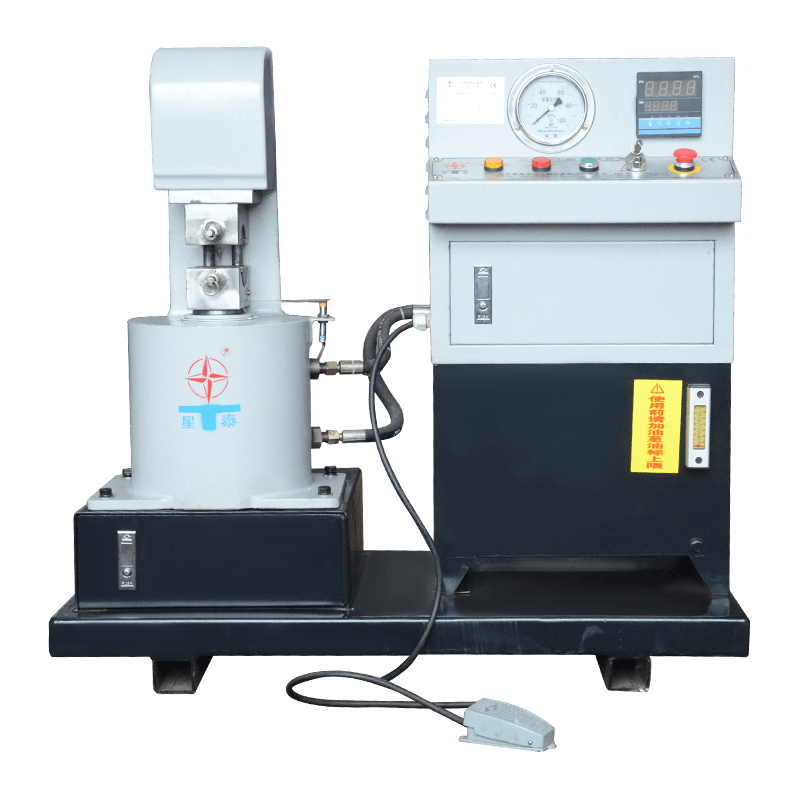
Most industrial-grade machines rely on a hydraulic power unit rather than manual force, because consistent pressure is what determines the strength and repeatability of the finished termination. Smaller or portable pneumatic swaging tools for wire rope use compressed air to drive a piston, which is useful for lighter cable assemblies and field repair work where a full hydraulic station is not practical. Larger fixed installations, by contrast, use dual-pressure hydraulic pumps that switch between a fast, low-pressure approach stroke and a slower, high-pressure pressing stroke, which shortens cycle time without sacrificing die control.
Understanding this distinction matters before selecting equipment: pneumatic units generally suit lower-volume or mobile work, while hydraulic press lines are built for continuous production of rigging, lifting, and structural cable assemblies. The remainder of this article breaks down the mechanical principles, selection criteria, and maintenance practices behind reliable swaging tools for wire rope.
Core Components and Working Principle of a Hydraulic Wire Rope Swager
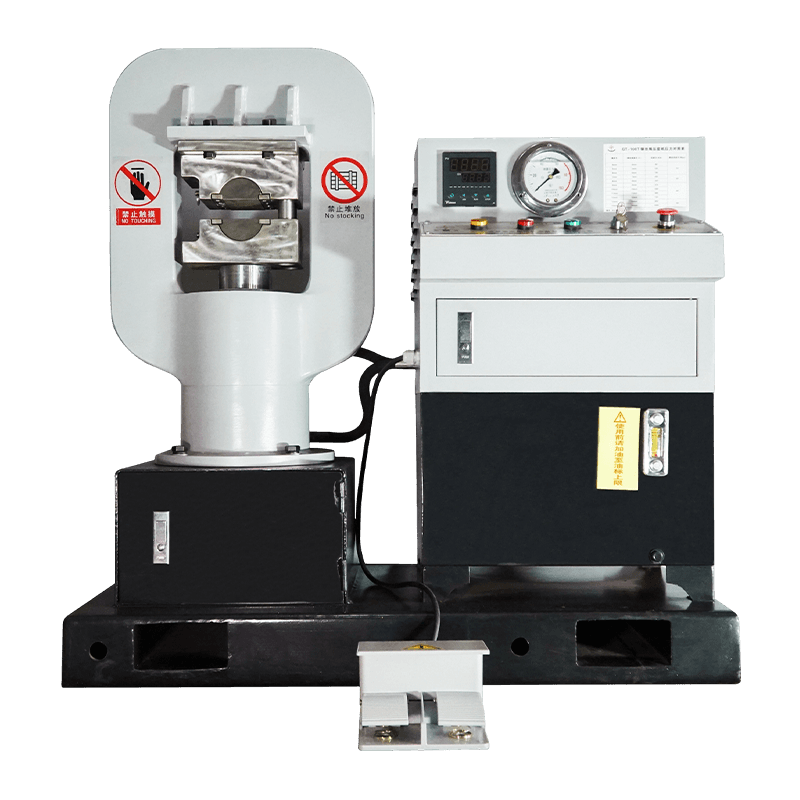
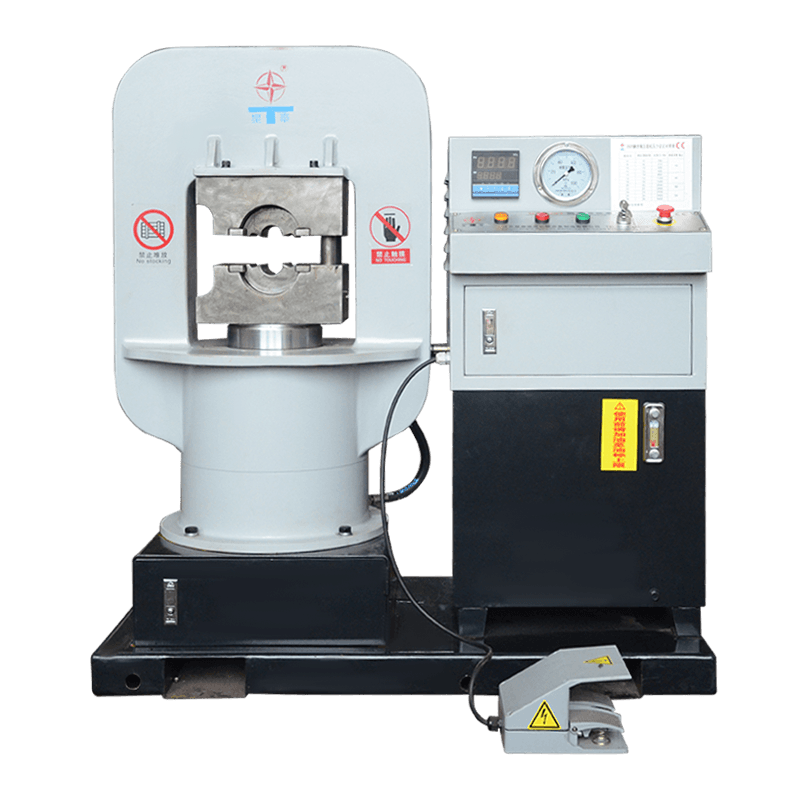
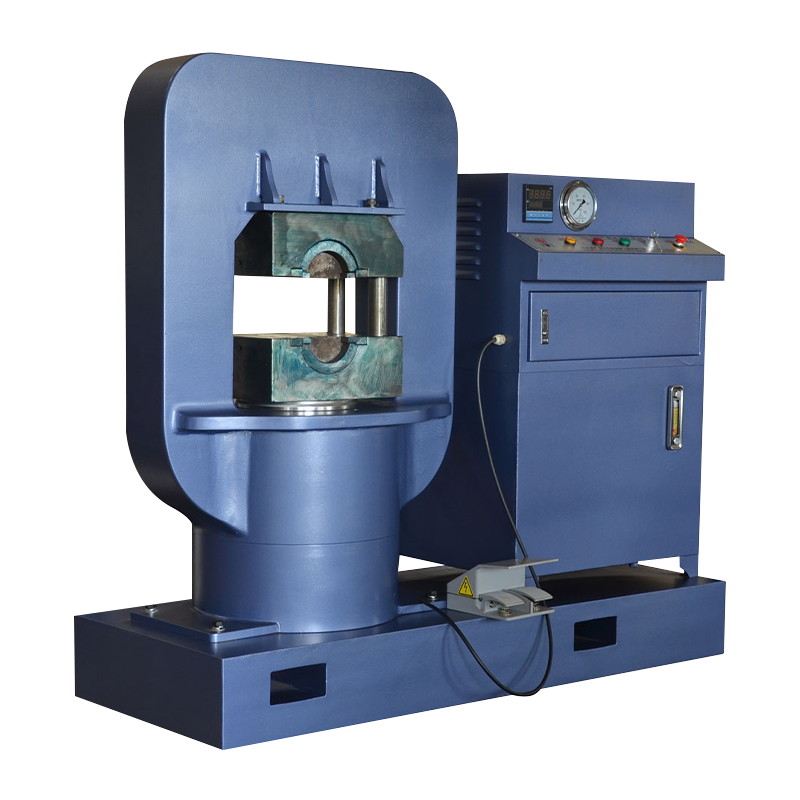
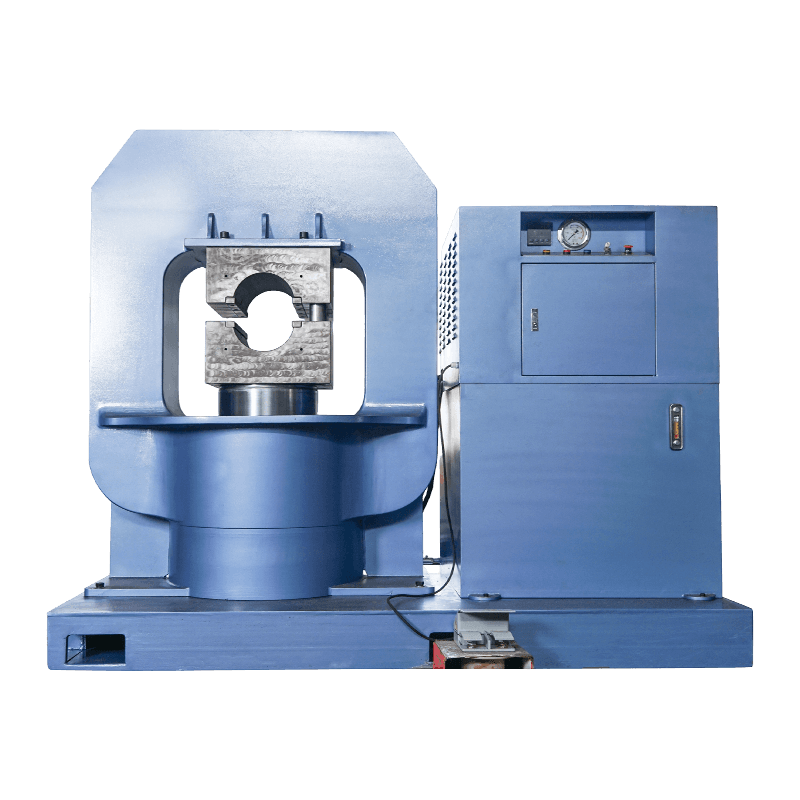
A typical hydraulic wire rope press is built around four functional groups: the frame and body, the hydraulic power unit, the die set, and the control system. The frame is often manufactured as a single forged or cast block rather than a welded assembly, because a monolithic body resists deformation under repeated high-tonnage cycles and extends the working life of the machine. The dies themselves are precision-machined from hardened tool steel, since they must repeatedly withstand concentrated pressure without losing dimensional accuracy.
The hydraulic circuit is where most of the performance difference between machines becomes visible. A dual-pump, high-low pressure oil supply system allows the ram to advance quickly during the non-load phase, then automatically shift to a lower-speed, higher-force phase once the dies contact the sleeve. This two-stage behavior reduces idle time between cycles while still allowing the operator, or the automatic pressure switch, to hold precise control during the actual pressing moment. Publicly available industry engineering documentation for this class of equipment typically lists working pressures in the range of roughly 28 to 70 MPa, depending on machine tonnage and die configuration.
Typical Working Sequence
- The sleeve is threaded onto the rope end and positioned inside the open dies.
- The operator engages the foot pedal or control panel, sending the ram forward at rapid approach speed.
- On contact, the system transitions to high-pressure mode, compressing the sleeve to the specified diameter.
- A pressure-relief or automatic return function retracts the ram once target force is reached.
- The finished assembly is inspected against the required post-swage diameter tolerance.
Capacity Tiers: Matching a Wire Rope Machine to Rope Diameter
Equipment in this category is generally organized into capacity tiers rather than a single universal size, because a machine built for thin aircraft cable serves a different job than one built for large mooring or crane rope. Publicly documented equipment specifications across the wire rope rigging industry commonly describe a working span from portable units suited to a few millimeters of rope diameter up to heavy press lines rated at several thousand kilonewtons of force. The chart below groups this range into three illustrative tiers to make the relationship between rope diameter and required press tonnage easier to visualize.
In the small tier, lightweight pneumatic swaging tools for wire rope or compact hydraulic units cover cable and thin rope work, where portability and quick setup matter more than raw tonnage. The medium tier is where most fixed-installation wire rope swager equipment operates, covering the diameter range used in general rigging, elevator suspension, and lifting sling manufacturing. The large tier represents heavy press lines built for thick mooring, marine, or mining rope, where the die set and frame must handle proportionally higher clamping force. As rope diameter increases, the required press tonnage does not scale linearly, since larger sleeves need both greater force and longer die travel to achieve full compaction. This is one reason equipment selection should start from the intended rope diameter range rather than from tonnage alone, and it is why many manufacturers offer interchangeable die sets on a single frame to extend the usable range of one machine.
Pneumatic Swaging Tools for Wire Rope vs Hydraulic Press Systems
Choosing between a pneumatic and a hydraulic wire rope machine depends primarily on production volume, rope diameter, and site conditions. Pneumatic units are generally lighter, easier to move between job sites, and require only a compressed air supply rather than a dedicated hydraulic power pack. Hydraulic units, on the other hand, generate substantially higher and more consistent clamping force, which becomes necessary once rope diameter or sleeve wall thickness increases beyond what compressed air alone can reliably compress.
| Factor | Pneumatic Swaging Tools | Hydraulic Wire Rope Press |
|---|---|---|
| Typical rope range | Thin cable to small diameter rope | Small to large diameter rope |
| Portability | High, field-friendly | Lower, workshop-based |
| Force consistency | Adequate for light duty | High, repeatable under load |
| Best-suited use | Field repair, low-volume work | Continuous production, rigging manufacturing |
Neither format is universally superior; the correct choice depends on the assembly being produced. Workshops that manufacture swaging tools for wire rope output at scale generally standardize on hydraulic press lines because of the tonnage headroom and die-change flexibility, while field service technicians often keep a pneumatic unit on hand for on-site repairs.
Pressing Cycle Behavior: Why Dual-Pressure Hydraulics Matter
One of the more meaningful engineering differences between wire rope press designs is whether the hydraulic system uses a single pump or a dual-pressure pump arrangement. In a dual-pump layout, a high-flow, low-pressure pump drives the ram quickly through the empty travel distance, then disengages once resistance is detected, handing control to a low-flow, high-pressure pump for the actual compression phase. The chart below is a conceptual illustration, not a measured data log, showing how ram speed and pressure typically relate to each other across a single pressing cycle in this type of system.
Read left to right, the curve shows ram speed starting high while the dies are still open and no resistance is present, then dropping sharply once the sleeve makes contact and the system shifts into its pressing phase. Pressure behaves in the opposite direction, remaining low during the fast approach and rising once the ram engages the workpiece, reaching its working maximum during the compaction stage. This inverse relationship is precisely what a hydraulic wire rope press is engineered to produce, since combining fast approach with controlled, high-force compression is what shortens overall cycle time without compromising die accuracy. Machines lacking this dual-stage behavior tend to move at a single speed throughout, which either wastes cycle time during the empty stroke or risks an uncontrolled, high-speed impact when the dies meet the sleeve. In practice, this is one of the specification points worth asking about when comparing different wire rope swage equipment, alongside tonnage and die compatibility.
Where Wire Rope Swaging Equipment Is Typically Used
Swaged wire rope terminations appear across a wide range of load-bearing applications, from construction hoisting to marine mooring lines. The illustrative breakdown below is intended to show relative emphasis across common application groups rather than an exact statistical share of any specific market, since no single verified industry census covers every regional segment equally.
Construction and general rigging work tends to represent the largest single share, since crane slings, tie-downs, and structural cable assemblies are produced continuously across the building and infrastructure sector. Marine and mooring applications follow closely, where corrosion-resistant sleeves and larger diameter rope demand higher tonnage press equipment. Elevator and vertical lifting applications require tightly controlled swage diameters because passenger safety codes typically specify strict tolerance and inspection requirements for suspension rope terminations. Mining and bulk material handling round out the picture, often using heavier gauge rope subject to abrasive conditions, which places extra emphasis on die durability and consistent compaction quality. Recognizing which application category a given production run falls into helps determine both the required press tonnage and the die tooling needed for that specific wire rope swage job.
Operating Comfort and Efficiency Benchmarks
Beyond raw tonnage, day-to-day usability factors such as noise level and pressing consistency influence how a shop floor experiences a given wire rope machine over an eight-hour shift. Industrial noise exposure guidelines commonly reference roughly 70 decibels as a comfort benchmark for sustained workplace exposure, and well-engineered hydraulic swaging equipment is generally designed with sealed pump housings and vibration-dampened mounts to work toward that target. The gauge below represents this benchmark conceptually, illustrating how a well-maintained system compares to that general reference point rather than reporting a measured reading from a specific machine.
A quieter machine is not simply a workplace comfort feature; it is often a secondary indicator of well-fitted hydraulic seals, properly cooled oil, and a stable pump, since worn components tend to introduce cavitation noise and vibration before they produce visible performance loss. Operators working an extended shift on a wire rope swager that runs closer to the comfort benchmark generally experience less fatigue, which can support more consistent attention to die alignment and post-swage inspection. This is one reason noise performance is increasingly listed alongside tonnage and pressure specifications when evaluating equipment for a production floor. It is also worth noting that ambient noise readings vary with mounting surface, enclosure, and facility acoustics, so any single benchmark should be treated as a general reference rather than a guaranteed outcome for every installation. Routine maintenance of seals and hydraulic oil condition remains the most practical way to keep a machine operating near its intended acoustic and pressure performance over its service life.
Maintenance Practices That Protect Swaging Tools for Wire Rope
Consistent maintenance is what keeps a hydraulic press producing repeatable swage diameters over years of use rather than gradually drifting out of tolerance. The list below reflects general hydraulic equipment maintenance practice rather than instructions specific to any single machine model.
- Check hydraulic oil level and condition on a defined schedule, replacing filters as contamination indicators suggest.
- Inspect seals around the ram and cylinder for early signs of weeping, which usually precedes pressure loss.
- Verify die alignment and surface wear before each production run, since worn dies compromise final sleeve diameter.
- Confirm the pressure gauge or electric contact control is reading accurately against a known calibration reference.
- Keep the frame and moving components free of debris that could interfere with full die closure.
Treating maintenance as a scheduled activity rather than a reactive one tends to reduce unplanned downtime and helps ensure every finished assembly produced by a wire rope machine meets its intended specification.
About Jiangsu Xingtai Hydraulic Manufacturing Co., Ltd.
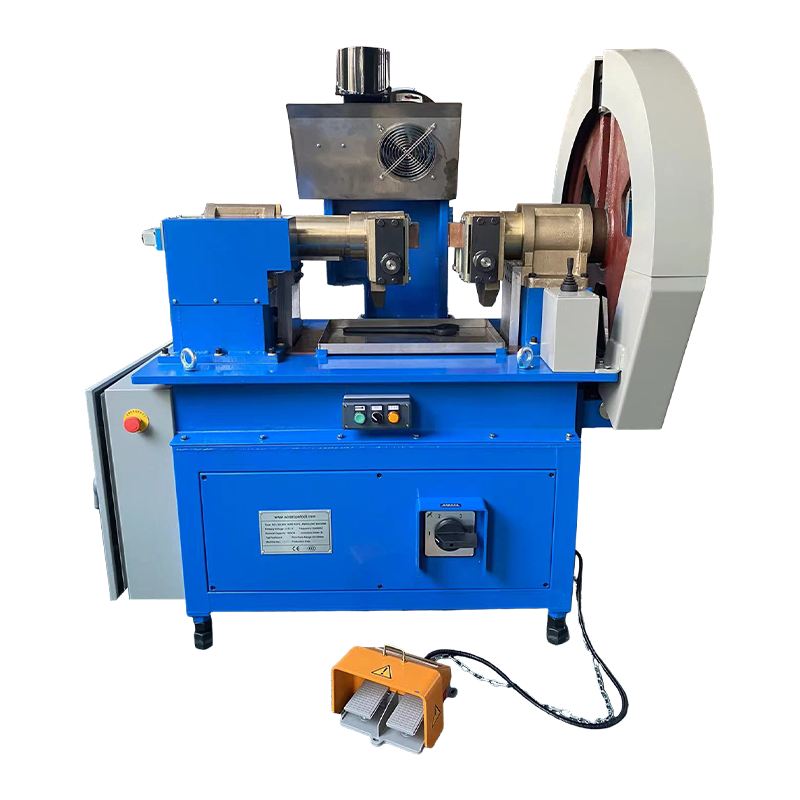
Jiangsu Xingtai Hydraulic Manufacturing Co., Ltd. was founded in 1992 and is located in Taizhou City, Jiangsu Province, China. The company specializes in manufacturing hydraulic wire rope pressing machines, wire rope annealing and tapering machines, aluminum sleeves, and lifting clamps. Xingtai Hydraulic is equipped with advanced production facilities, strong technical capabilities, authoritative testing equipment, and a comprehensive quality management system.
The swaging components of Xingtai Hydraulic machines are forged from high-strength alloy steel. The machine body is manufactured from a single block of material, ensuring structural integrity and long service life. Our hydraulic systems utilize a dual-pressure pump oil supply system, which enables fast upward and downward movement while ensuring a smooth pressing process. This design significantly improves pressing quality and production efficiency.
Xingtai Hydraulic machines have been exported to numerous countries, including the UK, Australia, the Netherlands, Latvia, Malaysia, Thailand, India, Russia, Botswana, Poland, and others.
Guided by the philosophy of high quality, competitive value, and lasting commitment, we strive to meet our customers' needs and provide them with attentive service. We remain dedicated to serving both existing and new clients as we work together toward a successful future.
Frequently Asked Questions
Q1: What is the difference between a wire rope swage and a mechanical clamp connection?
A swage compresses a sleeve permanently around the rope end using controlled pressure, forming a fixed, non-adjustable termination. A mechanical clamp, by contrast, uses fasteners that can be tightened or removed, which typically makes it suited to temporary or field-adjustable connections rather than permanent load-bearing assemblies.
Q2: Can pneumatic swaging tools for wire rope handle the same diameter range as a hydraulic press?
Generally not. Pneumatic tools are well suited to thinner cable and smaller rope diameters, while larger diameter rope typically requires the higher and more consistent clamping force produced by a hydraulic wire rope press system.
Q3: Why does die alignment matter so much for swaging quality?
If dies are misaligned or worn, the finished sleeve diameter can be inconsistent, which affects how evenly load is distributed across the compressed section. Regular inspection of die surfaces helps maintain the intended termination strength across every assembly produced.
Q4: How often should hydraulic oil be checked on a wire rope swager?
This depends on production volume and operating environment, but a defined inspection interval, rather than a reactive one, is the general practice recommended for hydraulic equipment to catch contamination or seal wear before it affects pressing consistency.
Q5: What should be evaluated before selecting a wire rope machine for a production line?
Key factors include the rope diameter range to be processed, required press tonnage, die interchangeability, hydraulic system design such as dual-pressure pumping, and the availability of technical support for ongoing maintenance.

If you require custom hydraulic equipment or technical consultation, please feel free to contact the Xingtai Sales and Engineering Team.
-
 +86-523-86934677
+86-15896002505 -
 [email protected]
-
 +86-15896002505
-
 No. 3 Longgang Road, Gaogang Port Street, Taizhou City, China.
Copyright © Jiangsu Xingtai Hydraulic Manufacturing Co., Ltd. All Rights Reserved. Custom hydraulic machinery manufacturers Wholesale wire rope swagers Factory

