 English
 русский
 Français
 Español
 Português
 Deutsch
 عربى
عربى Türk
Türk
Content
- 1 Wire Rope Processing Accessories Turn A Plain Steel Cable Into A Reliable Load Bearing Assembly
- 2 Aluminium Hourglass Sleeves And Aluminum Ferrules Under DIN 3093
- 3 Flemish Eye Splicing With Steel Ferrules
- 4 Steel Wire Rope Swage Terminals And Wire Rope Thimbles
- 5 Comparing Termination Methods Across Practical Factors
- 6 Sleeve And Rope Diameter Compatibility Trend
- 7 DIN 3093 Reference Overview For Aluminum Sleeves And Ferrules
- 8 Isometric Structure View Of A Swaged Sleeve And Thimble Assembly
- 9 About Jiangsu Xingtai Hydraulic Manufacturing Co Ltd
- 10 Frequently Asked Questions
Wire Rope Processing Accessories Turn A Plain Steel Cable Into A Reliable Load Bearing Assembly
Wire rope processing accessories, including aluminium hourglass sleeves, aluminum ferrules, steel ferrules, swage terminals, and wire rope thimbles, are the components that convert a length of raw wire rope into a finished termination system ready for lifting, rigging, or structural use. These termination systems accessories work together at the end of the rope, where the load is transferred from the cable into a fitting, an eye, or a connection point, and where a poorly formed termination is far more likely to fail than the rope body itself. An aluminium hourglass sleeve or aluminum ferrule made to a reference such as DIN 3093 is swaged over two overlapping rope legs to form a compression joint, while a steel ferrule finishing a Flemish eye splice reinforces a pre spliced eye rather than relying on compression alone. Wire rope thimbles are then fitted inside the eye to protect the rope fibers or wires from being pinched or worn against a pin, shackle, or hook. Choosing the correct combination of sleeve, ferrule, and thimble for a given rope diameter and application is the single most important factor in building a durable wire rope termination. The sections below look at how each accessory functions, how they compare, and where dimensional references like DIN 3093 fit into rope end preparation.
Aluminium Hourglass Sleeves And Aluminum Ferrules Under DIN 3093
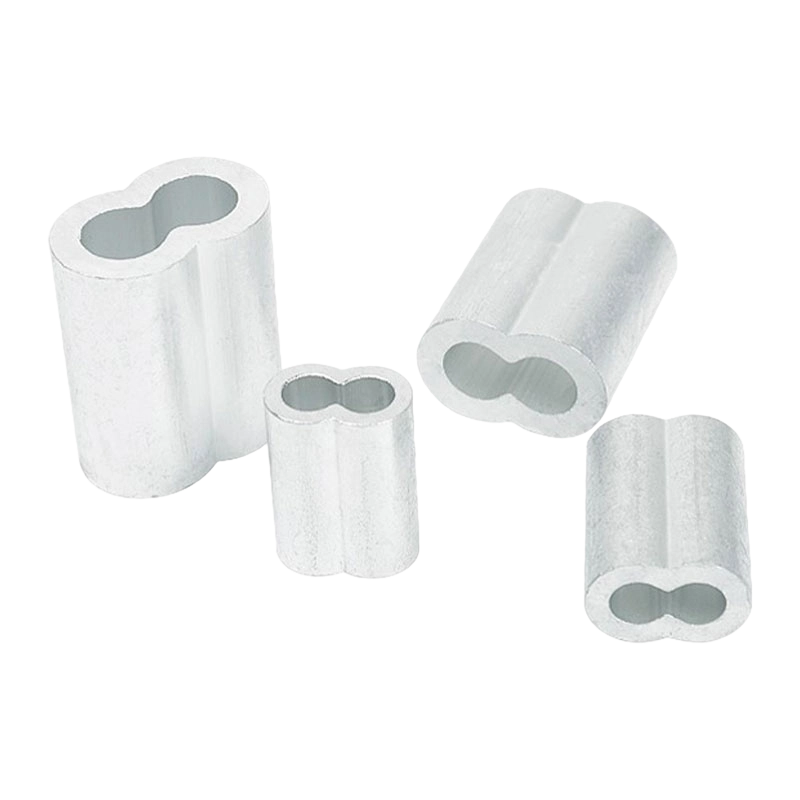
An aluminium hourglass sleeve, also referred to as an aluminum ferrule or aluminum sleeve, gets its name from the pinched hourglass profile that forms once the sleeve is compressed over two overlapping sections of wire rope in a hydraulic press. DIN 3093 is a widely referenced dimensional standard for these oval and hourglass shaped aluminum sleeves, giving processors a common set of bore diameters, lengths, and press tonnage guidance across different rope sizes. Because aluminum is softer than the surrounding steel wire rope, the sleeve material flows into the gaps between the outer wires during pressing, which is what creates the mechanical grip that holds the two rope legs together. This swaging method is widely used for wire rope slings, tie downs, and general lifting assemblies because it forms a compact, relatively low profile termination compared with some spliced alternatives. Correct sleeve selection depends on matching the sleeve bore and length to the exact rope diameter and construction being terminated, since an undersized or oversized sleeve reduces the effectiveness of the compression joint.
Key Factors In Aluminum Sleeve Selection
- Rope diameter and construction, since sleeve bore must match the rope being terminated.
- Sleeve length, which determines how much overlap area is available for compression.
- Press tonnage and die profile matched to the sleeve reference dimensions.
- Number of presses specified for the sleeve length, applied in the correct sequence.
- Visual inspection of the finished hourglass profile for uniform, complete compression.
Flemish Eye Splicing With Steel Ferrules
A Flemish eye is formed by unlaying the strands at the end of the wire rope, dividing them into two groups, and relaying them back around a thimble or mandrel to form a self locking eye shape before a steel ferrule is pressed over the joint to hold the tucked strands in place. This method differs from a straight aluminum sleeve termination because part of the load path is carried by the mechanical interlock of the splice itself, with the steel ferrule adding additional compression and protecting the tucked ends from unraveling. Flemish eye terminations with steel ferrules are commonly specified for heavier duty rigging and structural wire rope assemblies where a robust, inspectable eye is required. Because the splice itself contributes to load transfer, a correctly formed Flemish eye can behave differently under load compared with a purely compression based aluminum sleeve termination of similar rope size. Selecting between an aluminum sleeve termination and a Flemish eye with steel ferrule generally comes down to the expected duty cycle, inspection requirements, and the specific rigging standard governing the application.
Steel Wire Rope Swage Terminals And Wire Rope Thimbles
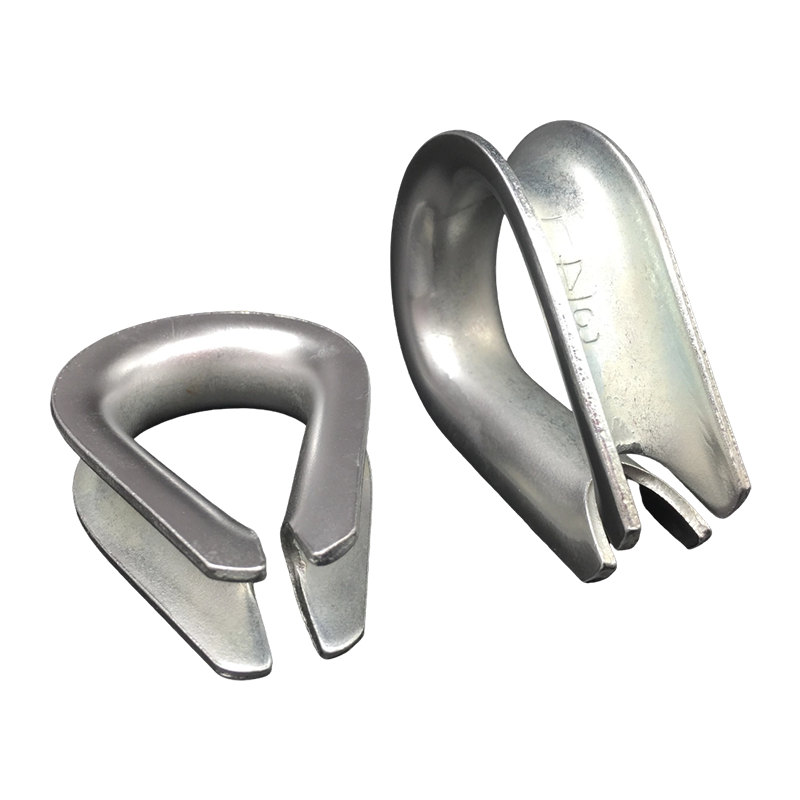
Steel wire rope swage terminals are solid steel fittings, such as swage sockets, studs, or forks, that are pressed directly onto the end of a wire rope in a hydraulic swaging machine to form a permanent, high strength connection point. Unlike a sleeve that joins two rope legs together, a swage terminal typically joins the rope end to a threaded stud, eye, or fork designed to connect directly into rigging hardware, which can simplify the overall assembly compared with a spliced eye plus separate connector. Wire rope thimbles, meanwhile, are shaped metal inserts fitted inside a formed eye, whether that eye is created by a Flemish splice or an aluminum sleeve loop, to maintain the eye shape and prevent the rope from being crushed or abraded against a pin or shackle body. Using a correctly sized thimble inside a rope eye is a straightforward way to extend the working life of the termination by keeping the load bearing surface rounded and evenly distributed. Together, swage terminals and thimbles round out a wire rope processing accessory lineup that covers both direct hardware connections and protected eye terminations.
This donut chart presents an illustrative breakdown of how different wire rope termination types are generally distributed across typical rigging and lifting work, based on common industry practice rather than a single verified survey. Aluminum sleeve terminations make up the largest illustrative share because they are widely used across general purpose slings and tie down assemblies where a compact, efficient termination is preferred. Swage terminals follow closely, reflecting their common use wherever a direct threaded or hardware connection is required at the rope end. Flemish eye terminations with steel ferrules represent a smaller but still significant portion, consistent with their more frequent use in heavier duty or structural rigging applications. The remaining share covers other thimble based assemblies, which appear across nearly every termination type as a protective component rather than as a standalone category. As with any general industry pattern, actual proportions vary by region, rope size range, and end use, so this chart should be read as a general orientation rather than a precise statistic.
Comparing Termination Methods Across Practical Factors
Choosing among an aluminum sleeve termination, a Flemish eye with steel ferrule, and a steel swage terminal generally involves weighing installation speed, inspection ease, load capacity, and how each method behaves under repeated cyclic loading. Aluminum sleeve terminations tend to be quick to install once the correct press and die combination is set up, which supports higher throughput on production style rope shops. Flemish eye splices require more skilled labor to unlay and relay the strands before the steel ferrule is pressed, but many rigging standards recognize the resulting eye as a well proven, inspectable termination. Steel swage terminals concentrate the connection into a single solid fitting, which can simplify downstream hardware selection since many terminals are produced with a standard thread or clevis interface. None of these methods is universally superior, and the right choice depends on the governing rigging code, the rope construction, and the specific service conditions of the assembly.
This radar chart illustrates general practical tradeoffs between an aluminum sleeve termination and a Flemish eye finished with a steel ferrule across five factors relevant to rope shop and rigging decisions. Aluminum sleeve terminations generally score higher on installation speed and assembly compactness because the swaging process is quicker to perform and produces a lower profile fitting than a hand spliced eye. Flemish eye terminations with steel ferrules tend to score well on inspection ease, since the visible splice pattern combined with the ferrule allows a trained inspector to check strand tuck quality alongside the compression joint. Load capacity for both methods depends heavily on correct sizing and installation technique rather than on the termination family alone, which is why the two lines sit relatively close together on that axis in this illustration. Corrosion resistance in this comparison is driven mainly by the specific ferrule or sleeve material and finish selected, rather than by the termination method itself. As with the earlier chart, these values are illustrative and are intended to support general planning rather than to replace testing or the requirements of a specific rigging standard.
Sleeve And Rope Diameter Compatibility Trend
As wire rope diameter increases, the corresponding aluminum sleeve or ferrule bore and length generally increase as well, since the sleeve must fully enclose two overlapping rope legs of the larger diameter to develop an effective compression joint. This relationship is documented in reference tables associated with standards such as DIN 3093, which list matching sleeve dimensions and recommended press tonnage for a range of common rope diameters. The relative increase in required press tonnage tends to grow faster than the rope diameter itself, because larger sleeves require the aluminum material to flow around a proportionally larger cross section of steel wires during compression. This is one reason rope processors maintain calibrated presses and dies matched to specific sleeve size ranges rather than using a single press setting across all rope diameters. The chart below presents a general illustrative trend rather than a certified press setting table for any specific sleeve product.
The chart shows a general upward trend in relative press tonnage as rope diameter increases from 6mm through 26mm, which reflects the larger volume of aluminum material that must be compressed around a thicker rope cross section. The curve rises gradually at smaller diameters, where sleeve sizes and press requirements change in smaller increments between adjacent rope sizes. At larger diameters, the trend continues upward and the increments between sizes tend to become more pronounced, consistent with the greater material volume involved in bigger sleeves. This general pattern explains why rope processing shops typically maintain a range of dies and reference tonnage settings rather than relying on a single press configuration for all rope sizes. Operators should always confirm actual press tonnage and sleeve dimensions against the current manufacturer specification sheet and the relevant standard rather than relying on a general trend line alone.
DIN 3093 Reference Overview For Aluminum Sleeves And Ferrules
DIN 3093 is a widely referenced dimensional standard covering oval and hourglass shaped aluminum sleeves used for wire rope termination, giving processors and buyers a common framework for bore diameter, sleeve length, and general application range across different rope sizes. Referencing a recognized standard such as DIN 3093 allows buyers to compare aluminum ferrules and hourglass sleeves from different sources using consistent dimensional expectations rather than relying solely on a single supplier catalog. The table below summarizes general category information relevant to wire rope processing accessories associated with this type of reference standard, and it should be read alongside a current copy of the standard and the manufacturer specification sheet for exact tolerances.
| Category | Typical Material | Termination Method | General Use Case |
|---|---|---|---|
| Aluminium Hourglass Sleeve | Aluminum Alloy | Hydraulic Compression Swaging | General lifting slings and tie down assemblies |
| Aluminum Ferrule DIN 3093 | Aluminum Alloy | Hydraulic Compression Swaging | General wire rope loop and eye termination |
| Flemish Eye Steel Ferrule | Steel | Spliced Eye Plus Compression | Heavier duty rigging and structural assemblies |
| Steel Wire Rope Swage Terminal | Steel | Direct Rope End Swaging | Direct hardware connection points |
| Wire Rope Thimble | Steel | Fitted Inside Formed Eye | Protecting rope eyes from wear and crushing |
Isometric Structure View Of A Swaged Sleeve And Thimble Assembly
The isometric diagram below outlines the general structure of a wire rope eye termination formed with an aluminum sleeve compressed over two overlapping rope legs, with a wire rope thimble fitted inside the resulting loop to preserve its shape. The compressed hourglass sleeve is shown gripping both rope legs after swaging, which is the feature primarily responsible for transferring load between the two overlapping sections of rope. The thimble sits inside the eye, providing a rounded bearing surface that keeps the rope from being pinched or worn against a shackle pin or hook body during use. The rope legs extend outward from the sleeve on one side and curve into the eye around the thimble on the other, illustrating how the two accessories work together as a complete termination. Viewing the assembly in this simplified three dimensional form helps clarify how the sleeve and thimble serve two distinct but complementary functions within the same wire rope termination.
This isometric SVG illustration is a simplified representation intended to communicate function rather than to serve as a manufacturing drawing. The rounded thimble shape shown inside the eye represents the general profile used to support the rope and distribute load evenly around the bend. The rectangular sleeve on the right represents the compressed aluminum ferrule after swaging, shown with a simplified center line to suggest the hourglass profile without a fully detailed die impression. The two rope legs extending from the sleeve and looping around the thimble illustrate how the finished assembly forms a complete, load bearing termination. Actual product drawings, tolerances, and press schedules should always be obtained from the current specification sheet for the specific sleeve, ferrule, or thimble size and rope construction being used.
About Jiangsu Xingtai Hydraulic Manufacturing Co Ltd
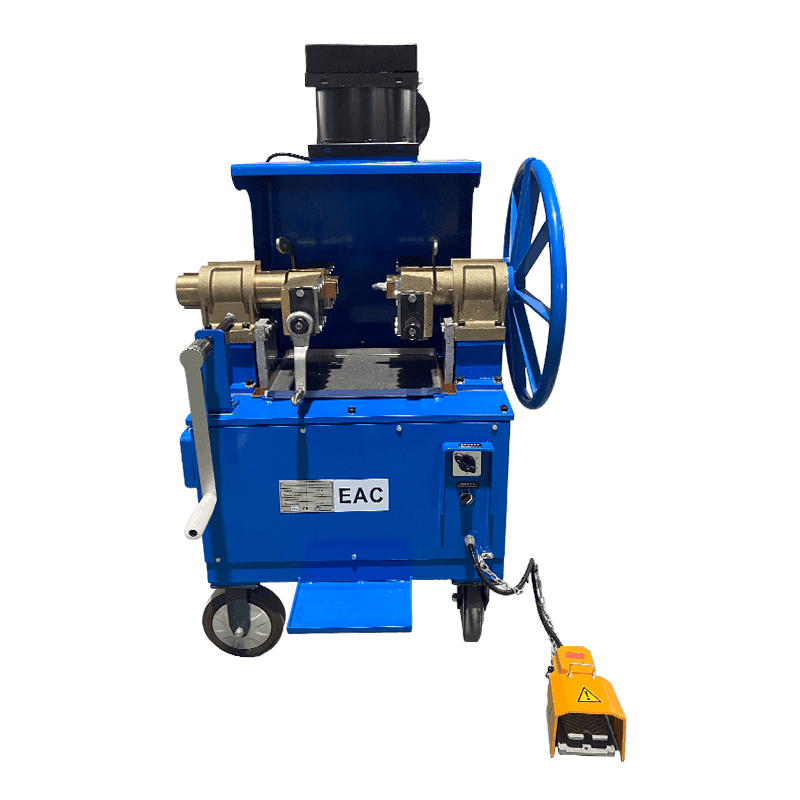
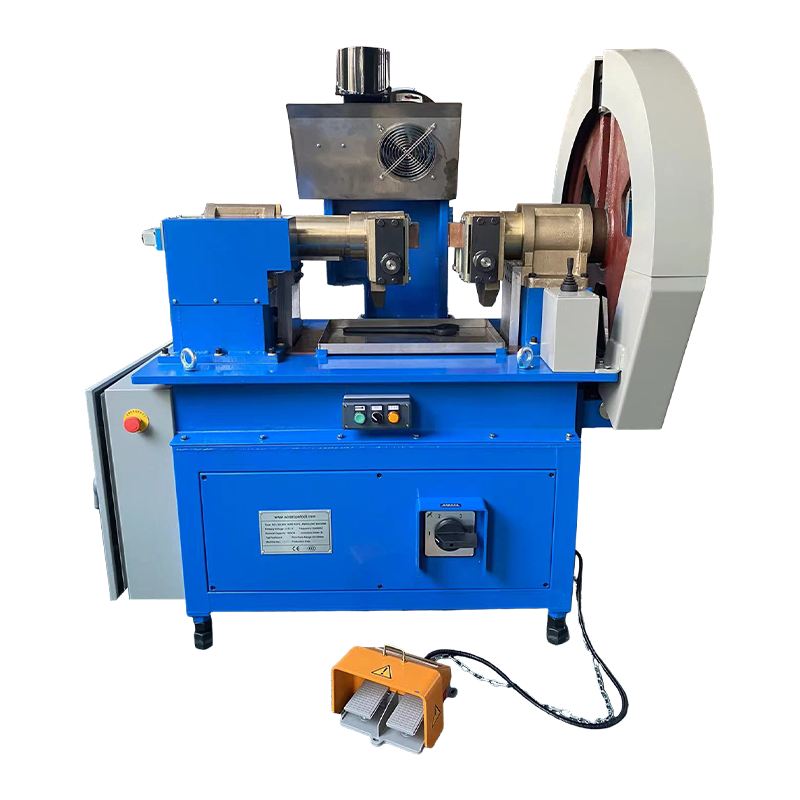
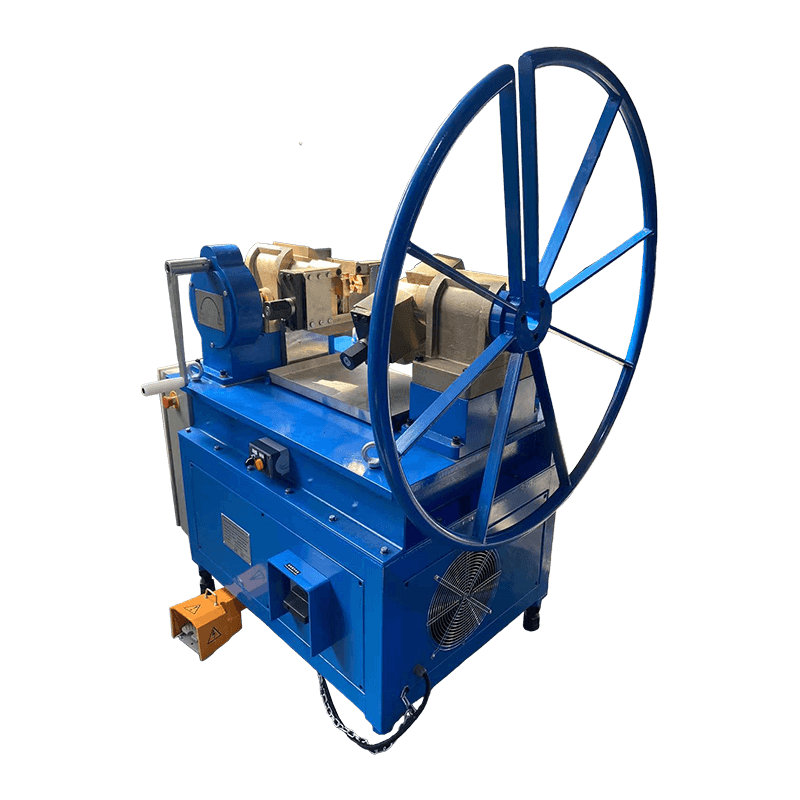
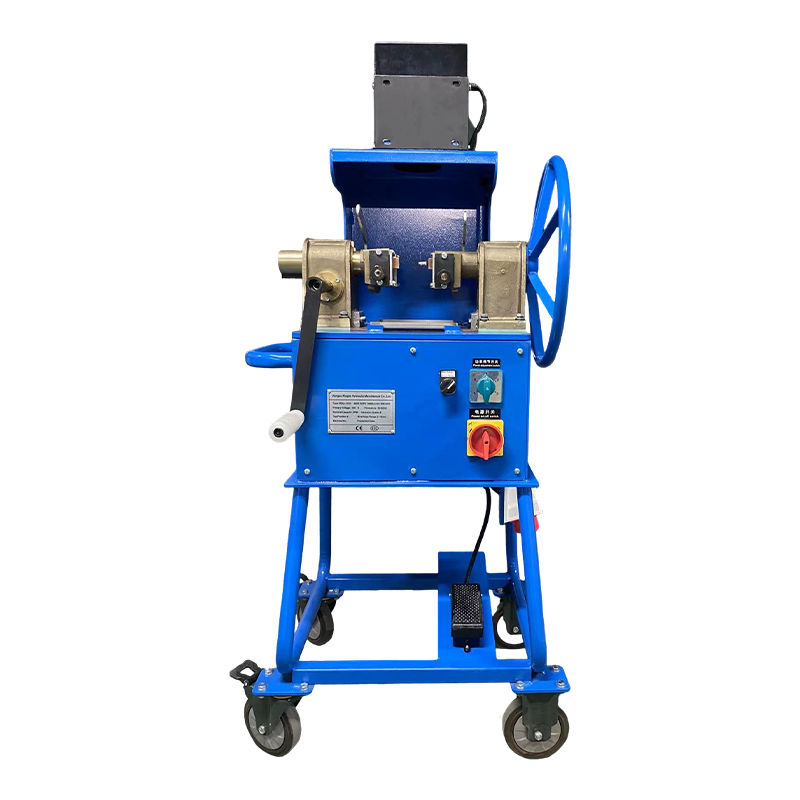
Jiangsu Xingtai Hydraulic Manufacturing Co., Ltd. was founded in 1992 and is located in Taizhou City, Jiangsu Province, China. The company specializes in manufacturing hydraulic wire rope pressing machines, wire rope annealing and tapering machines, aluminum sleeves, and lifting clamps, placing it directly in the supply chain for wire rope processing accessories and termination systems accessories described throughout this article. Xingtai Hydraulic is equipped with advanced production facilities, strong technical capabilities, authoritative testing equipment, and a comprehensive quality management system. The swaging components used in Xingtai Hydraulic machines are forged from high strength alloy steel, and the machine body is manufactured from a single block of material, supporting structural integrity and long service life. The hydraulic systems used in these machines utilize a dual pressure pump oil supply system, enabling fast upward and downward movement while maintaining a smooth pressing process, which supports consistent pressing quality and production efficiency when forming aluminium hourglass sleeves, aluminum ferrules, and related terminations. Xingtai Hydraulic machines have been exported to numerous countries, including the United Kingdom, Australia, the Netherlands, Latvia, Malaysia, Thailand, India, Russia, Botswana, and Poland, among others, reflecting a broad base of international customers relying on this equipment for wire rope processing work.
Frequently Asked Questions
Q1: What is the difference between an aluminium hourglass sleeve and a Flemish eye steel ferrule.
A1: An aluminium hourglass sleeve joins two overlapping rope legs through compression swaging alone, while a Flemish eye steel ferrule reinforces a pre spliced eye where the strands themselves are unlaid and relaid before the ferrule is pressed.
Q2: What does DIN 3093 cover.
A2: DIN 3093 is a dimensional reference standard for oval and hourglass shaped aluminum sleeves used in wire rope termination, providing common bore diameter and length guidance across a range of rope sizes.
Q3: Why is a wire rope thimble used inside a rope eye.
A3: A wire rope thimble maintains the shape of the eye and provides a rounded bearing surface that protects the rope from being crushed or worn against a pin, shackle, or hook.
Q4: When is a steel swage terminal preferred over a sleeve or splice.
A4: A steel swage terminal is often preferred when the rope end needs to connect directly to threaded hardware or a clevis fitting, since the terminal integrates the connection point into a single solid fitting rather than a separate eye and hardware combination.
Q5: What equipment is used to form these terminations.
A5: Aluminum sleeves, ferrules, and steel swage terminals are formed using hydraulic wire rope pressing machines matched to the specific sleeve, ferrule, or terminal dimensions and the rope construction being processed.

If you require custom hydraulic equipment or technical consultation, please feel free to contact the Xingtai Sales and Engineering Team.
-
 +86-523-86934677
+86-15896002505 -
 [email protected]
-
 +86-15896002505
-
 No. 3 Longgang Road, Gaogang Port Street, Taizhou City, China.
Copyright © Jiangsu Xingtai Hydraulic Manufacturing Co., Ltd. All Rights Reserved. Custom hydraulic machinery manufacturers Wholesale wire rope swagers Factory

