 English
 русский
 Français
 Español
 Português
 Deutsch
 عربى
عربى Türk
Türk
Content
- 1 Common Types and Key Features of a Wire Rope Annealing Machine
- 2 Working Principle and Structure of a Wire Rope Annealing Machine
- 3 Typical Heating Time by Wire Rope Diameter
- 4 Applications and Selection Guide for Wire Rope Annealing Machine Manufacturers
- 5 Temperature Profile During a Single Annealing Cycle
- 6 Where Annealing Machines Are Used Across the Wire Rope Industry
- 7 Detailed Comparison: Recommended Power Setting by Rope Diameter
- 8 Maintenance Guidance for a Wire Rope Annealing Machine
- 9 Choosing a Reliable Wire Rope Annealing Machine Manufacturer
- 10 Frequently Asked Questions About Wire Rope Annealing Machines
- 10.1 Q1: What does a wire rope annealing machine actually do to the rope?
- 10.2 Q2: What rope diameter range can a wire rope annealing machine handle?
- 10.3 Q3: Does a wire rope annealing machine need special tools to operate?
- 10.4 Q4: Is a wire rope annealing machine safer than manual torch heating?
- 10.5 Q5: Should annealed rope ends be cooled quickly or slowly?
- 10.6 Q6: What should buyers confirm before ordering from a wire rope annealing machine manufacturer?
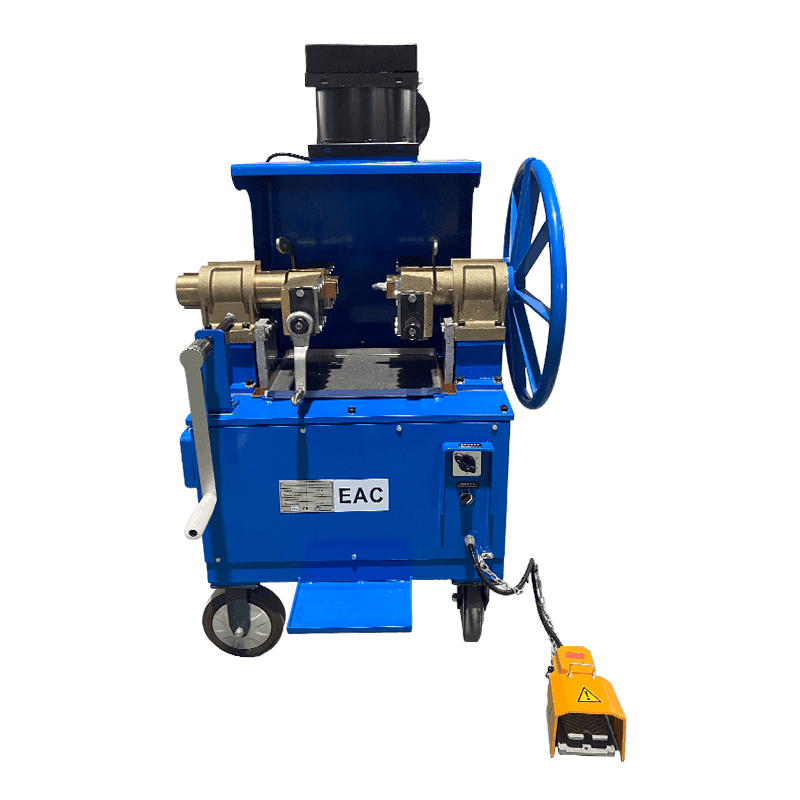
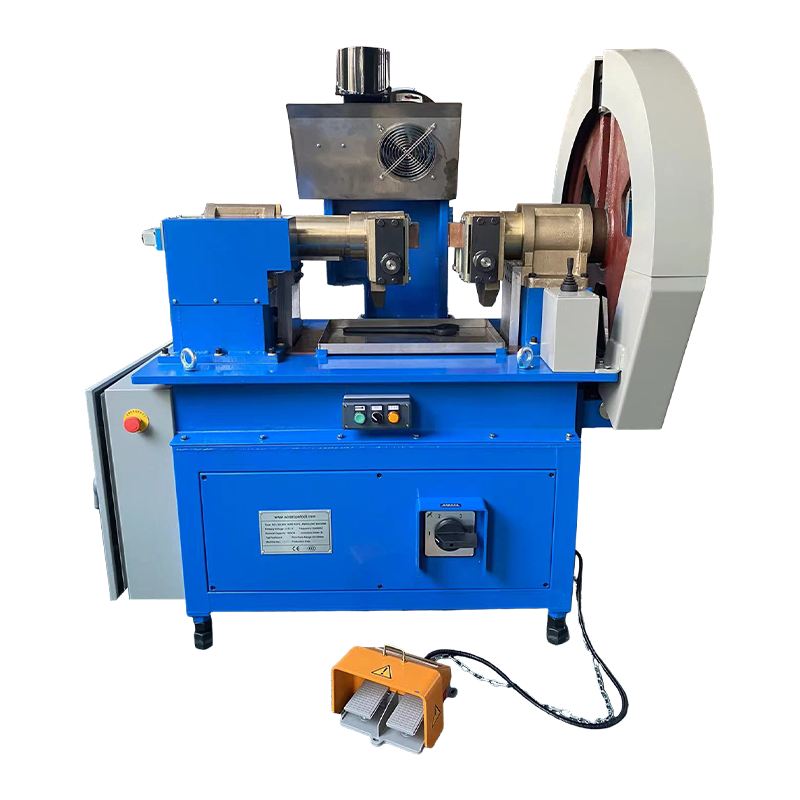
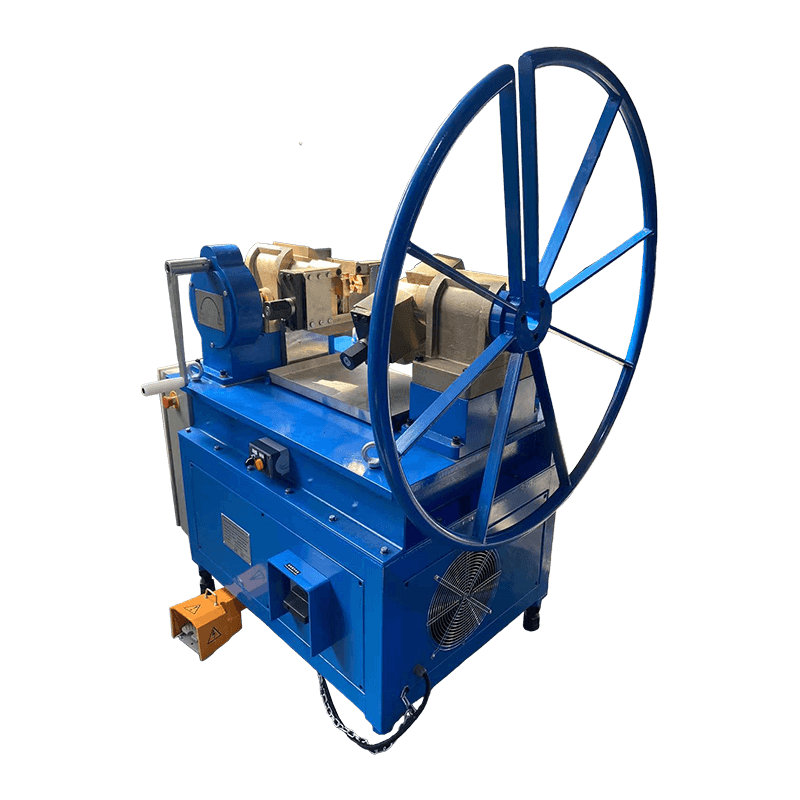
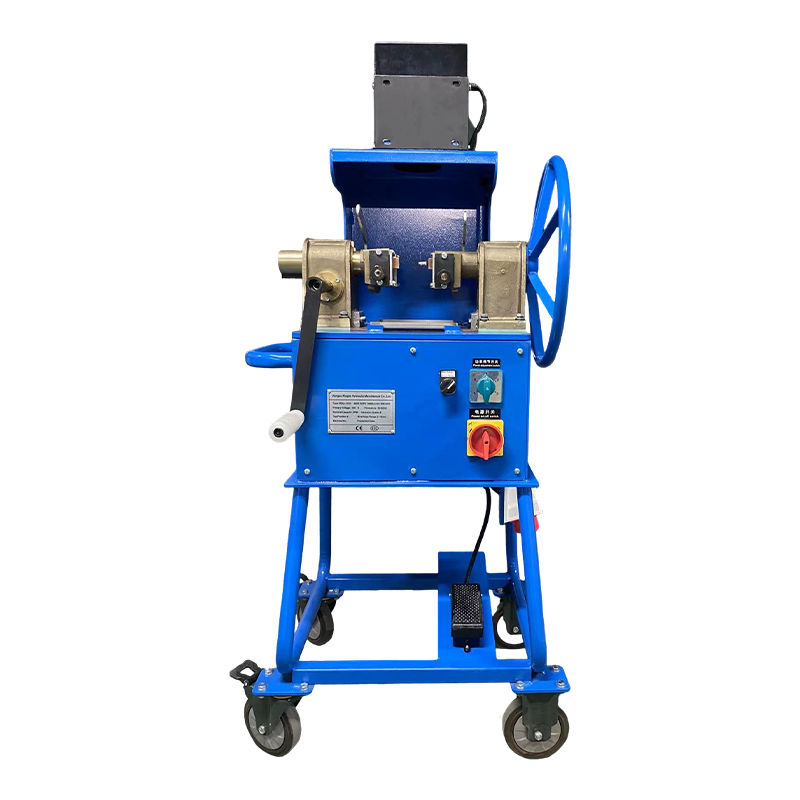
A wire rope annealing machine heats the end section of a steel wire rope to a controlled high temperature and then cools it gradually, softening the steel so the strands can be twisted into a neat, rounded, conical or spiral point instead of a loose, fraying end. This heated and shaped end is what allows the rope to be spliced, socketed, or fed into further processing without individual wires unwinding or catching. Wire rope manufacturers, port and jetty operators, elevator makers, and rigging fabricators all rely on this equipment to prepare rope ends consistently, which is why choosing the right wire rope annealing machine and understanding how it fits into a production line matters as much as choosing the press equipment used later in the process.
Common Types and Key Features of a Wire Rope Annealing Machine
Most equipment in this category falls into two broad groups. Standalone electric resistance annealing machines are dedicated units built purely to heat and soften the rope end, leaving the twisting or tapering step to be done by hand or by a separate fixture. Combined annealing and tapering machines integrate the heating stage and the shaping stage into a single workstation, so an operator can heat, twist, and finish the rope end without moving the workpiece between two separate machines. The combined design is common on higher-volume lines where reducing handling steps has a direct effect on daily output.
Within both groups, machines are further distinguished by their melting or heating diameter range. A well designed wire rope annealing machine can process a wide span of rope diameters using the same clamping electrodes, without needing to swap parts every time the diameter changes, which keeps changeover time short on mixed-diameter production runs. Operation is generally straightforward: most models are built so that no spanner or separate tool is needed to tighten the clamping device, and the welding or heating head is compact enough to fit into a normal bench or floor workstation without special ventilation infrastructure beyond standard workshop practice.
- Standalone electric resistance annealing machines: dedicated heating stage, often paired with a separate tapering fixture
- Combined annealing and tapering machines: heating and shaping in one workstation for fewer handling steps
- Wide melting diameter range: one clamping setup covers multiple rope sizes without part replacement
- Low working power draw: reduces energy cost and suits workshops with limited electrical supply
Energy efficiency is a practical selling point that is easy to overlook when comparing specification sheets. Because the heating current is applied directly to the clamped rope end rather than heating a large surrounding area, a properly sized wire rope annealing machine manufacturer can typically deliver equipment with lower working power requirements than open-flame torch heating for the same volume of finished rope ends, while also keeping the process safer since there is no open flame involved.
A wire rope annealing machine with a wide melting diameter range and tool-free clamping reduces changeover time on mixed-diameter production runs, which is often the largest hidden cost on a busy termination line.
Working Principle and Structure of a Wire Rope Annealing Machine
The process begins by clamping the end section of the wire rope firmly between two electrodes. An electric current is then passed through the clamped section, and the electrical resistance of the steel generates heat directly within the rope itself rather than from an external flame source. As the temperature rises, the wire strands soften enough to be twisted together into a smooth, rounded taper or spiral shape, which locks the outer wires against unwinding once the rope cools back down.
Heating and Clamping System
The clamping jaws and electrodes are the components that see the most repeated contact stress, so they are typically made from conductive alloy materials selected to resist wear from repeated clamping cycles. A transformer or power supply unit regulates the current delivered to the electrodes, and on most current-generation machines a control panel or timer allows the operator to set heating duration consistently rather than judging by eye, which is one of the main reasons machine-based annealing produces more uniform results than manual torch heating.
Twisting and Cooling Stage
Once the rope end reaches the target temperature, it is twisted, either manually or by an integrated mechanism on combined tapering models, while it is still soft enough to reshape but no longer at its peak heat. The rope end is then allowed to cool gradually rather than being quenched suddenly, since a controlled cooling rate helps avoid brittleness at the newly shaped tip. The finished result is a conical or spiral end that is smooth, free of loose wire ends, and ready for further processing such as splicing, socketing, or feeding into a pressing operation.
| Component | Function |
|---|---|
| Clamping electrodes | Hold the rope end firmly and conduct heating current into the steel |
| Transformer or power supply unit | Regulates and delivers the electrical current used for heating |
| Timer or control panel | Sets consistent heating duration across repeated cycles |
| Tapering or twisting fixture | Shapes the softened rope end into a conical or spiral point |
Because the heating current is applied directly through the clamped rope, a wire rope annealing machine produces a more evenly softened end than an open flame, which is the main reason the resulting taper holds its shape consistently from one rope to the next.
Typical Heating Time by Wire Rope Diameter
Cycle planning for a wire rope annealing machine usually starts with a simple question: how long does each rope diameter need to sit under heat before it is soft enough to twist. Thinner rope reaches the required softening temperature quickly because there is less steel mass to heat through, while thicker rope needs a longer, steadier heating period to soften evenly all the way through the cross section rather than just on the surface. Getting this timing right matters for both quality and throughput, since heating too briefly leaves a hard core that resists shaping cleanly, while heating too long wastes energy and can affect the surrounding rope structure. The chart below sets out general heating time expectations across a typical diameter range, intended as planning guidance rather than a fixed specification for any particular rope construction. As diameter increases, the heating time curve rises steadily, and workshops that process a wide range of diameters generally build this variation directly into their cycle time planning and staffing schedules.
The chart shows heating time roughly doubling as diameter moves through each successive size step, with the largest jump appearing between the mid-range and the largest diameter shown. This pattern reflects the basic physics of resistance heating: larger cross sections have more mass to bring up to temperature and take proportionally longer even though the current density is similar. For production planning, this means a line running mostly small diameter rope can expect fast, frequent cycles, while a line focused on larger diameter rigging rope should plan staffing and daily output targets around the longer cycle times shown toward the right of the chart. Workshops that process a mixed range of diameters within a single shift often batch similar sizes together rather than alternating randomly, since grouping reduces the number of times the operator needs to adjust timer settings on the wire rope annealing machine. It is also worth noting that ambient conditions, rope construction, and core type can shift these figures somewhat, so operators are generally trained to judge readiness by the visual glow and softness of the rope end rather than relying on the timer alone for unusual or non-standard rope constructions. Combined annealing and tapering machines can often absorb part of this cycle time difference by starting the twisting motion as soon as the rope reaches working softness, rather than waiting for a fixed timer to expire.
Applications and Selection Guide for Wire Rope Annealing Machine Manufacturers
A wire rope annealing machine is most often found wherever a rope end needs to be prepared cleanly before further processing, and the range of end users is broader than many buyers expect. Wire rope manufacturers use it as a standard finishing step on coils leaving the production line, so the cut end does not fray during transport or later handling. Ports and jetties rely on annealed and tapered rope ends for mooring lines and cargo handling equipment where a smooth, snag-free tip matters for both safety and equipment longevity. Elevator makers use the same principle to prepare suspension and governor rope ends before socketing, and general rigging fabricators use it as a preparation step ahead of splicing or pressing operations described elsewhere in this article series.
| End User | Typical Rope Range | Recommended Configuration |
|---|---|---|
| Wire rope manufacturers | Wide mixed range | Combined annealing and tapering, wide diameter range |
| Ports and jetties | 16mm to 32mm | Floor-standing unit for heavier mooring rope |
| Elevator makers | 6mm to 12mm | Compact bench unit with precise timer control |
| Rigging fabricators | 6mm to 22mm | Standalone annealing paired with existing tapering fixture |
Beyond diameter range, available electrical supply is a practical factor that is easy to overlook until installation day. Because the machine draws current through the rope itself, the available voltage and amperage at the workshop need to match the machine's power supply requirements, and export buyers in particular should confirm voltage compatibility with a wire rope annealing machine supplier before ordering rather than assuming a single standard applies everywhere. Throughput needs also matter: a workshop annealing only a handful of rope ends per day has very different requirements from one processing several hundred, and the second case usually justifies a combined annealing and tapering unit to remove a manual handling step from the cycle.
Matching rope diameter range, available electrical supply, and daily throughput is the most reliable way to select the right wire rope annealing machine configuration for a given workshop.
Temperature Profile During a Single Annealing Cycle
Understanding what happens to rope temperature during a single annealing cycle helps explain why timing and gradual cooling matter so much to the finished result. When the current is first applied, the rope end heats up quickly through the ramp phase, reaching a red-hot working temperature within the first portion of the cycle. The machine then typically holds that temperature briefly, giving the operator or the tapering fixture a stable window in which to twist the softened section into shape. After shaping, the current is reduced or cut off, and the rope end is allowed to cool gradually rather than being quenched suddenly in water or another rapid-cooling medium. This general pattern, illustrated in the chart below, is common across resistance-heating annealing equipment, though the exact timing varies with rope diameter and machine power rating as discussed in the previous section.
The shape of the area under the curve is the important detail here rather than any single number on the axis. The steep rise on the left represents the heating ramp, the flatter plateau in the middle represents the working window during which the softened rope is twisted into shape, and the long, gentle slope on the right represents the gradual cooling phase. This gradual cooling slope is deliberately shallow rather than a sudden drop, because cooling the freshly shaped steel too quickly can leave the tip more brittle than a rope end that was allowed to cool naturally in open air. The plateau in the middle of the curve is the section operators watch most closely, since twisting the rope either before it reaches full softness or after it has begun cooling again produces a less uniform shape. Combined annealing and tapering machines are often designed so that the twisting mechanism engages automatically once this plateau is detected, which removes some of the timing judgment from the operator and improves consistency across a long production run. Workshops that skip the gradual cooling phase, for example by dunking a freshly shaped rope end in water to save time, generally accept a tradeoff in finished end quality in exchange for a shorter cycle, which is not usually recommended for safety-critical rope terminations. Understanding this profile is also useful when troubleshooting inconsistent results, since a rope end that comes out too hard or too brittle often points back to either an undersized hold phase or an overly rapid cooling step rather than a fault with the wire rope annealing machine itself.
Where Annealing Machines Are Used Across the Wire Rope Industry
Looking at who actually buys and operates a wire rope annealing machine helps put the earlier application guidance into context. Wire rope manufacturers represent the largest share of demand, since annealing and tapering is a routine finishing step applied to a large proportion of coils before they leave the factory. Ports and jetties make up a meaningful secondary segment, driven by the ongoing need to prepare and replace mooring and cargo handling lines. Elevator makers form a smaller but steady segment tied closely to construction and building maintenance cycles, and general rigging fabricators fill out the remainder, often as smaller workshops preparing rope for slings and lifting assemblies on a made-to-order basis. The chart below presents this general distribution as a rough illustration of typical demand patterns across the industry rather than a precise market survey figure.
The largest segment of the ring reflects wire rope manufacturers, which makes sense given that annealing is a near-universal finishing step applied at the source before rope is even shipped to a downstream customer. Ports and jetties form the next largest segment, and this demand tends to be steady rather than seasonal, since mooring and cargo lines wear and require replacement on an ongoing maintenance cycle regardless of broader construction activity. Elevator makers occupy a smaller but consistent slice tied to building construction and modernization schedules, which can shift somewhat with regional construction cycles but rarely disappears entirely given ongoing maintenance and code-driven replacement needs. Rigging fabricators fill out the remaining segment, and this group is often the most diverse in terms of machine specification, since a small rigging shop may only need a compact bench unit while a larger fabricator supplying industrial clients may need a combined annealing and tapering machine similar to those used by rope manufacturers themselves. For a wire rope annealing machine manufacturer, this spread of end users is part of why product lines typically offer several tonnage and diameter configurations rather than a single fixed model, since a port authority and a small rigging workshop rarely have identical requirements even though both fall under the same broad equipment category.
Detailed Comparison: Recommended Power Setting by Rope Diameter
One of the most practical comparisons a new operator needs is understanding how power setting should shift as rope diameter and construction change, since applying the wrong setting is one of the most common causes of an uneven or overheated rope end. Thinner rope generally needs a lower power setting held for a shorter duration, while thicker rope needs higher power to soften the additional steel mass within a reasonable cycle time. Rope construction also plays a role, since a rope with a fiber core generally needs less aggressive heating near the core than an independent wire rope core construction of the same outer diameter. The grid below illustrates general power setting guidance across common diameter bands, intended as a starting reference that should always be confirmed against the specific machine manufacturer's documentation and the rope supplier's recommendations for a given construction.
Reading the grid from top to bottom, the darkest shaded cell shifts steadily from the low power column at the smallest diameter toward the high power column at the largest diameter, which visually confirms the same relationship described in the heating time chart earlier in this article. The lightest cells in each row indicate settings that are generally unsuitable for that diameter, either because the power is too low to soften the rope within a reasonable cycle or because it is high enough to risk overheating a smaller rope end. This kind of reference grid is particularly useful for training new operators, since it gives a quick visual starting point before they build up the experience needed to judge readiness by the glow and softness of the rope itself. It is worth stressing that these settings are general guidance rather than fixed values, since actual power requirements depend on the specific wire rope annealing machine model, its rated output, and the exact rope construction being processed, so operators should always confirm starting settings against the machine manufacturer's documentation before running unfamiliar rope. Workshops that keep a simple printed version of a grid like this near the machine often find it reduces trial-and-error adjustment time, particularly during the first weeks after a new operator joins the line or a new rope size is introduced to production.
Matching power setting to rope diameter, rather than using a single fixed setting for all rope sizes, is one of the simplest ways to reduce inconsistent annealing results on a wire rope annealing machine.
Maintenance Guidance for a Wire Rope Annealing Machine
Keeping a wire rope annealing machine running reliably mostly comes down to protecting the electrical contact points and confirming the timer or control settings stay accurate over time. Because the heating current passes directly through the clamping electrodes, these components experience gradual surface wear and occasional pitting from repeated contact with hot steel, so they should be inspected regularly for buildup or damage that could affect current flow and, in turn, heating consistency.
Daily and Weekly Checks
- Inspect clamping electrodes for pitting, buildup, or uneven wear before each shift
- Confirm the timer or control panel settings match the intended rope diameter
- Check power cables and connections for wear, looseness, or overheating signs
- Verify the twisting or tapering fixture moves smoothly through its full range
- Keep the work area around the machine clear of loose metal debris that could interfere with clamping
Longer-Term Preventive Care
On a longer schedule, the transformer or power supply unit should be checked by a qualified technician to confirm it is delivering the expected current output, since a gradually weakening supply can cause heating times to drift upward without an obvious cause. Electrode surfaces that have become heavily pitted should be resurfaced or replaced rather than left in service, since uneven contact area leads to uneven heating across the rope cross section. Keeping a simple log of cycle times and any unusual results, similar to the recommendation made for pressing equipment elsewhere in this series, helps operators and maintenance staff notice a slow drift in performance before it becomes a quality problem.
Regular inspection of the clamping electrodes and periodic verification of the power supply output are the two maintenance tasks that most directly affect heating consistency on a wire rope annealing machine.
Choosing a Reliable Wire Rope Annealing Machine Manufacturer
Because annealing quality directly affects how well a rope end performs in later splicing, socketing, or pressing steps, the manufacturer behind the equipment matters as much as the specification sheet. Jiangsu Xingtai Hydraulic Manufacturing Co., Ltd. was founded in 1992 and is located in Taizhou City, Jiangsu Province, China, and the company specializes in manufacturing hydraulic wire rope pressing machines, wire rope annealing and tapering machines, aluminum sleeves, and lifting clamps. Producing annealing, tapering, and pressing equipment together under one roof allows the company to consider how a rope end prepared on an annealing machine will later be processed on a press, rather than treating each machine as an unrelated product.
Xingtai Hydraulic is equipped with advanced production facilities, strong technical capabilities, authoritative testing equipment, and a comprehensive quality management system, and this same manufacturing discipline extends across the annealing and tapering equipment line, not only the pressing machines described elsewhere in this series. As a wire rope annealing machine manufacturer with decades of production experience, the company has exported equipment to customers across the UK, Australia, the Netherlands, Latvia, Malaysia, Thailand, India, Russia, Botswana, and Poland, giving it practical exposure to a wide range of voltage standards, rope constructions, and workshop conditions across different markets.
Buyers evaluating a wire rope annealing machine supplier generally benefit from confirming voltage compatibility for their region, checking the melting diameter range against their heaviest rope, and asking whether the same supplier can also provide compatible pressing equipment for a fuller termination line. Guided by a philosophy of high quality, competitive workmanship, and lasting commitment to customers, the company continues to serve both established and new clients with the same manufacturing standards applied across its wire rope pressing, annealing, and tapering machine lines.
Sourcing an annealing machine from a manufacturer that also produces compatible pressing equipment reduces the risk of mismatched cycle times and rope handling between stages of a termination line.
Frequently Asked Questions About Wire Rope Annealing Machines
Q1: What does a wire rope annealing machine actually do to the rope?It heats the end section of the rope to a controlled temperature, softening the steel so it can be twisted into a neat conical or spiral point, and then cools it gradually so the shaped end holds without becoming brittle. |
Q2: What rope diameter range can a wire rope annealing machine handle?Most models cover a wide diameter range using the same clamping electrodes without needing part replacement, with compact bench units generally suited to smaller diameters and floor-standing units built for heavier mooring or industrial rope. |
Q3: Does a wire rope annealing machine need special tools to operate?No, most machines in this category are designed so the clamping device tightens without a spanner, and the control panel or timer allows an operator to set heating duration without additional specialized tooling. |
Q4: Is a wire rope annealing machine safer than manual torch heating?Resistance heating equipment avoids an open flame and generally uses lower working power, which many workshops find reduces safety risk and energy use compared with manual torch-based heating for the same volume of rope ends. |
Q5: Should annealed rope ends be cooled quickly or slowly?Gradual cooling is generally recommended rather than rapid quenching, since a slower cooling rate helps the freshly shaped rope end avoid becoming overly brittle at the tip. |
Q6: What should buyers confirm before ordering from a wire rope annealing machine manufacturer?Buyers should confirm voltage compatibility for their region, check the melting diameter range against their heaviest rope, and ask whether the supplier also offers compatible pressing equipment for a complete termination line. |

If you require custom hydraulic equipment or technical consultation, please feel free to contact the Xingtai Sales and Engineering Team.
-
 +86-523-86934677
+86-15896002505 -
 [email protected]
-
 +86-15896002505
-
 No. 3 Longgang Road, Gaogang Port Street, Taizhou City, China.
Copyright © Jiangsu Xingtai Hydraulic Manufacturing Co., Ltd. All Rights Reserved. Custom hydraulic machinery manufacturers Wholesale wire rope swagers Factory

