 English
 русский
 Français
 Español
 Português
 Deutsch
 عربى
عربى Türk
Türk
What Is a Wire Rope Rolling Machine Used For?
Content
- 1 What Is a Wire Rope Rolling Machine Used For? A Complete Guide to the Wire Rope Rolling Process
- 2 The Wire Rope Rolling Process: Mechanics and Metallurgy
- 3 Quantified Benefits: What Rolling Does for Wire Rope Performance
- 4 Performance Improvement of Rolled vs. Conventional Wire Rope
- 5 Types of Wire Rope Rolling Machines and Their Configurations
- 6 Rolling Machine Configuration Comparison
- 7 Industrial Applications That Depend on Rolled Wire Rope
- 8 Rope Diameter Range and Metallic Fill Factor Requirement by Application
- 9 Key Technical Parameters of a Wire Rope Rolling Machine
- 10 Die Wear, Process Monitoring, and Quality Assurance
- 11 Post-Roll Diameter Drift Over Cumulative Production
- 12 Integration with Other Wire Rope Manufacturing Processes
- 13 Strand-Level vs. Full-Rope Rolling: Performance Property Comparison
- 14 Frequently Asked Questions About Wire Rope Rolling Machines
What Is a Wire Rope Rolling Machine Used For? A Complete Guide to the Wire Rope Rolling Process
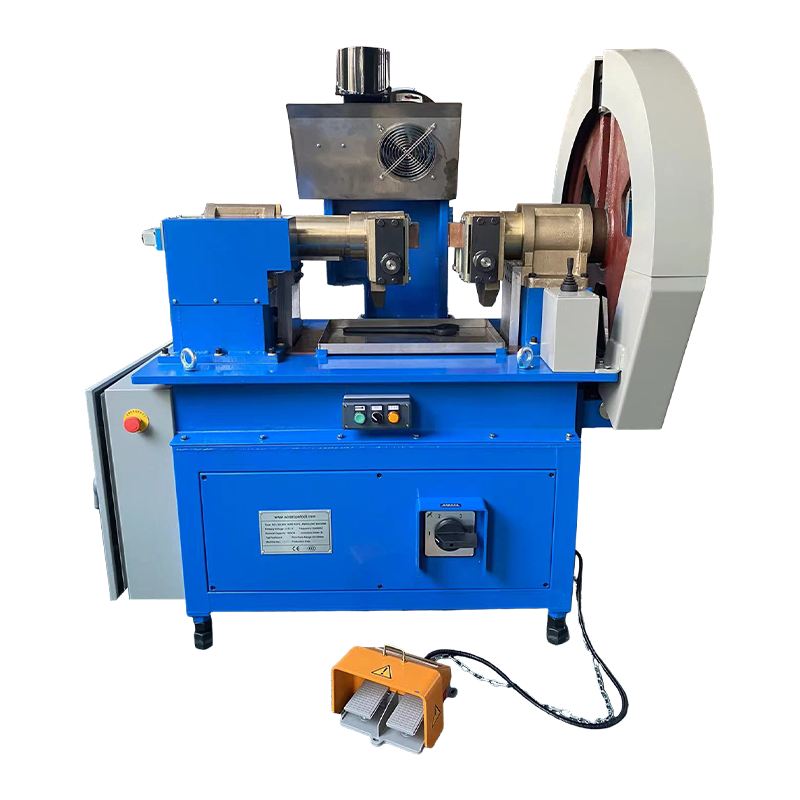
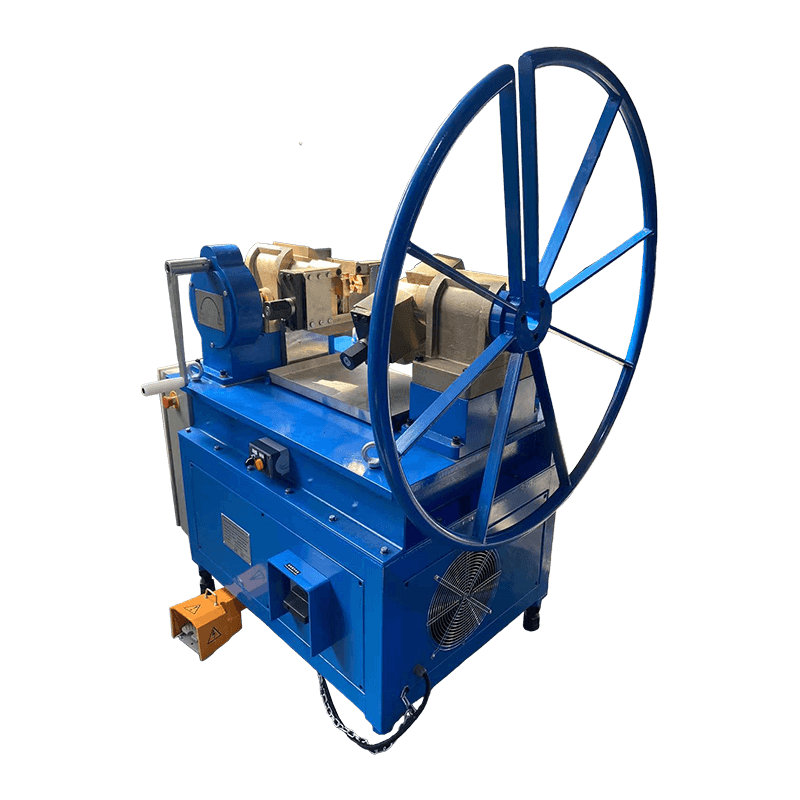
A Wire Rope Rolling Machine is used to plastically deform and compact wire rope strands or assembled ropes by passing them through precision-engineered rolling dies or rollers under controlled pressure. The primary purposes are to reduce the outer diameter of the rope, increase metallic cross-sectional area, improve surface smoothness, enhance fatigue resistance, and optimize the load-bearing geometry of the finished product. Rolling is not a simple shaping step — it is a controlled cold-working process that fundamentally changes the mechanical properties and structural behavior of the rope in ways that no other manufacturing step can replicate.
In practical terms, a rolling machine for wire rope enables manufacturers to produce compacted-strand and swaged ropes that achieve 10–20% higher metallic fill factor than equivalent conventional round-strand constructions of the same nominal diameter. This translates directly into higher breaking force, better resistance to bending fatigue over sheaves, and improved abrasion resistance in service. For industries such as mining, crane manufacturing, offshore oil and gas, and elevator production, these performance gains are not marginal — they determine whether a rope meets the design specification or falls short under demanding service conditions.
The Wire Rope Rolling Process: Mechanics and Metallurgy
Understanding what happens inside a wire rope rolling machine requires examining the process at both the macroscopic and microstructural level. The wire rope rolling process involves passing a stranded wire rope — either as individual strands before final assembly or as a complete rope after closing — through a set of three or four rotating dies arranged symmetrically around the rope axis. The gap between the dies is set to be smaller than the incoming rope diameter, forcing plastic deformation of the outer wire surfaces under compressive contact pressure.
Strand-Level Rolling vs. Full-Rope Rolling
There are two fundamentally different points in the manufacturing sequence at which rolling can be applied. Strand-level rolling passes individual strands through the rolling machine before they are assembled into the finished rope. This approach compacts each strand from a round cross-section into a more flattened, trapezoidal, or oval profile, significantly increasing the contact area between adjacent wires within the strand. The result is a compacted strand with a metallic fill factor of 85–92% compared to approximately 75–80% for an uncompacted round strand of equivalent nominal diameter.
Full-rope rolling is applied to the assembled rope after closing and compacts the outer layer of strands simultaneously, creating a smooth, dense outer surface with very high wire-to-wire contact area. This configuration is particularly effective for ropes used in drum winding applications where smooth spooling and multi-layer coiling are required. The compaction achieved in full-rope rolling typically reduces the nominal diameter by 3–8% while increasing metallic fill factor by 8–15 percentage points compared to the unrolled rope.
Contact Pressure and Deformation Zone
The contact pressure generated between the rolling die and the rope surface is the key process variable governing the degree of compaction achieved. For a typical three-roller arrangement processing a 20 mm diameter rope, contact pressures in the range of 800–2,500 MPa are generated at the die-rope interface, depending on die geometry, reduction ratio, and rope construction. These pressures are sufficient to plastically deform the outer wire surfaces, flattening the contact zones between adjacent wires and eliminating the voids that exist between round wires in an uncompacted strand.
The deformation zone extends through several wire diameters into the strand cross-section, creating a gradient of work-hardening from the surface inward. Surface wires may experience area reductions of 5–15% in the contact zones, introducing compressive residual stresses at the surface that are metallurgically beneficial — they oppose the tensile fatigue stresses that drive crack initiation during bending over sheaves.
Wire Rope Rolling Process: Sequence of Operations
Pay-off
Control
Die Pass
Check
Inspect
Coiling
Fig. 1 — Standard six-stage sequence of the wire rope rolling process. Tension control before the rolling die pass is critical to maintaining consistent lay length and preventing torque imbalance in the finished rope.
Effect on Rope Lay Length and Torque Balance
One consequence of the rolling process that must be carefully managed is its effect on rope lay length and torque balance. As wires are plastically compressed in the contact zones, there is a tendency for axial elongation of the rope — the compacted material must go somewhere, and it preferentially flows in the direction of least constraint, which is along the rope axis. This elongation effect typically amounts to 0.3–1.2% of rope length for standard compaction ratios, and must be accounted for in the pay-off and take-up tension control system to prevent locking of lay or torque imbalance in the finished rope.
Quantified Benefits: What Rolling Does for Wire Rope Performance
The performance improvements delivered by the wire rope rolling process are well-documented and quantifiable across multiple test regimes. The data below represents aggregated results from comparative testing of conventional round-strand ropes versus compacted-strand ropes of equivalent nominal diameter and steel grade.
Performance Improvement of Rolled vs. Conventional Wire Rope
Performance Improvement of Rolled vs. Conventional Wire Rope (Same Nominal Diameter, Same Steel Grade)
Fig. 2 — Performance improvements for rolled compacted-strand rope versus conventional round-strand rope of the same nominal diameter and steel grade. Data compiled from EN 12385-series and ASTM A1023 comparative test programs.
The bending fatigue improvement is particularly significant from an engineering perspective. In crane and hoist applications where a rope bends over a sheave thousands of times per shift, the difference between a 30% and 60% longer fatigue life translates directly into reduced rope replacement frequency, lower maintenance downtime, and better overall equipment availability. For a mining hoist rope operating 20 hours per day and completing 300 bend cycles per hour, a 40% fatigue life extension extends the expected rope service life from, for example, 8 months to over 11 months — a substantial operational benefit over the multi-year life of the hoist system.
Types of Wire Rope Rolling Machines and Their Configurations
Several machine architectures are used in industrial wire rope rolling, differing in the number of rolling elements, their arrangement geometry, the mechanism of die force application, and the range of rope diameters and constructions they can process. Selecting the correct machine configuration for a given application is one of the most consequential decisions in setting up a compacted rope production line.
Three-Roller Rolling Machines
The three-roller configuration is the most widely used in wire rope compaction. Three hardened steel rollers or dies are arranged at 120° intervals around the rope axis, applying radially symmetric compressive force as the rope passes through. This geometry produces uniform compaction across all outer strands without introducing net bending moment or lateral force on the rope — critical for maintaining straight lay and preventing torque imbalance. Three-roller machines are well-suited for rope diameters from 8 mm to 60 mm and are the standard choice for six-strand and eight-strand rope constructions.
Four-Roller Rolling Machines
Four-roller machines arrange rolling elements at 90° intervals and are preferred when processing ropes with an even number of outer strands, particularly eight-strand and multi-strand constructions where the 90° symmetry aligns better with the strand geometry. They also offer advantages for very large diameter ropes above 60 mm, where the additional contact point distributes the total compaction force over a larger area and reduces peak contact pressure on individual wire surfaces, minimizing the risk of surface cracking in high-carbon steel wire.
Rotary Die Rolling Machines
In a rotary die machine, the entire die assembly rotates around the rope axis at a speed synchronized with the helical pitch of the outer strand layer. This ensures that each roller contacts the rope at the same angular position relative to the outer strand lay throughout the pass, producing a more uniform deformation pattern than a stationary roller arrangement — where the contact geometry changes continuously as the helical strands pass through. Rotary die machines are significantly more complex and expensive than stationary roller machines but produce superior compaction uniformity, particularly for ropes with short lay lengths and large strand diameters above 5 mm.
Inline vs. Standalone Rolling Machines
A rolling machine for wire rope can be configured either as a standalone unit fed from a separate pay-off reel, or as an inline unit integrated directly into the stranding or closing machine line. Inline integration eliminates the need for an intermediate handling and re-spooling step, reducing rope handling damage and maintaining better tension control throughout the process. However, it requires that the rolling machine speed be precisely synchronized with the main line speed — typically requiring a servo-driven independent drive with a ±0.5% speed matching accuracy to prevent accumulated lay length variation.
Rolling Machine Configuration Comparison
Rolling Machine Configuration Comparison (Score 1–10 per Dimension)
Fig. 3 — Radar comparison of three rolling machine configurations across five operational dimensions (1–10). Capital Cost (inv.) is inverted — higher score means lower cost. Rotary die machines lead in compaction uniformity but rank lower in flexibility and cost.
Industrial Applications That Depend on Rolled Wire Rope
The output of a wire rope rolling machine — compacted-strand or swaged rope — is specified by engineers and procurement teams in applications where conventional round-strand rope cannot meet the performance requirements. The following sectors represent the most significant industrial users of rolled wire rope products.
Mining Hoists and Shaft Winding Systems
Underground mine hoists demand wire rope that can sustain millions of bending cycles over a service life measured in years, under combined tension loads that may reach 80–90% of the rope's rated working load during emergency braking scenarios. Compacted-strand ropes produced using rolling machines provide the higher metallic fill factor and improved fatigue resistance required for these conditions. A typical deep-level mine hoist rope in the 50–80 mm diameter range processed through a rolling machine achieves a breaking force 12–16% higher than an equivalent conventional rope, allowing engineers to use a smaller nominal diameter for the same safety factor — reducing hoist drum size, drum drive power, and total system cost.
Crane and Hoist Applications
Mobile cranes, tower cranes, and overhead bridge cranes use compacted-strand rope for hoist lines where rope life between replacements is a critical maintenance cost driver. The smooth outer surface produced by the rolling process reduces sheave and drum groove wear compared to conventional rope, extending both rope and sheave service life simultaneously. In multi-layer drum applications common on lattice boom cranes, the improved roundness and dimensional consistency of rolled rope allows up to 25% more rope to be stored on a drum of given dimensions while maintaining better layer-to-layer transition behavior and reducing spooling damage.
Offshore Mooring and Installation
Deepwater mooring systems and offshore installation vessels require wire rope with the highest possible strength-to-diameter ratio to minimize system weight and the demands on winch drums of limited capacity. Compacted and swaged ropes produced through multi-pass rolling achieve metallic fill factors of 88–93%, approaching the theoretical maximum for the wire arrangement geometry. For a typical 76 mm offshore installation rope, the difference between a conventional and a rolled rope may amount to 180–250 kN of additional breaking force — without any change in nominal diameter or steel grade, and without any increase in the system weight budget.
Elevator and Vertical Transportation
High-rise elevator installations use rolled wire ropes to achieve the combination of high fatigue life, smooth running over traction sheaves, and low elongation under load that defines a safe and comfortable elevator system. The rolling process improves the consistency of the rope's elastic modulus by eliminating the constructional stretch that occurs in conventional rope as round wires seat against each other under initial loading. Rolled ropes exhibit initial constructional stretch values of 0.05–0.15% compared to 0.15–0.35% for conventional ropes — a significant advantage in elevator systems where rope elongation determines the precision of floor-leveling control.
Suspension Bridge and Structural Cable Systems
Although parallel wire strand is more common for main suspension cables, compacted wire rope produced through precision rolling is used extensively for hangers, back-stays, and auxiliary cables in suspension and cable-stayed bridges. The smooth, dense outer surface of rolled rope is advantageous for external cable sheathing and cable anchorage, as it provides a more uniform cross-section for grout injection or HDPE sheathing adhesion. Bridge hanger ropes in the 60–120 mm diameter range routinely specify a minimum metallic fill factor of 82% — a requirement that effectively mandates the use of a rolling machine in the production process.
Rope Diameter Range and Metallic Fill Factor Requirement by Application
Typical Rope Diameter Range and Metallic Fill Factor Requirement by Application
Fig. 4 — Typical operating diameter range and metallic fill factor specification zones for major rolled wire rope application sectors. The dashed grey line shows the typical fill factor of conventional round-strand rope (~76%), illustrating why the rolling process is required for these specifications.
Key Technical Parameters of a Wire Rope Rolling Machine
Specifying and commissioning a rolling machine for wire rope production requires evaluating a set of interdependent technical parameters. Errors in specification at this stage lead to machines that either cannot achieve the required compaction ratio or impose excessive loads on the rope that cause internal wire damage and strength loss.
| Parameter | Typical Range | Effect if Under-Specified | Effect if Over-Specified |
|---|---|---|---|
| Maximum rolling force per roller | 50–800 kN | Insufficient compaction; target fill factor not reached | Wire fracture, internal strand damage |
| Die adjustment range (diameter) | 8–120 mm | Cannot process full product range; need multiple machines | Reduced machine stiffness at small diameters |
| Maximum line speed | 5–120 m/min | Production bottleneck; limits stranding line output | Increased capital cost; excess capacity |
| Die material and hardness | 58–64 HRC tool steel or carbide | Rapid die wear; diameter drift; poor surface finish | Higher tooling cost; brittleness risk under impact |
| Drive power (main motor) | 15–250 kW | Motor overload at full rolling force; speed drop | Excess electrical infrastructure cost |
| Force measurement accuracy | ±1–2% of full scale | Inconsistent compaction batch-to-batch; QC failures | Marginal — higher-precision load cells rarely needed |
| Pass-line height adjustment | ±50–150 mm | Cannot align with stranding line; bending stress at entry | Unnecessary complexity |
Of the parameters listed above, die material selection deserves particular attention because it is the factor most commonly under-specified in initial procurement. Rolling dies for wire rope operate under extremely high Hertzian contact stresses — often exceeding 1,500 MPa at the die-wire interface for heavy compaction of high-carbon steel rope. Dies made from standard tool steel hardened to 58–60 HRC will typically survive 800–2,000 tonnes of rope processed before dimensional wear causes the post-roll diameter to drift outside the tolerance band. Tungsten carbide-lined dies, while significantly more expensive, can process 5–15 times more material before replacement, reducing tooling cost per tonne of output and the frequency of production interruptions for die changes.
Die Wear, Process Monitoring, and Quality Assurance
Consistent product quality from a wire rope rolling machine depends on more than setting the correct initial die gap. Die wear, thermal expansion of machine components, and variations in incoming rope diameter all cause the actual post-roll diameter to drift over a production run. A robust process monitoring strategy is essential for maintaining product within specification.
Post-Roll Diameter Drift Over Cumulative Production
Post-Roll Diameter Drift Over Cumulative Production (mm above nominal target)
Fig. 5 — Post-roll diameter drift over cumulative production output for two die materials. Tool steel dies typically reach the tolerance limit (0.25 mm) at approximately 1,400–1,500 tonnes, while carbide-lined dies remain within tolerance beyond 2,000 tonnes.
Production monitoring for a wire rope rolling machine should include the following elements as standard practice:
- Continuous laser diameter measurement: Non-contact laser gauges installed immediately downstream of the rolling dies provide real-time diameter readings updated at 1,000 Hz or faster, enabling automatic die gap correction before out-of-tolerance product is produced.
- Rolling force logging: The hydraulic or mechanical force applied by each roller should be recorded continuously and compared to the process specification. Gradual force increase at constant die gap setting is an early indicator of die wear or die pocket contamination.
- Surface visual inspection: The rope surface should be inspected for longitudinal cracking, surface wire fracture, or visible die marks at regular intervals — typically at the start of every coil or every 500 m of production, whichever is more frequent.
- Periodic tensile and torsion testing: Wire samples extracted from the rolled rope should be tensile and torsion tested per EN 10264 or equivalent at the frequency required by the product standard — typically one test per coil for safety-critical applications.
- Die inspection schedule: Dies should be removed and dimensionally measured against the nominal bore profile at intervals of every 200–400 tonnes for tool steel dies and every 800–1,200 tonnes for carbide dies, using a calibrated bore gauge or profilometer.
Integration with Other Wire Rope Manufacturing Processes
A rolling machine for wire rope does not operate in isolation — it is one step in a multi-stage production sequence, and its placement within that sequence has significant implications for the final product properties. Understanding how rolling interacts with the preceding and following process steps is essential for optimizing the overall manufacturing outcome.
Rolling After Stranding, Before Closing
When strand-level rolling is performed — passing individual strands through the rolling machine before final rope closing — the compacted strands must be handled carefully to avoid uncoiling, kinking, or surface damage that would undo the benefits of compaction. The strands are typically collected on bobbins under controlled tension and transferred directly to the closing machine with minimal storage time. Because compacted strands have a more stable geometry than round strands, they tend to produce more consistent lay lengths during rope closing, resulting in better torque balance in the finished rope.
Rolling After Rope Closing
Full-rope rolling after the closing machine produces a different result from strand-level rolling. The deformation now affects the outer strand profiles of the assembled rope, creating the characteristic smooth, dense surface associated with swaged rope. This approach is more effective at eliminating the valleys between outer strands — improving drum spooling and sheave contact geometry — but is less effective at improving the internal metallic fill factor of each individual strand. For applications where internal stress distribution is critical, such as fatigue-loaded hoist ropes, strand-level rolling is technically superior; for applications where surface quality and drum performance dominate, full-rope rolling is the preferred approach.
Strand-Level vs. Full-Rope Rolling: Performance Property Comparison
Strand-Level vs. Full-Rope Rolling: Performance Property Comparison (Index: Conventional = 100)
Fig. 6 — Comparative performance index for strand-level rolling vs. full-rope rolling vs. conventional unrolled rope (Conventional = 100 baseline). Strand-level rolling shows greater advantage in fatigue life and elongation; full-rope rolling leads in abrasion resistance and drum spooling quality.
Lubrication Compatibility
Wire rope lubrication applied during stranding or closing can interfere with the rolling process if not managed correctly. Excess lubricant on the rope surface reduces the friction between the rolling die and the wire surface, causing slippage that results in uneven compaction and surface marking. Most rolling machine operators either clean the rope surface with a dry wiper before the rolling dies or specify a dry lubricant application (such as a wax-based compound) that does not create a hydrodynamic film under the die contact pressures generated during rolling. Post-roll lubrication of the finished rope is typically applied downstream of the rolling machine using a dip-tank or spray system.
Frequently Asked Questions About Wire Rope Rolling Machines
Q1: What is the difference between a wire rope rolling machine and a wire rope swaging machine?
A1: Although both processes involve plastic deformation of wire rope, they differ significantly in mechanism, application, and the type of deformation produced. A wire rope rolling machine uses rotating rollers or dies to apply compressive force to the full length of a rope as it passes through the machine at production line speed, compacting the outer strand profiles continuously along the entire rope length. The result is a compacted rope with improved metallic fill factor throughout its length. A wire rope swaging machine, by contrast, applies compressive force to a short fitting or ferrule already positioned at the end of a rope — typically over a length of 50–300 mm — to permanently attach a terminal fitting. The two machines serve entirely different manufacturing purposes and are not interchangeable. Rolling is a bulk rope production process; swaging is a termination attachment process. A complete wire rope production facility will typically have both types of machine, used at different stages of the manufacturing and assembly process.
Q2: Can a wire rope rolling machine process stainless steel rope, or is it limited to carbon steel constructions?
A2: Wire rope rolling machines can process both stainless steel and carbon steel rope constructions, but the process parameters must be adjusted for the different mechanical properties of each material. Austenitic stainless steel (Type 316 is most common for rope wire) work-hardens significantly more rapidly than carbon steel under cold deformation — its work hardening exponent is approximately 0.45–0.55 compared to 0.15–0.25 for pearlitic rope wire. This means that a given die gap reduction produces substantially higher rolling forces for stainless steel rope, and the risk of wire surface cracking from excessive cold work is greater. In practice, stainless steel rope is processed at smaller reduction ratios per pass — typically 3–5% diameter reduction rather than the 5–8% used for carbon steel rope of equivalent diameter — and may require an inter-pass annealing step for heavily compacted constructions to restore ductility before further processing.
Q3: How does the wire rope rolling process affect the rope's torque balance and rotation behavior?
A3: The rolling process can affect rope torque balance if not carefully controlled, primarily through two mechanisms. First, the axial elongation of the rope during compaction — typically 0.3–1.2% — changes the effective lay length of the outer strands relative to their as-stranded geometry. If this elongation is not uniform across all outer strands (for example, because the compaction force is not perfectly symmetric between all rolling dies), a residual torque imbalance is introduced that will cause the rope to rotate under load. Second, if the rolling machine is not precisely aligned with the rope axis, it can introduce a net bending or twisting moment that modifies the strand helix angle. Modern rolling machines address both issues through symmetric die geometry with individual force monitoring per roller, precision pass-line alignment systems, and closed-loop tension control on both the pay-off and take-up sides of the machine. For rotation-resistant rope constructions — which are inherently sensitive to torque imbalance — rolling force symmetry must be verified at the start of every production run using a calibrated torque measurement tool on the finished rope.
Q4: What rope constructions are not suitable for processing through a wire rope rolling machine?
A4: While the rolling process is broadly applicable to most wire rope constructions, certain configurations are not well-suited to rolling and may be damaged by passing through a rolling machine. Ropes with fiber cores (FC or SFC) are problematic for full-rope rolling because the radial compressive force applied by the rolling dies can crush and permanently deform the fiber core, reducing its ability to support the inner strands under load and degrading the rope's fatigue performance in bending applications. Ropes with very fine outer wires (wire diameter below approximately 0.5 mm) are susceptible to surface cracking under the high Hertzian contact stresses generated at the die-wire interface, particularly in high-carbon steel grades. Ropes with plastic-coated or polymer-filled constructions — such as plastic-impregnated cores or polymer-coated outer wires — require special die materials and surface treatments to prevent adhesion or scoring of the polymer layer. For these constructions, the rolling machine manufacturer should be consulted before production trials to confirm compatibility and identify any required die or process modifications.
Q5: How is the correct die gap setting determined for a specific rope product on a rolling machine?
A5: Determining the correct die gap for a specific rope product requires a combination of calculation and empirical validation. The starting point is to calculate the target post-roll diameter from the product specification — this is typically the nominal diameter minus the specified compaction tolerance, for example nominal – 2% to – 4% for a standard compacted-strand rope. The die gap is then set to a value that will produce this diameter, accounting for the elastic springback of the rope after the die contact forces are removed. Springback typically amounts to 0.2–0.8 mm for rope diameters in the 20–60 mm range, meaning the die gap must be set below the target post-roll diameter by the springback amount. Because springback varies with rope construction, steel grade, and line speed, it must be determined experimentally during commissioning by setting the die gap to a calculated starting point, running a short length of test rope, measuring the actual post-roll diameter, and adjusting the die gap accordingly. This process is repeated until the post-roll diameter consistently falls within the target tolerance band. The validated die gap setting is then recorded in the product-specific setup record and used as the starting point for all subsequent production runs of that product.
Q6: What are the most common causes of surface defects on wire rope processed through a rolling machine, and how can they be prevented?
A6: Surface defects in rolled wire rope fall into several categories, each with a distinct cause and prevention strategy. Longitudinal scoring marks — parallel grooves running along the rope axis — are typically caused by debris (wire chips, scale, or hardened lubricant) trapped between the die surface and the rope. Prevention requires regular cleaning of the die throat and incoming rope surface, and installation of a rope wiper ahead of the rolling dies. Transverse surface cracks on individual wires are caused by excessive die contact pressure, typically resulting from setting the die gap too small, using a worn die with an irregular bore profile, or processing rope with insufficient incoming ductility — for example, rope that has been incorrectly annealed or that has been cold-drawn beyond the allowable reduction without inter-pass annealing. Prevention requires strict die gap control, regular die inspection and replacement, and verification that incoming wire properties meet the ductility specification before rolling. Uneven surface finish — where some outer strand faces are well-compacted while others show less deformation — indicates a die alignment or force balance problem. This is corrected by checking and adjusting the symmetry of the die closing mechanism and verifying equal force output from all rollers using load cells or pressure transducers installed on each die actuator.
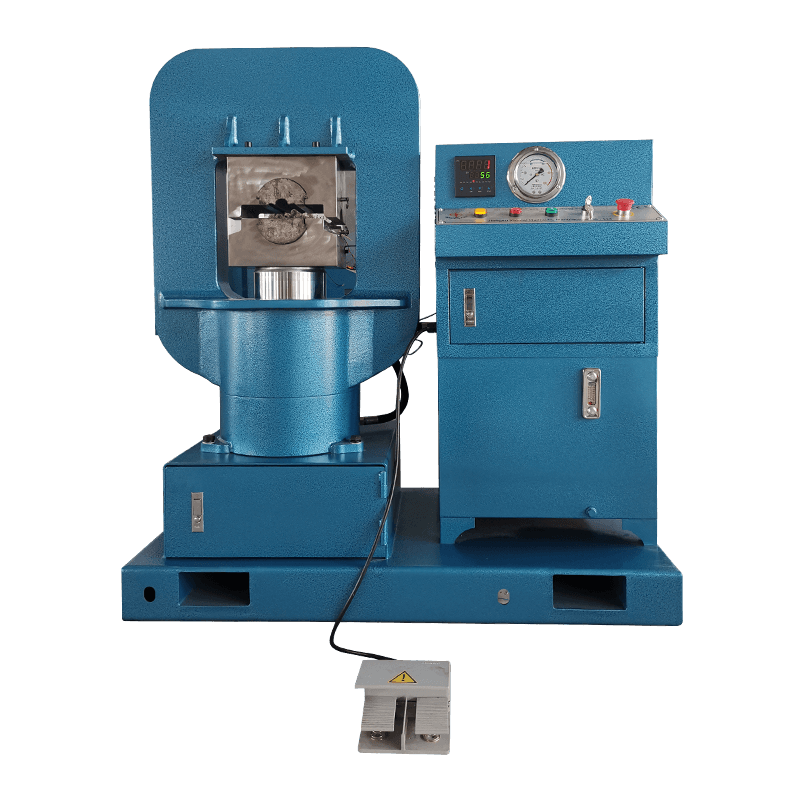
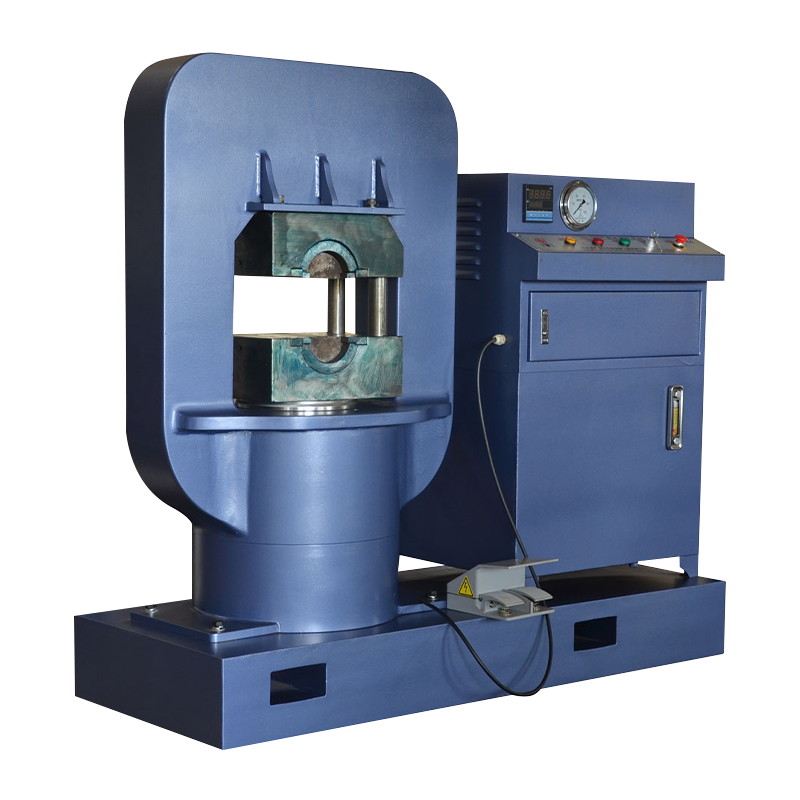
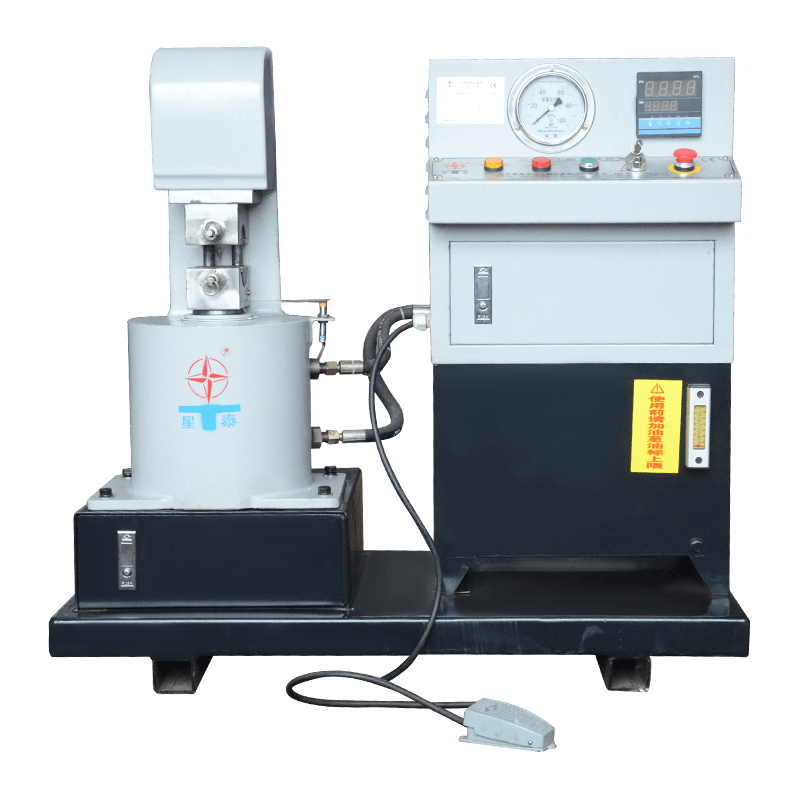
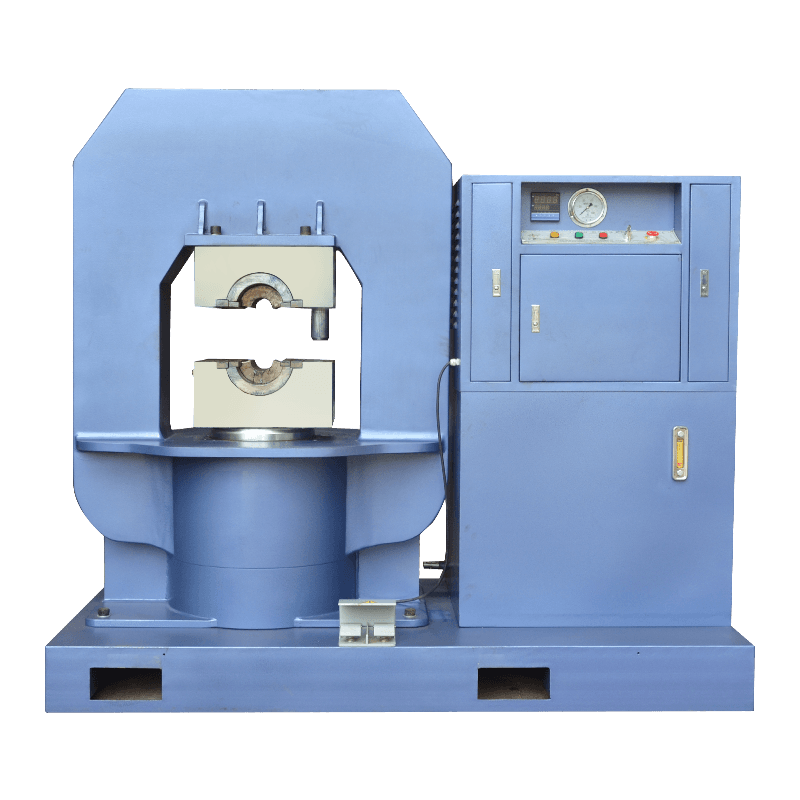

If you require custom hydraulic equipment or technical consultation, please feel free to contact the Xingtai Sales and Engineering Team.
-
 +86-523-86934677
+86-15896002505 -
 [email protected]
-
 +86-15896002505
-
 No. 3 Longgang Road, Gaogang Port Street, Taizhou City, China.
Copyright © Jiangsu Xingtai Hydraulic Manufacturing Co., Ltd. All Rights Reserved. Custom hydraulic machinery manufacturers Wholesale wire rope swagers Factory

