 English
 русский
 Français
 Español
 Português
 Deutsch
 عربى
عربى Türk
Türk
Content
- 1 What Is the GT-60 Hydraulic Wire Rope Swage Press Machine (C Frame)?
- 2 Understanding the C-Frame Design and Its Advantages
- 3 Key Characteristics of the GT-60 Hydraulic Wire Rope Swage Press Machine
- 4 Typical Applications for a Small-Diameter Steel Wire Rope Press Machine
- 5 Hydraulic System and Structural Composition
- 6 Performance Overview: What the Design Features Deliver
- 7 Technical Specifications
- 8 Delivery, Packaging and Lead Time
- 9 About Jiangsu Xingtai Hydraulic Manufacturing Co., Ltd.
- 10 How to Choose a Steel Wire Rope Press Machine for Small-Diameter Work
- 11 Frequently Asked Questions
- 11.1 Q1: What wire rope diameter range can the GT-60 hydraulic wire rope swage press machine process?
- 11.2 Q2: What type of frame does the GT-60 use, and why does it matter?
- 11.3 Q3: Is the GT-60 suitable for producing light-duty lifting slings?
- 11.4 Q4: How does mold changing work on this steel wire rope press machine?
- 11.5 Q5: What accessories and packaging are included with delivery?
- 11.6 Q6: What is the typical lead time for production and shipping?
What Is the GT-60 Hydraulic Wire Rope Swage Press Machine (C Frame)?
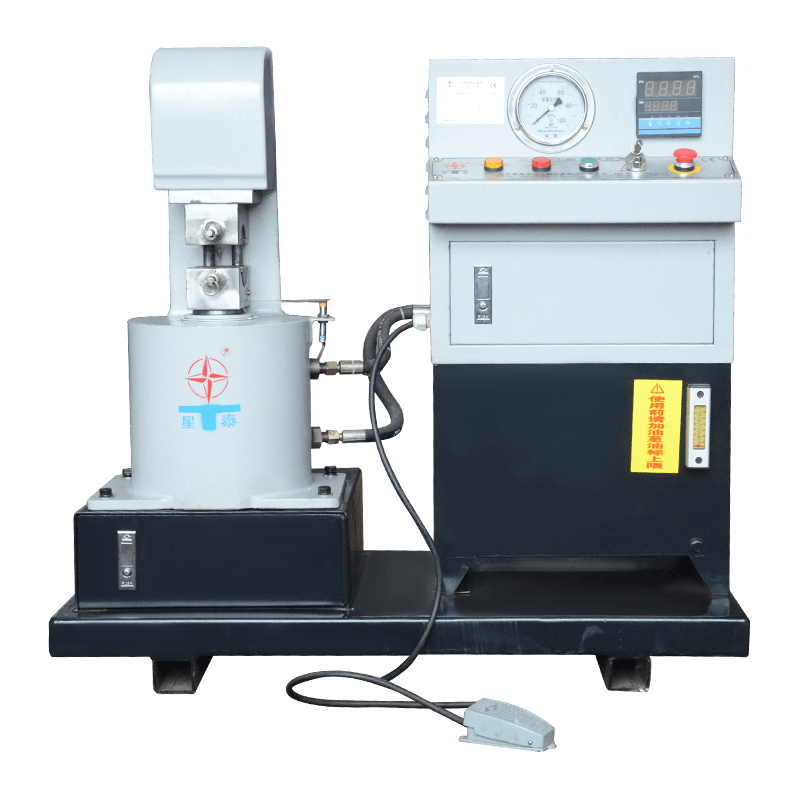
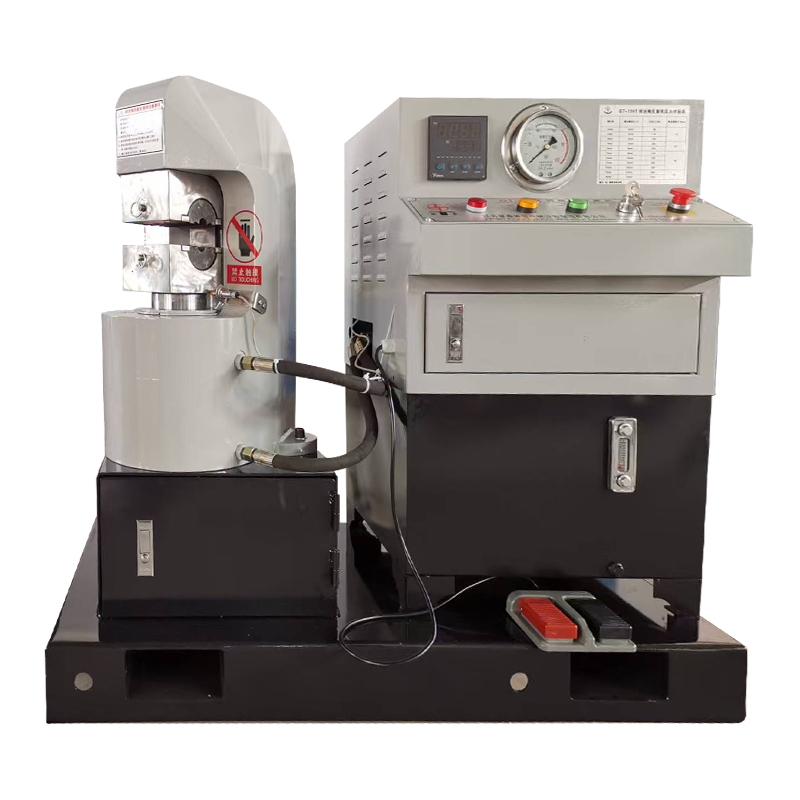
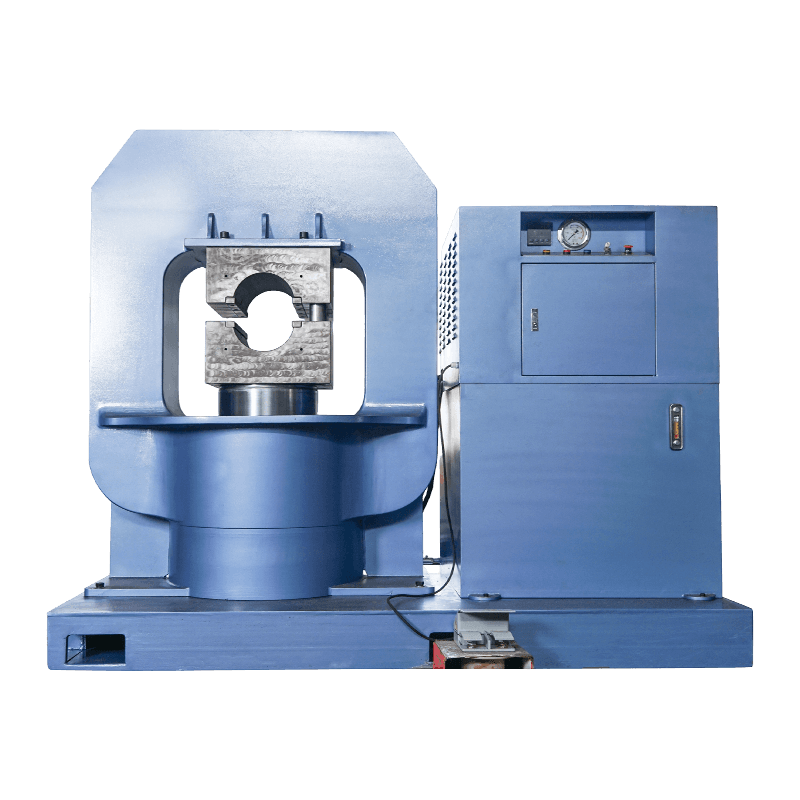
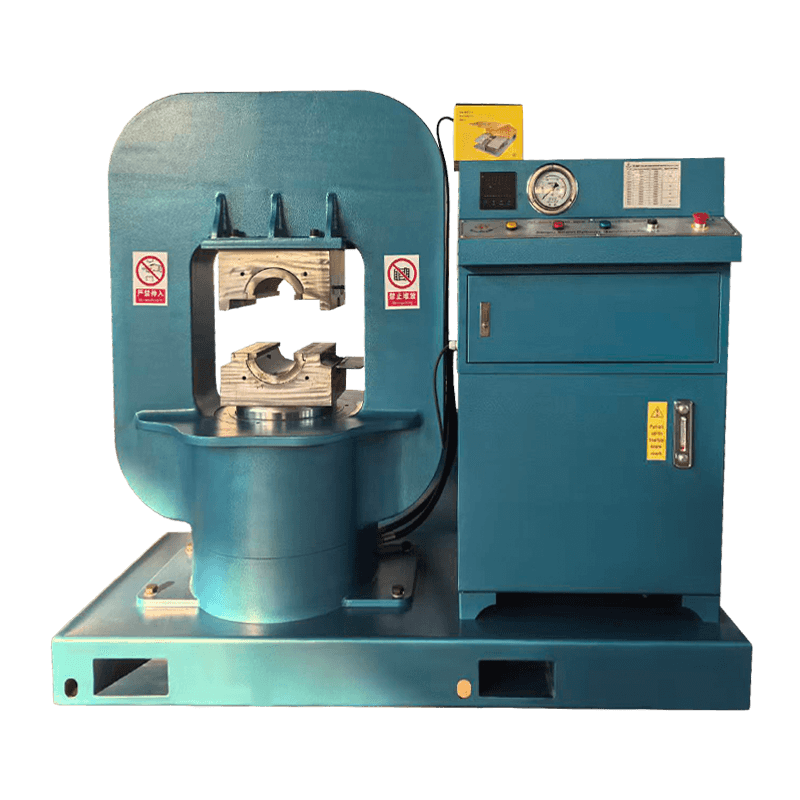
The GT-60 Hydraulic Wire Rope Swage Press Machine (C Frame) is a compact hydraulic press built to swage steel wire rope with a diameter range of 1mm to 10mm. It is the smallest model in the C-frame series, designed for fast, precise pressing of small-diameter wire rope end fittings, and it is commonly used in factories that produce slings for lifting light products, including C-clip hangers and shot fire solutions. The machine uses an overall basket-style frame design that keeps the unit compact while maintaining strong pressing force and good concentricity, which supports a smooth, uniform surface on finished slings. Because the GT-60 relies on a dual-pressure pump hydraulic oil supply system, the piston can move up and down quickly between cycles while still delivering a smooth, controlled pressing stroke, which supports both efficient cycle times and consistent pressing quality.
As a product category, a steel wire rope press machine — also referred to as a wire press machine, wire rope crimping tool, or steel wire crimping tool — is used to permanently join a metal sleeve or ferrule around one or more strands of wire rope, creating a fixed, load-bearing end termination. Within this category, the GT-60 model occupies the small-diameter, C-frame segment, which is generally suited to lighter production lines rather than heavy structural rigging. This guide walks through the machine's design, its typical wire diameter coverage, its application range, its hydraulic architecture, its performance characteristics, its full technical specification, and its delivery process, so that a manufacturer, wholesaler, or workshop owner researching a small hydraulic wire rope press machine can evaluate it in context.
Understanding the C-Frame Design and Its Advantages
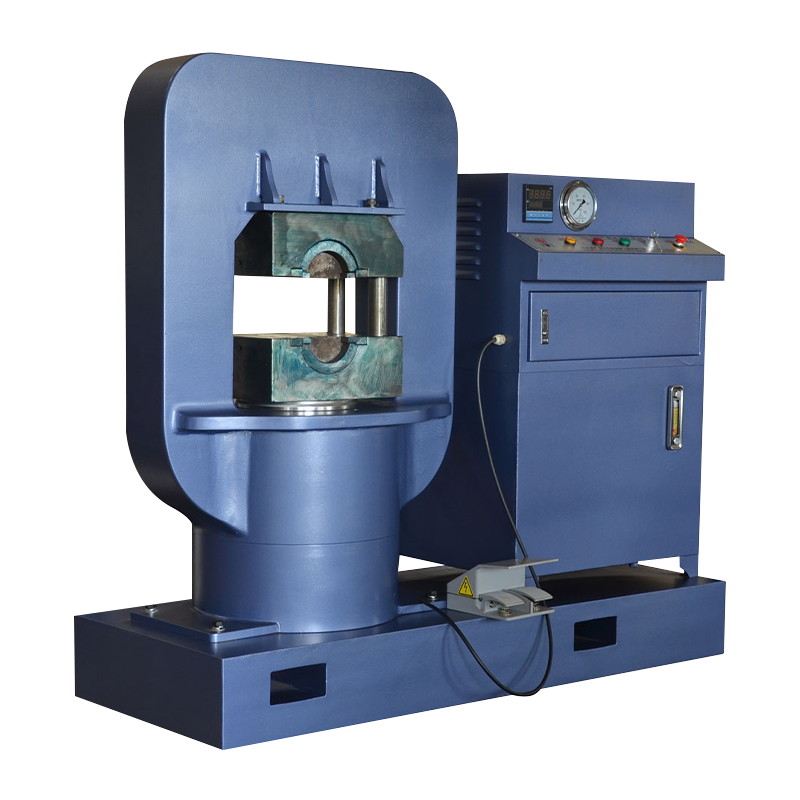
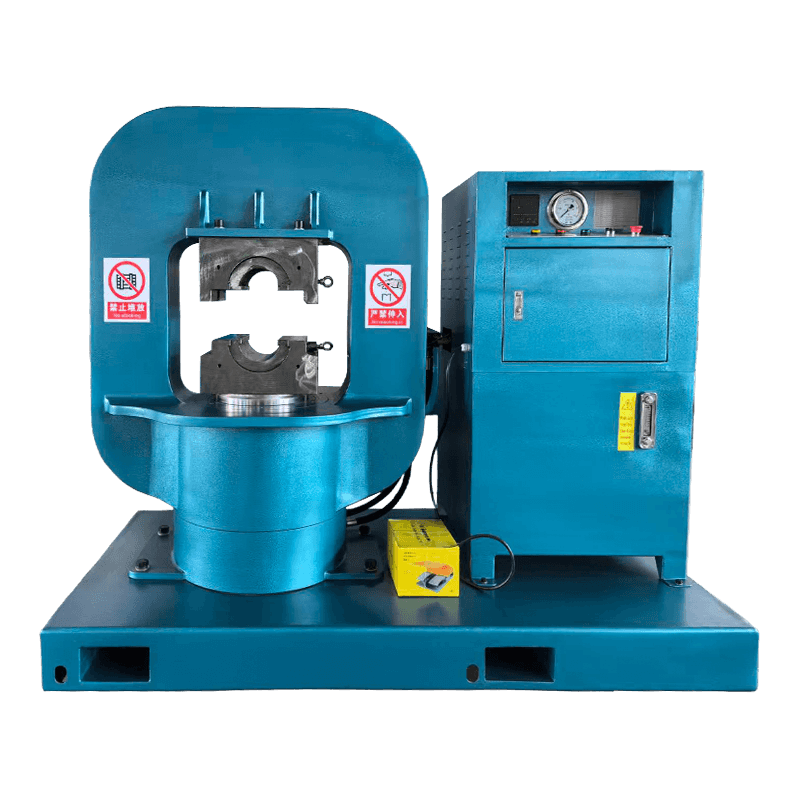
A C-frame press machine gets its name from the open, C-shaped throat of the frame body, which leaves one side of the working area open for loading and unloading wire rope. This is different from fully enclosed, four-column press designs that surround the working area on all sides. The C-frame wire rope press machine is the smallest style in the broader family of press frame designs used for wire rope swaging, and the GT-60 sits at the entry point of that C-frame lineup, built specifically to press small-sized wire rope from 1mm to 10mm.
Because the frame body of the GT-60 is manufactured from a single block of material rather than assembled from separate welded sections, the design supports structural integrity and long service life. A single-block body avoids the welded seams that can act as stress points in some assembled frame designs, which is a meaningful consideration for a machine expected to run repeated pressing cycles over years of factory use. The open C-shaped throat also makes it straightforward for an operator to position wire rope and sleeves quickly, which supports steady throughput on a small production line.
- Compact footprint suited to smaller workshops or dedicated sling-assembly stations
- Open C-shaped throat for quick side loading and unloading of wire rope and sleeves
- Single-block frame body built for structural integrity and long service life
- Good concentricity, which supports a smooth, evenly formed pressed surface
For buyers comparing a wire rope press machine or wire press machine for the first time, the frame style is often the first structural decision to make, since it affects footprint, loading speed, and the practical diameter range the machine can serve. The C-frame category, and the GT-60 within it, is generally positioned toward small-diameter, high-repetition production rather than large-diameter structural cable work.
It is also worth noting that frame style and diameter capacity tend to scale together across the wider steel wire rope press machine category. Smaller C-frame units, such as the GT-60, are generally built around a lighter hydraulic circuit and a narrower mold range, which keeps the machine compact and easier to install on an existing workshop floor without dedicated foundation work. Larger frame styles, by contrast, typically require a heavier hydraulic pump, a bigger mold inventory, and more floor space, since they are engineered to handle greater diameters and correspondingly higher pressing forces. For a factory that produces mainly small fittings such as C-clip hangers or light lifting slings, this size-to-capacity relationship generally favors a compact C-frame machine, since it avoids paying for hydraulic capacity and floor space that the production line does not actually need. This is one reason a dedicated small-diameter wire rope crimping tool, rather than a single oversized universal press, is a common choice among workshops that specialize in light-duty sling and fitting production.
Key Characteristics of the GT-60 Hydraulic Wire Rope Swage Press Machine
The GT-60 hydraulic wire rope swage press machine (C frame) is defined by four core design characteristics that shape how it performs on a production floor. Together, these characteristics explain why the machine is positioned as a compact, precision-oriented steel wire rope press machine rather than a heavy-tonnage rigging press.
- Overall basket design: a compact structure with high strength and good concentricity, producing pressed slings with a smooth surface.
- Round mold design with automatic positioning, making it straightforward to change between different molds for different wire diameters.
- Automatic piston descent once a pressing cycle is finished, reducing manual reset steps between cycles.
- Time-controlled piston operation, allowing the pressing cycle timing to be set and repeated consistently.
Chart: Wire Rope Diameter Range Segments
Understanding where a machine's wire diameter capacity sits within the broader wire rope size range helps buyers match equipment to their production needs. Wire rope used across general industry commonly spans from very fine diameters used in light craft and signage work up to large diameters used in heavy lifting and marine applications. The chart below places the GT-60 hydraulic wire rope swage press machine's working range against three broader reference bands so the small-diameter segment it serves is easy to see at a glance. These bands are presented as general reference categories rather than a fixed industry standard, since exact diameter cutoffs can vary between regions and applications. Reviewing this range visually can help a buyer quickly confirm whether the GT-60, as a C-frame steel wire rope press machine, fits within the diameter requirements of their own sling or fitting production line.
As shown in the chart, the GT-60 hydraulic wire rope swage press machine (C frame) is built to press wire rope with a diameter of 1mm up to 10mm, placing it firmly in the small-diameter segment of the wider range shown. This 1mm to 10mm span covers many of the wire sizes used for light-duty slings, C-clip hangers, and shot fire solutions, which is consistent with how the machine is described for factory use. The medium-diameter band shown to the right, roughly 10mm to 20mm, generally calls for larger press machines with greater clamping force and a different mold set, which sits outside the scope of the compact C-frame GT-60 model. The large-diameter band, 20mm and above, is typically associated with heavier lifting slings and structural rigging, again outside the working range of this particular small C-frame unit. Positioning the GT-60 at the smaller end of the scale is intentional, since the machine is described as the smallest model in the C-frame series, prioritizing compactness, concentricity, and smooth pressing over raw tonnage. A smaller working range also allows the round mold design and automatic positioning system to stay simple, which supports faster mold changes when switching between different small wire diameters. For a manufacturer or workshop that primarily produces small slings, tie-downs, or safety cable ends, staying within this 1mm to 10mm range is usually sufficient, and choosing an oversized press machine for this scope of work is generally unnecessary. On the other hand, a workshop that regularly processes wire rope above 10mm in diameter would need to look toward a larger C-frame or multi-column press machine rather than the GT-60 model. This kind of range chart is a practical first filter for buyers researching a steel wire rope press machine, wire press machine, or wire rope crimping tool, since diameter compatibility is usually the very first specification to confirm. Because the chart uses general reference bands rather than a single certified standard, buyers are encouraged to confirm exact diameter requirements against their own wire rope specification sheet before finalizing a machine choice. Overall, the chart reinforces the direct answer given earlier in this guide: the GT-60 hydraulic wire rope swage press machine (C frame) is purpose-built for small-diameter pressing work rather than large-diameter rigging production.
Typical Applications for a Small-Diameter Steel Wire Rope Press Machine
The GT-60T hydraulic press machine is usually used in factories that produce slings to lift light products. Its 1mm to 10mm pressing range fits naturally into a group of applications where wire rope is thin, sleeves are small, and production runs are often repetitive rather than one-off. Because the machine is compact and the mold system supports quick changes, it is well suited to workshops that need to switch between several small wire diameters over the course of a single shift.
Common uses reported for this class of small C-frame wire rope crimping tool include the assembly of C-clip hangers, shot fire solutions, and general light lifting slings. Beyond these named examples, small-diameter swage presses of this type are also commonly used across sign-hanging assemblies, light tie-down fittings, and general small-scale cable termination work, since these applications typically rely on wire rope within the same small diameter range the GT-60 is built to handle.
| Application | Typical Wire Rope Character | Fits GT-60 Diameter Range |
|---|---|---|
| C-clip hangers | Light-duty, small diameter | Yes |
| Shot fire solutions | Light-duty, small diameter | Yes |
| Light lifting slings | Small to mid diameter | Yes |
| Sign and display tie-downs | Fine to small diameter | Yes |
| Heavy structural rigging | Large diameter | Outside range |
For a manufacturer or wholesaler sourcing a wire press machine specifically for small-diameter sling assembly, matching the application to the diameter range shown above is a practical starting point before evaluating mold sets, cycle timing, and hydraulic system details in the sections that follow.
Workshops that run mixed small-diameter production, meaning several different wire diameters within the 1mm to 10mm band on the same shift, tend to benefit most from a machine with a straightforward mold-change process, since downtime between mold swaps can otherwise become a larger share of total production time than the pressing cycle itself. This is one reason mold design and positioning convenience are treated as a core characteristic of the GT-60 rather than as a secondary detail, and it is also why the performance overview later in this guide dedicates a specific chart to mold-change convenience alongside concentricity and surface finish. Buyers sourcing this type of small C-frame steel wire rope press machine for wholesale distribution or in-house sling production should weigh application fit, mold-change speed, and diameter range together rather than evaluating diameter capacity in isolation.
Hydraulic System and Structural Composition
The swaging components of Xingtai Hydraulic machines, including the GT-60, are forged from high-strength alloy steel, which supports durability under repeated pressing loads. The machine body is manufactured from a single block of material, which supports structural integrity and long service life. The hydraulic system uses a dual-pressure pump oil supply, which enables fast upward and downward piston movement while still allowing a smooth pressing process, a combination that is intended to improve both pressing quality and production efficiency.
Chart: Core Structural Composition of a C-Frame Hydraulic Press
A hydraulic wire rope press machine is not a single part but an assembly of several major subsystems working together during each pressing cycle. Understanding how a C-frame machine like the GT-60 is generally composed can help buyers evaluate build quality, expected service life, and maintenance needs. The donut chart below breaks a typical C-frame hydraulic press machine down into four general structural areas: the frame body, the hydraulic system, the piston and mold assembly, and the control and safety system. These proportions are presented as an illustrative overview of a typical small hydraulic swage press rather than an exact bill of materials for any single unit. Reviewing this composition helps explain why the frame body and hydraulic system generally make up the largest share of the machine's overall structure and function.
The frame body represents the largest share in the chart because it is manufactured from a single block of material, which is central to the machine's structural integrity and long service life. A single-block frame body avoids the welded joints found in some assembled frame designs, which can reduce points of potential stress concentration over repeated pressing cycles. The hydraulic system occupies the second-largest share, reflecting its role in generating and controlling the pressing force applied to each wire rope sleeve. On the GT-60, this hydraulic system is built around a dual-pressure pump oil supply, which allows the piston to travel up and down quickly during the non-pressing stroke while still applying a smooth, controlled force during the actual swaging stroke. This dual-pressure approach is a practical way to balance cycle speed with pressing quality, since a single fixed-pressure pump would generally be either too slow or too aggressive across the full stroke. The piston and mold assembly, shown as the third segment, is where the round mold design and automatic positioning system are located, allowing operators to change molds for different wire diameters within the 1mm to 10mm range. Because the piston is designed to move down automatically once a pressing cycle finishes, and because piston movement can be controlled by time, this segment also reflects the machine's basic automation features. The control and safety system, the smallest segment in the chart, still plays an important role by governing timing, piston movement, and operator safety during each cycle. Together, these four segments explain how a compact C-frame steel wire rope press machine can remain small in footprint while still delivering consistent, repeatable swaging results. This structural overview is also useful context for anyone comparing a wire press machine, wire rope crimping tool, or steel wire crimping tool from a manufacturing or maintenance perspective, since each subsystem has a different expected wear pattern and service requirement. In general, the frame body and hydraulic system require the least frequent attention once properly installed, while seals and high-pressure tubing within the hydraulic system are the components most likely to need periodic inspection or replacement over time.
Performance Overview: What the Design Features Deliver
Beyond raw diameter capacity, several design-driven performance characteristics influence how well a small hydraulic swage press performs in daily production use. These characteristics are shaped directly by the machine's physical design choices rather than by general marketing claims.
Chart: Performance Characteristics Overview
Beyond raw diameter capacity, several design-driven performance characteristics influence how well a small hydraulic swage press performs in daily production use. These characteristics are shaped directly by the machine's physical design choices rather than by abstract marketing claims. The radar chart below maps six characteristics of the GT-60 hydraulic wire rope swage press machine that are directly tied to its documented design features. Each axis is rated on a simple five-point descriptive scale based on how the corresponding design feature is described, rather than on third-party laboratory testing. Viewing all six characteristics together on one chart makes it easier to see the overall performance profile the C-frame design is intended to deliver.
Concentricity precision is rated highly on the chart because the overall basket design of the GT-60 is specifically described as delivering good concentricity, which supports evenly formed, round sleeve profiles. Surface finish quality is rated similarly high, since the same basket design is associated with pressed slings that have a smooth surface rather than an uneven or scarred finish. Mold-change convenience is rated at the top of the scale because the round mold design includes automatic positioning, which is intended to make switching between different mold sizes straightforward for the operator. Automation level is rated slightly lower than the top score, reflecting a practical middle ground: the piston moves down automatically once pressing finishes and can be controlled by time, but the machine is still an operator-guided C-frame press rather than a fully unattended production line. Structural compactness is rated highly, consistent with the GT-60 being described as the smallest machine in the C-frame lineup, which makes it suitable for smaller workshop footprints. Build strength is rated close to the top of the scale as well, supported by the single-block frame body and forged high-strength alloy steel swaging components used in construction. Taken together, the chart shows a performance profile weighted toward precision, surface quality, and mold-change convenience, which lines up with the machine's intended role in small-diameter sling and fitting production rather than heavy-duty rigging. This kind of profile is generally more relevant to buyers focused on wire diameters from 1mm to 10mm than to buyers processing large-diameter rigging cable, where raw tonnage and cycle force would carry more weight in the evaluation. Because each rating traces back to a specific documented design feature, the chart is intended as a transparent summary rather than an independently certified benchmark score. Buyers evaluating a steel wire rope press machine, wire press machine, or wire rope crimping tool for small-diameter work can use a similar framework to compare concentricity, surface finish, mold-change convenience, automation, compactness, and build strength across different machine options. For applications that specifically require consistent small-diameter sling production with manageable mold-change downtime, this performance profile is generally well aligned with day-to-day workshop needs.
Technical Specifications
The table below summarizes the core specification points for the GT-60 hydraulic wire rope swage press machine (C frame), based directly on the manufacturer's product description, and is intended as a quick reference for buyers comparing this model against other equipment in the wire rope press machine category.
| Item | Specification |
|---|---|
| Model | GT-60 Hydraulic Wire Rope Swage Press Machine (C Frame) |
| Frame Type | C-Frame, open throat, single-block body |
| Wire Rope Diameter Range | 1mm – 10mm |
| Mold Type | Round mold, automatic positioning |
| Piston Return | Automatic descent after pressing cycle |
| Piston Control | Time-controlled, adjustable |
| Hydraulic Supply | Dual-pressure pump oil supply system |
| Typical Applications | C-clip hangers, shot fire solutions, light lifting slings |
| Packaging | Shrink wrap and iron box |
| Included Accessories | Seals, high-pressure tube |
| Typical Lead Time | 10–30 days, subject to order volume |
Delivery, Packaging and Lead Time
Once an order for the GT-60 hydraulic wire rope swage press machine is confirmed, the unit is packaged using shrink wrap and an iron box, with seals and a high-pressure tube included as standard accessories. Typical lead time for production and shipping preparation is 10 to 30 days, depending on order volume and configuration.
Chart: Typical Production and Delivery Timeline
Delivery timing is often one of the most practical questions a buyer has once a machine specification has been confirmed. Lead time for a hydraulic wire rope press machine generally depends on production scheduling, order volume, and export packaging requirements. The chart below presents a general reference timeline showing how a typical 10 to 30 day lead time might be distributed across production, testing, packaging, and shipping preparation stages. This timeline is illustrative and intended to help buyers understand the general flow of activity behind the stated lead time rather than to promise an exact schedule for any specific order. Actual timing for any individual order can vary depending on factors such as order size, mold configuration, and current production scheduling.
In the reference timeline shown, the largest portion of the 10 to 30 day window is allocated to production and assembly, which reflects the time needed to machine, forge, and assemble the frame body, hydraulic system, and piston and mold assembly. Because the GT-60's swaging components are forged from high-strength alloy steel and the frame body is manufactured from a single block of material, this stage typically requires more time than the final packaging steps. Quality testing follows production and assembly, allowing the dual-pressure pump hydraulic system and automatic piston movement to be checked before the unit is approved for shipment. Packaging comes next in the reference timeline, during which the machine is prepared using shrink wrap and an iron box, along with accessories such as seals and a high-pressure tube. Shipping preparation is the final stage shown, covering documentation, loading, and coordination with the shipping method appropriate for the destination country. Because Xingtai Hydraulic machines are exported to many countries, including the UK, Australia, the Netherlands, Latvia, Malaysia, Thailand, India, Russia, Botswana and Poland, shipping preparation can vary somewhat depending on the destination and documentation requirements. Buyers ordering multiple units or customized mold configurations should generally expect timing closer to the upper end of the 10 to 30 day window shown in the chart. Buyers ordering a single standard configuration machine may experience timing closer to the lower end of the same window, although this can still vary by current production load. This kind of production-to-shipping breakdown is useful for planning purposes, particularly for buyers coordinating machine delivery with a broader project or production line installation schedule. Because packaging directly affects how well a machine survives international shipping, the use of shrink wrap combined with a rigid iron box is intended to help protect the C-frame structure and hydraulic components during transit. Overall, the reference timeline is meant to give buyers a realistic general expectation of how a 10 to 30 day lead time is typically structured, from initial production through to final shipping preparation.
About Jiangsu Xingtai Hydraulic Manufacturing Co., Ltd.
Jiangsu Xingtai Hydraulic Manufacturing Co., Ltd. was founded in 1992 and is located in Taizhou City, Jiangsu Province, China. As a hydraulic wire rope press machine manufacturer, the company specializes in manufacturing hydraulic wire rope pressing machines, wire rope annealing and tapering machines, aluminum sleeves, and lifting clamps. Xingtai Hydraulic is equipped with advanced production facilities, strong technical capabilities, authoritative testing equipment, and a comprehensive quality management system, which supports consistent output across its range of steel wire rope press machine and wire rope crimping tool products.
The swaging components of Xingtai Hydraulic machines, including the GT-60 hydraulic wire rope swage press machine (C frame), are forged from high-strength alloy steel. The machine body is manufactured from a single block of material, supporting structural integrity and long service life. The hydraulic systems used across the company's press machine range utilize a dual-pressure pump oil supply system, enabling fast upward and downward piston movement while maintaining a smooth pressing process, a design intended to improve pressing quality and production efficiency.
Xingtai Hydraulic machines have been exported to numerous countries, including the UK, Australia, the Netherlands, Latvia, Malaysia, Thailand, India, Russia, Botswana, Poland, and others, positioning the company as an established wire rope press machine supplier within international markets. Guided by a philosophy centered on quality, competitiveness, and lasting commitment, the company works to meet customer needs and provide dependable service to both existing and new clients, whether they are sourcing a single small C-frame press machine or coordinating a larger wholesale order across multiple hydraulic press models.
How to Choose a Steel Wire Rope Press Machine for Small-Diameter Work
Selecting the right wire press machine for small-diameter wire rope work generally comes down to matching the machine's structural design and control features to the specific fittings a workshop plans to produce. The list below outlines the main points worth reviewing before finalizing a decision between a compact C-frame machine and a larger alternative.
- Confirm the wire rope diameter range required for current and expected future production, and check it against the machine's stated capacity, such as the GT-60's 1mm to 10mm range.
- Consider frame type: a compact C-frame machine generally suits smaller workshops and lighter, high-repetition production, while larger frame styles suit heavier-duty work.
- Review the mold system, including whether mold positioning is automatic and how quickly molds can be swapped between different wire diameters.
- Check the hydraulic system design, since a dual-pressure pump setup can support both fast cycle times and smooth, controlled pressing force.
- Evaluate basic automation features, such as automatic piston descent and time-controlled operation, which can support more consistent cycle-to-cycle results.
- Confirm packaging and delivery details with the wire rope press machine supplier, including accessories included and the expected lead time for production and shipping.
For buyers focused specifically on small-diameter sling assembly, C-clip hangers, or shot fire solutions, a compact C-frame steel wire crimping tool such as the GT-60 hydraulic wire rope swage press machine is generally a reasonable starting point for evaluation, since its diameter range, mold system, and hydraulic design are all oriented toward that segment of production work.
Ongoing maintenance planning is also worth building into the initial purchase decision rather than treating it as an afterthought. As outlined in the structural composition overview earlier in this guide, hydraulic seals and high-pressure tubing tend to be the components most likely to need periodic inspection or replacement, which is one reason spare seals and a high-pressure tube are typically included as standard accessories with a new machine. Establishing a simple routine for checking oil levels, seal condition, and mold wear can help a small hydraulic wire rope press machine maintain consistent concentricity and surface finish over an extended service life. Buyers working with a wire rope press machine supplier should also confirm how replacement parts and technical support are handled after delivery, since this can materially affect long-term running costs even though it is separate from the initial equipment specification.
Frequently Asked Questions
Q1: What wire rope diameter range can the GT-60 hydraulic wire rope swage press machine process?
A1: The GT-60 is designed to press small-sized steel wire rope with a diameter range of 1mm to 10mm, making it suitable for light-duty slings and small end fittings.
Q2: What type of frame does the GT-60 use, and why does it matter?
A2: The GT-60 uses a C-frame, open-throat design with a single-block body, which supports a compact footprint, quick loading and unloading, and long-term structural integrity.
Q3: Is the GT-60 suitable for producing light-duty lifting slings?
A3: Yes. The machine is typically used in factories that produce slings to lift light products, including C-clip hangers and shot fire solutions.
Q4: How does mold changing work on this steel wire rope press machine?
A4: The GT-60 uses a round mold design with automatic positioning, which is intended to make switching between different mold sizes straightforward for the operator.
Q5: What accessories and packaging are included with delivery?
A5: Standard packaging includes shrink wrap and an iron box, with seals and a high-pressure tube included as accessories.
Q6: What is the typical lead time for production and shipping?
A6: Typical lead time is 10 to 30 days, depending on order volume and configuration.

If you require custom hydraulic equipment or technical consultation, please feel free to contact the Xingtai Sales and Engineering Team.
-
 +86-523-86934677
+86-15896002505 -
 [email protected]
-
 +86-15896002505
-
 No. 3 Longgang Road, Gaogang Port Street, Taizhou City, China.
Copyright © Jiangsu Xingtai Hydraulic Manufacturing Co., Ltd. All Rights Reserved. Custom hydraulic machinery manufacturers Wholesale wire rope swagers Factory

