 English
 русский
 Français
 Español
 Português
 Deutsch
 عربى
عربى Türk
Türk
Content
- 1 What Is a Wire Rope Swager and How Does It Work?
- 2 GT-400 Wire Rope Swaging Machine: Technical Specifications
- 3 Wire Rope Diameter Range: What Industries Need
- 4 Production Efficiency: Hydraulic Swager vs. Manual Methods
- 5 Why 56 MPa Working Pressure Matters for Swaging Quality
- 6 Performance Radar: Evaluating a Wire Rope Swaging Machine Across Key Dimensions
- 7 Applications: Where the GT-400 Wire Rope Swager Is Used
- 8 What to Evaluate When Choosing a Wire Rope Swaging Machine for Sale
- 9 Features That Define the Best Wire Rope Swaging Machine
- 10 About Jiangsu Xingtai Hydraulic Manufacturing Co., Ltd.
- 11 Frequently Asked Questions
Yes — a wire rope swager can significantly improve production efficiency. In industrial settings where wire rope terminations are produced at scale, the right wire rope swaging machine can reduce assembly time by up to 60%, minimize material waste, and virtually eliminate operator fatigue compared to manual methods. The GT-400 hydraulic wire rope swager from Jiangsu Xingtai Hydraulic Manufacturing, for example, processes wire ropes from 6 mm to 34 mm diameter with a dual-pressure pump system that enables fast up-and-down piston movement while maintaining consistent pressing quality. The result is a measurable boost in throughput for industries ranging from mining and metallurgy to marine, railway, and construction.
This article explores how a hydraulic wire rope swager works, what performance metrics matter, how the GT-400 compares on key specifications, and what buyers in the wire rope industry should evaluate before investing in a wire rope press or cable swager.
What Is a Wire Rope Swager and How Does It Work?
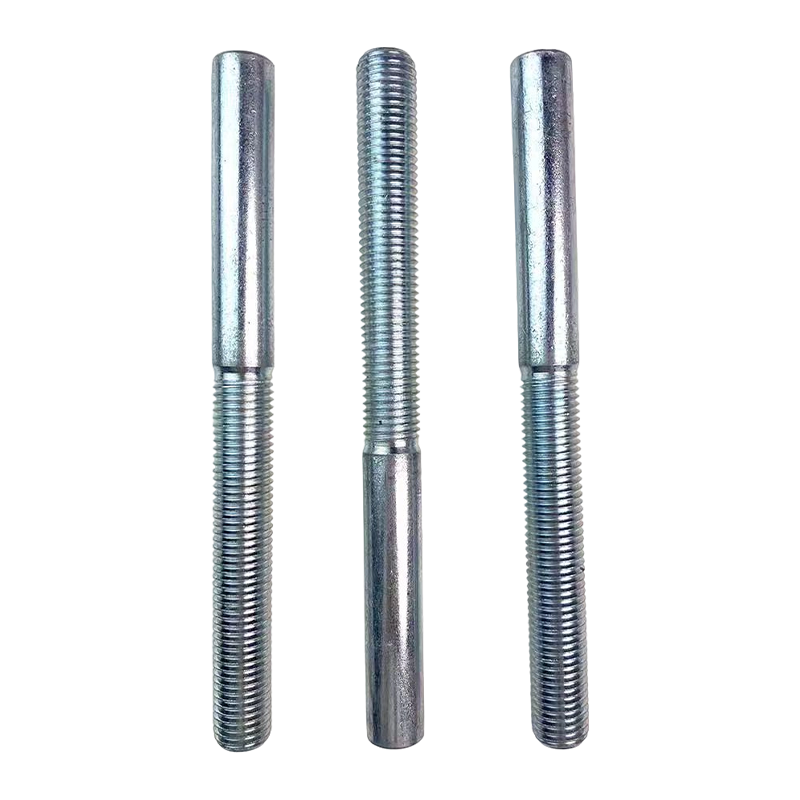
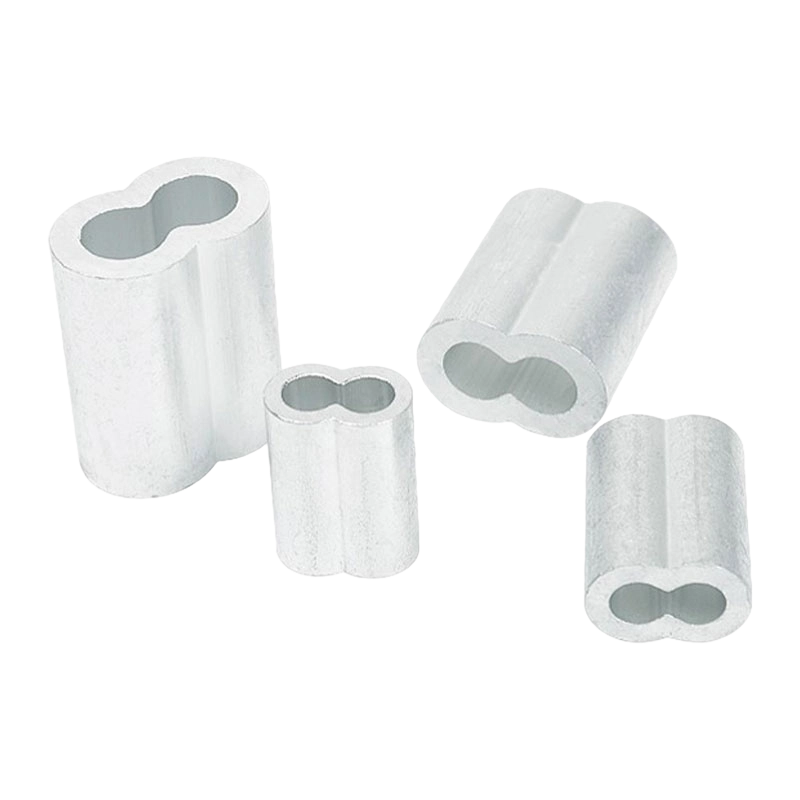
A wire rope swager — also called a wire rope swaging machine or wire rope press — is a device that permanently compresses a metal sleeve (ferrule or aluminum sleeve) around the end of a wire rope to create a secure loop or termination. The swaging process deforms the sleeve material around the rope strands under extreme hydraulic pressure, creating a cold-forged connection that can match or exceed the rated breaking strength of the wire rope itself.
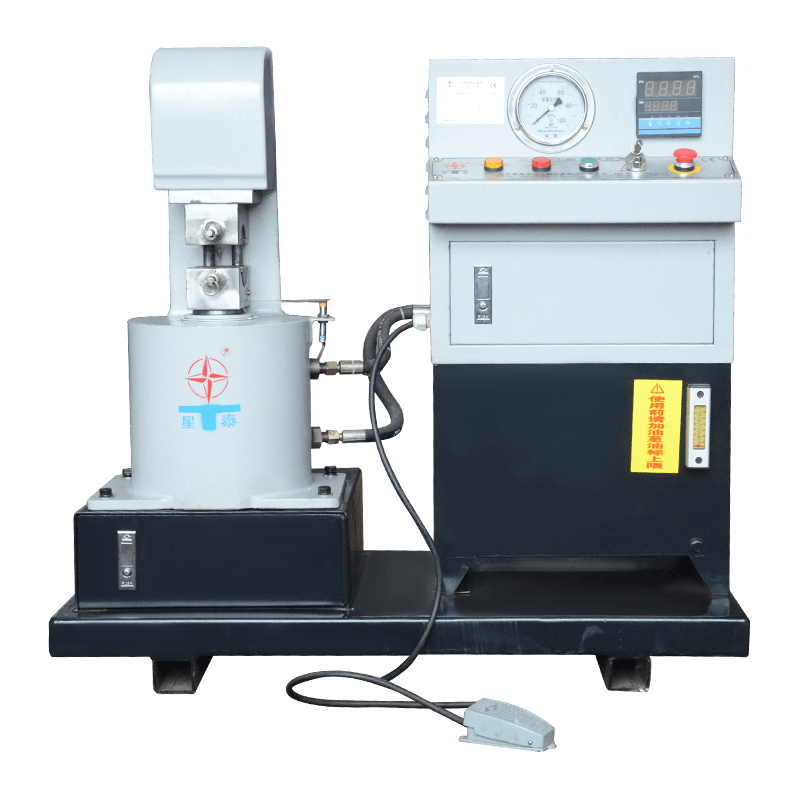
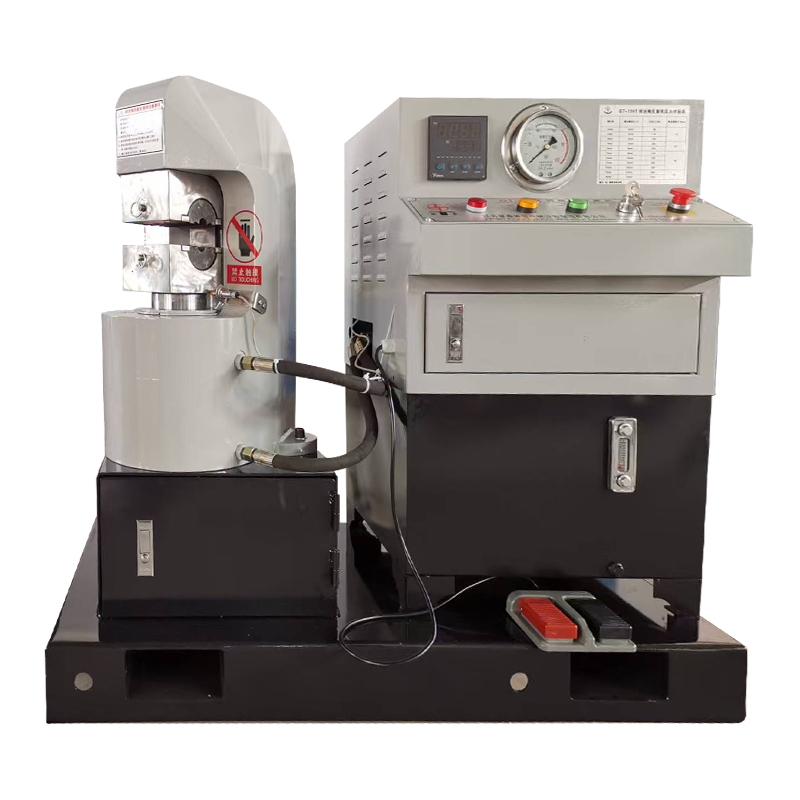
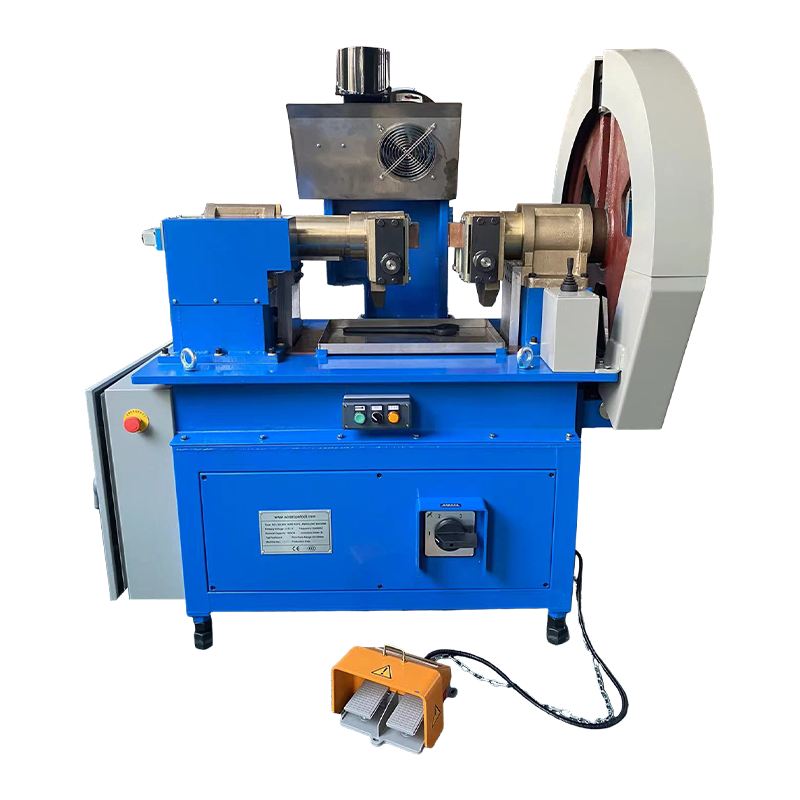
Modern hydraulic wire rope swagers operate on a piston-driven mechanism. Hydraulic oil, pressurized by a pump, drives a piston downward through precision-machined dies. The dies close around the sleeve-and-rope assembly, applying radially symmetric compressive force. In the GT-400, the maximum working pressure reaches 56 MPa, producing a termination of exceptional structural integrity with a maximum piston stroke of 80 mm.
There are three broad categories of wire rope swagers on the market: manual (bench-mounted lever or screw-press types for small-diameter ropes), electric, and hydraulic. For professional or industrial-grade applications — particularly those involving wire rope diameters above 10 mm — a hydraulic wire rope swage machine is the standard choice due to its consistent force delivery and operator safety.
Key Components of a Hydraulic Wire Rope Swager
- Swaging dies: Precision-machined from high-strength alloy steel; directly determines sleeve deformation quality
- Hydraulic pump unit: Dual-pressure design delivers fast idle movement and controlled high-pressure pressing
- Machine body (frame): Single-block construction eliminates weld-joint failure risk
- Piston assembly: Controls stroke depth and pressing speed (up/down)
- Control panel: Operator interface for pressure setting, stroke control, and cycle management
GT-400 Wire Rope Swaging Machine: Technical Specifications
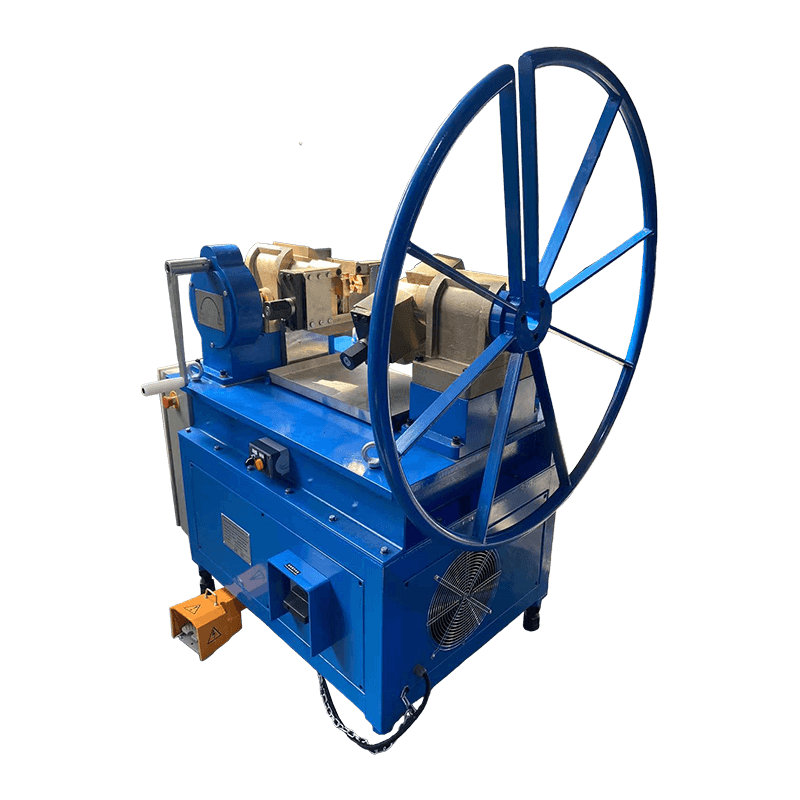
The GT-400 is Jiangsu Xingtai's flagship hydraulic wire rope swager for medium-to-heavy industrial applications. Built with a basket-frame design for enhanced structural rigidity, it handles the full range of common industrial wire rope diameters.
| Parameter | GT-400 Value |
|---|---|
| Max Wire Rope Diameter | Φ34 mm |
| Motor Power | 3 kW |
| Max Working Pressure | 56 MPa |
| Max Piston Movement | 80 mm |
| Piston Up Speed | 4.5 mm/sec |
| Piston Down Speed | 4.5 mm/sec |
| Machine Dimensions (L × W × H) | 1200 × 600 × 1350 mm |
Wire Rope Diameter Range: What Industries Need
Different industries demand different wire rope diameters. A capable wire rope swage machine must cover the full spectrum from light rigging (6–10 mm) to heavy-duty mining or marine applications (26–34 mm). The chart below compares the typical rope diameter requirements across key sectors against the GT-400's working range.
The chart above illustrates that across all major industrial sectors — from marine and mining to railway and electrical — the GT-400's operating range of 6 mm to 34 mm covers every common wire rope diameter in use. This versatility is critical for workshops and production facilities that serve multiple industry clients, as it eliminates the need to invest in multiple specialized swaging machines. Marine and port applications, which require the widest diameter range, are fully accommodated. Even for lighter electrical rigging applications starting at 6 mm, the machine performs reliably. The ability of a single industrial wire rope swager to span this entire spectrum translates directly into capital savings and floor-space efficiency. Operators in multi-industry environments will find that the GT-400 eliminates the switching downtime associated with maintaining two or more specialized rope crimping tools.
Production Efficiency: Hydraulic Swager vs. Manual Methods
One of the most compelling reasons to invest in a hydraulic wire rope swaging machine is the measurable gain in production throughput over time. The following line chart compares cumulative units produced per 8-hour shift between manual rope crimping tools and the GT-400 hydraulic wire rope swager over a 5-day workweek.
The line chart above demonstrates a clear and compounding productivity advantage for the GT-400 hydraulic wire rope swager over manual alternatives. On Day 1 alone, the hydraulic machine produces 95 terminations compared to just 40 with manual methods — a 2.4× difference. By the end of a 5-day period, cumulative output reaches 500 units hydraulically versus only 155 manually, representing a throughput gap of over 220%. The consistent speed of the GT-400's dual-pressure pump system (piston speed of 4.5 mm/sec in both directions) is the primary driver of this advantage, eliminating the variable fatigue-related slowdown that affects manual operators. A facility processing 500 terminations per week can accommodate larger order volumes, tighter turnaround commitments, and lower per-unit labor cost. For operations scaling from pilot production to full industrial volume, the investment in a quality hydraulic wire rope press delivers measurable ROI within weeks of deployment.
Why 56 MPa Working Pressure Matters for Swaging Quality
The maximum working pressure of a wire rope swaging machine is not just a specification number — it directly determines the quality and security of the swaged termination. Insufficient pressure results in incomplete sleeve deformation, which creates slip risk in the finished assembly. The column chart below illustrates how different classes of wire rope swage machines compare on maximum operating pressure.
The column chart above shows that the GT-400's 56 MPa maximum working pressure places it firmly in the high-performance category, well above basic hydraulic machines (~20 MPa) and dramatically above manual screw presses (~5 MPa). This pressure level is sufficient to cold-forge aluminum sleeves around wire ropes up to 34 mm with consistent dimensional accuracy, ensuring the pressed sleeve meets international rigging standards. Low-pressure machines often require multiple presses on the same sleeve to achieve adequate deformation, which introduces inconsistency and increases cycle time. At 56 MPa, a single controlled pressing cycle with the GT-400 achieves the required sleeve reduction in one pass, protecting wire rope integrity and reducing operator intervention. The machine's dual-pressure pump system is specifically designed to apply controlled, progressive force — fast travel during the idle approach stroke, then precisely metered high pressure during the actual swaging contact phase. This is a technically sophisticated feature that separates purpose-built wire rope press equipment from generic hydraulic presses repurposed for swaging applications.
Performance Radar: Evaluating a Wire Rope Swaging Machine Across Key Dimensions
Selecting the best wire rope swaging machine requires evaluating multiple performance dimensions simultaneously. The radar chart below compares the GT-400 hydraulic wire rope swager against a generic manual rope crimping tool across six critical performance metrics.
The radar chart reveals a decisive and multidimensional performance advantage for the GT-400 hydraulic wire rope swager across all measured categories. The GT-400 achieves near-maximum scores on pressing speed, maximum pressure capability, and wire rope diameter range — the three most operationally critical dimensions for industrial production environments. Its consistency score is also maximum, reflecting the machine's single-block body construction and precision-engineered piston assembly, which eliminate variance between cycles. Manual rope crimping tools show a relative strength only in ease of use for very simple tasks (low-diameter, single-unit production), but even this advantage disappears at any meaningful production volume. The safety dimension favors the hydraulic design, as automated pressure control eliminates the overloading risk associated with manual mechanical presses. For any facility choosing between a manual wire rope swager and a hydraulic machine, this radar comparison makes clear that the hydraulic option outperforms on every dimension that affects output quality, worker safety, and throughput.
Applications: Where the GT-400 Wire Rope Swager Is Used
The GT-400 is a purpose-built industrial wire rope swager that serves as a core production tool across a wide range of sectors. Its versatility stems from both its broad diameter range and the uniformity of swaged joints it produces, which meet the strength requirements demanded in safety-critical rigging and lifting applications.
Primary Application Areas
- Wire Rope Industry: Core production environment; swaging ferrules and aluminum sleeves onto wire rope ends for slings and lashings
- Mining Operations: Producing high-strength rope slings and lifting assemblies for shaft hoisting and underground haulage systems
- Metallurgical Plants: Assembly of wire rope lifting slings used in ladle handling, billet transport, and overhead crane systems
- Wharves and Ports: Fabricating mooring lines, crane slings, and cargo rigging; cable swager applications for container spreader bars
- Railways: Fabricating stay wires, tension cables, and wire rope assemblies for signaling infrastructure and catenary support
- Electrical / Telecom Infrastructure: Pre-formed and swaged cable assemblies for overhead line supports, guy wires, and suspension hardware
- Construction and Lifting: Producing custom wire rope slings for cranes, scaffolding, and structural tension cable assemblies
In each of these applications, the electric wire rope swage machine or hydraulic variant must produce consistent, dimensionally accurate terminations. Variations in sleeve compression directly affect the slip load of the finished assembly. For safety-critical applications — hoisting, overhead lifting, mooring — this consistency is non-negotiable, and it is precisely here that the GT-400's controlled 56 MPa pressing system provides a reliable production baseline.
What to Evaluate When Choosing a Wire Rope Swaging Machine for Sale
Buyers searching for a wire rope swaging machine for sale — whether a manual wire rope swager for a workshop or an industrial wire rope swager for production-scale output — should evaluate several interconnected factors before purchasing.
1. Rope Diameter Range
The single most important specification is whether the machine covers the full diameter range you need. If you are producing slings from 10 mm rope today but may need to work with 28 mm rope in six months, choosing a machine rated to Φ34 mm gives flexibility. The GT-400's range of 6–34 mm accommodates all standard wire rope diameters used in the applications listed above without requiring a die set change between smaller and larger sizes beyond standard die selection.
2. Frame Construction and Material Quality
The machine frame must withstand repeated high-force pressing cycles over a service life measured in years, not months. Xingtai Hydraulic's single-block body manufacturing approach eliminates welded joints — a common point of fatigue failure in lesser-built frames. The swaging components are forged from high-strength alloy steel, a specification that directly affects die longevity and dimensional stability over thousands of pressing cycles.
3. Hydraulic System Design
A dual-pressure pump oil supply system — as used in the GT-400 — is a significant feature. The machine moves quickly at low pressure during the approach stroke (saving time on each cycle) and then transitions to high-pressure, low-volume oil flow for the actual pressing phase. This reduces cycle time without sacrificing pressing accuracy, and it extends the service life of the hydraulic seals and cylinders by avoiding sustained full-pressure operation.
4. Power Requirements and Footprint
At 3 kW motor power and physical dimensions of 1200 × 600 × 1350 mm, the GT-400 is compact and energy-efficient for its pressure class, making it suitable for installation on a standard workshop floor with a single-phase or three-phase industrial power supply depending on configuration. Its relatively modest footprint allows placement adjacent to assembly stations without requiring dedicated machine rooms.
5. Export Compliance and After-Sales Support
For international buyers, machine export history and manufacturer reliability are critical considerations. Xingtai Hydraulic machines have been exported to the UK, Australia, the Netherlands, Latvia, Malaysia, Thailand, India, Russia, Botswana, Poland, and other markets — demonstrating operational suitability across diverse regulatory environments and industrial conditions. This global track record is a meaningful proxy for product quality and service reliability for buyers evaluating a hydraulic wire rope swager from overseas.
Features That Define the Best Wire Rope Swaging Machine
Not every machine marketed as a wire rope press or cable swager delivers consistent production-grade output. The following features separate a well-engineered hydraulic wire rope swager from generic alternatives:
| Feature | GT-400 Implementation | Production Benefit |
|---|---|---|
| Frame Construction | Single-block body, no welds | Long service life; no joint fatigue failure |
| Die Material | Forged high-strength alloy steel | Consistent dimensional accuracy over high cycle counts |
| Pump System | Dual-pressure (fast + high-pressure) | Shorter cycle times; smooth pressing quality |
| Max Pressure | 56 MPa | Complete sleeve deformation in one pressing cycle |
| Diameter Coverage | 6 mm – 34 mm | One machine covers all standard industrial rope sizes |
| Operation | Extremely easy; low operator skill threshold | Reduced training time; low error rate |
Xingtai Hydraulic's GT-400 earns its position among the best wire rope swaging machines through the combination of these features. Each engineering choice — from single-block frame to dual-pressure hydraulics — reflects a design philosophy optimized for production reliability over long operational periods, not just peak specification numbers.
About Jiangsu Xingtai Hydraulic Manufacturing Co., Ltd.
Jiangsu Xingtai Hydraulic Manufacturing Co., Ltd. was founded in 1992 and is located in Taizhou City, Jiangsu Province, China. The company specializes in manufacturing hydraulic wire rope pressing machines, wire rope annealing and tapering machines, aluminum sleeves, and lifting clamps. Xingtai Hydraulic is equipped with advanced production facilities, strong technical capabilities, authoritative testing equipment, and a comprehensive quality management system.
The swaging components of Xingtai Hydraulic machines are forged from high-strength alloy steel. The machine body is manufactured from a single block of material, ensuring structural integrity and long service life. Xingtai's hydraulic systems utilize a dual-pressure pump oil supply system, which enables fast upward and downward movement while ensuring a smooth pressing process. This design significantly improves pressing quality and production efficiency.
Xingtai Hydraulic machines have been exported to numerous countries, including the UK, Australia, the Netherlands, Latvia, Malaysia, Thailand, India, Russia, Botswana, Poland, and others. Guided by the philosophy of "high quality, competitive price, and lasting commitment," Xingtai remains dedicated to serving both existing and new clients with the same level of excellence as they work together to build a successful future.
Frequently Asked Questions
If you require custom hydraulic equipment or technical consultation, please feel free to contact the Xingtai Sales and Engineering Team.
-
 +86-523-86934677
+86-15896002505 -
 [email protected]
-
 +86-15896002505
-
 No. 3 Longgang Road, Gaogang Port Street, Taizhou City, China.
Copyright © Jiangsu Xingtai Hydraulic Manufacturing Co., Ltd. All Rights Reserved. Custom hydraulic machinery manufacturers Wholesale wire rope swagers Factory

