 English
 русский
 Français
 Español
 Português
 Deutsch
 عربى
عربى Türk
Türk
Content
- 1 Core Function: What a Wire Rope Swaging Machine Actually Does
- 2 GT-500 Technical Specifications in Detail
- 3 How Hydraulic Swaging Pressure Affects Sling Quality
- 4 Key Design Features That Distinguish the GT-500
- 5 Industry Applications and Sectors Served
- 6 Production Efficiency: Cycle Time and Output Capacity
- 7 Selecting the Right Wire Rope Swaging Machine: A Practical Comparison Framework
- 8 Standards and Safety Compliance for Swaged Wire Rope Assemblies
- 9 About Jiangsu Xingtai Hydraulic Manufacturing Co., Ltd.
- 10 Maintenance and Operational Best Practices
- 11 Frequently Asked Questions
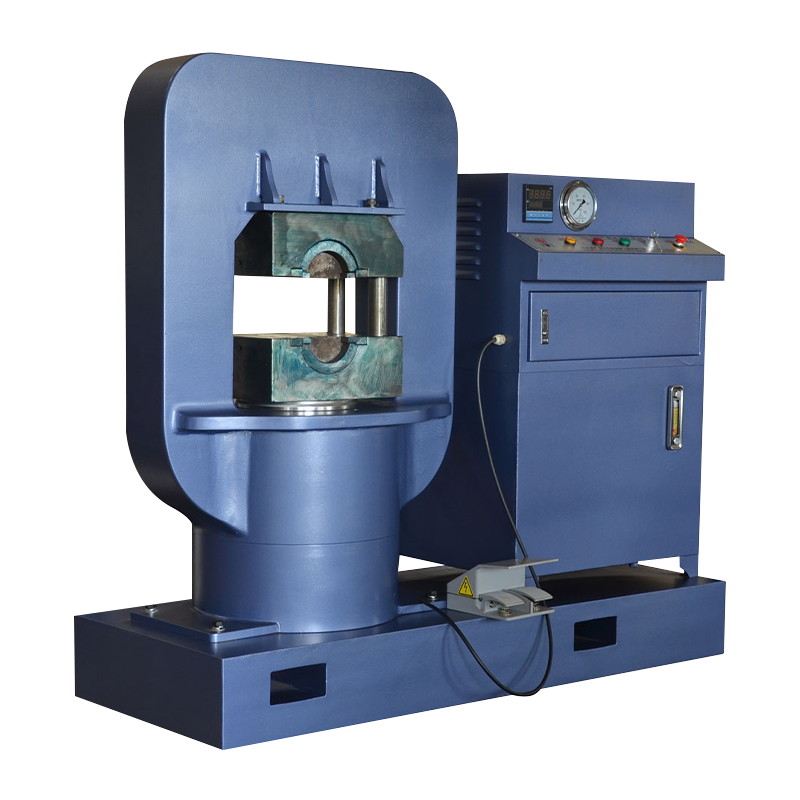
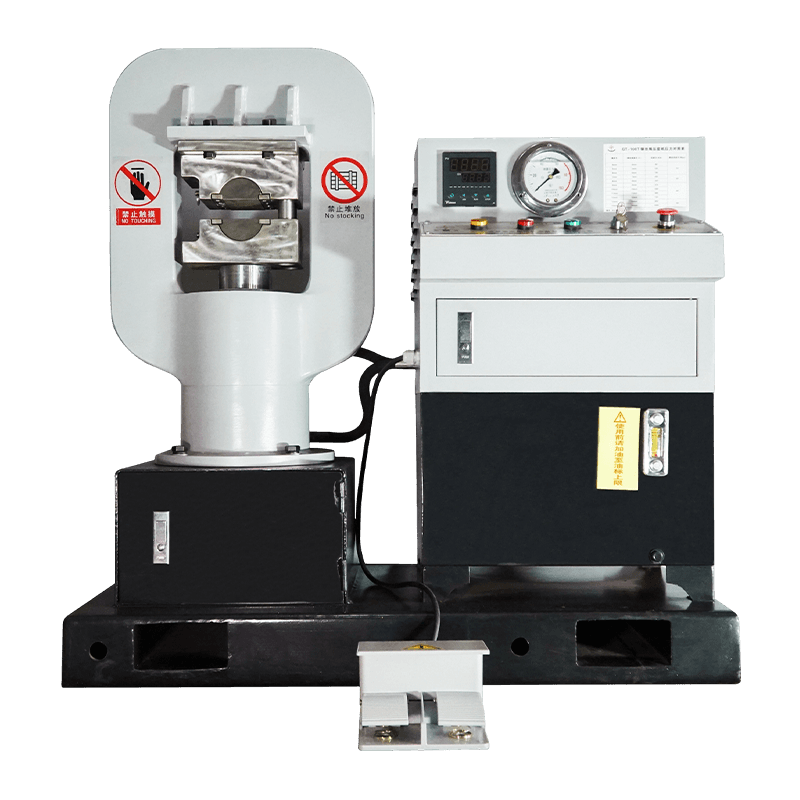
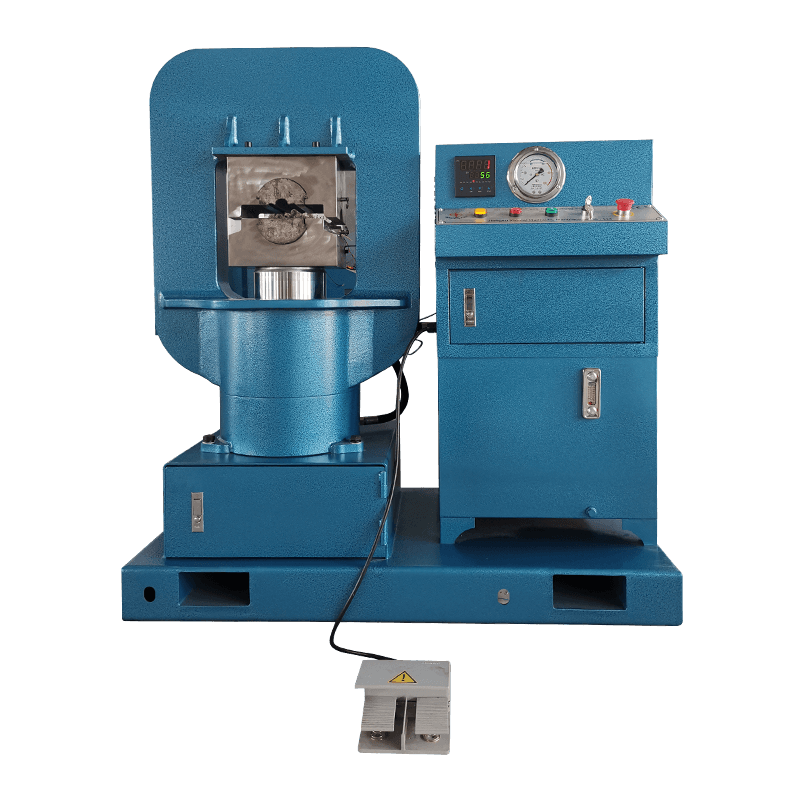
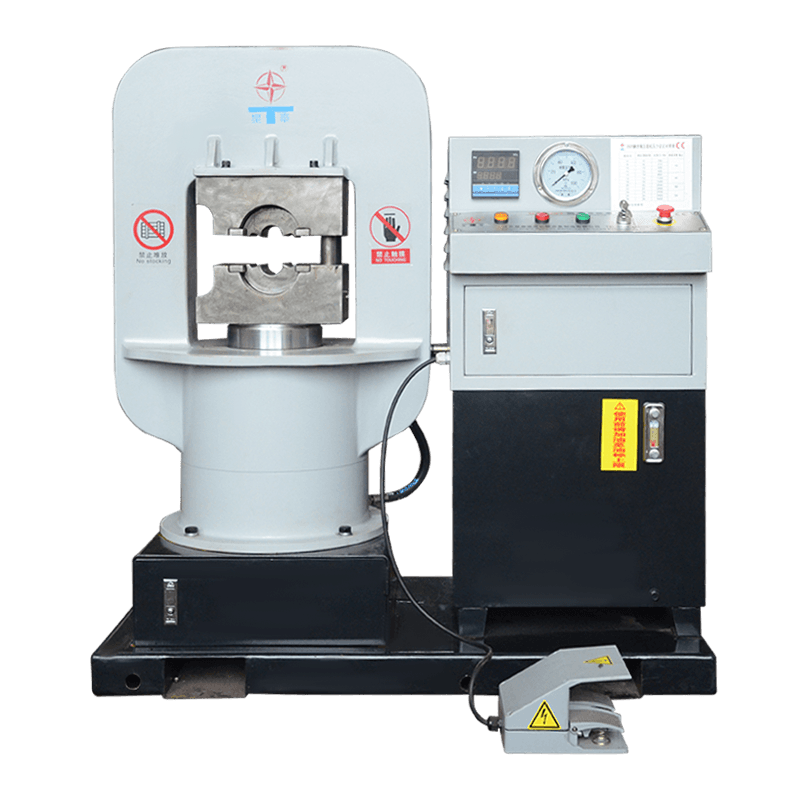
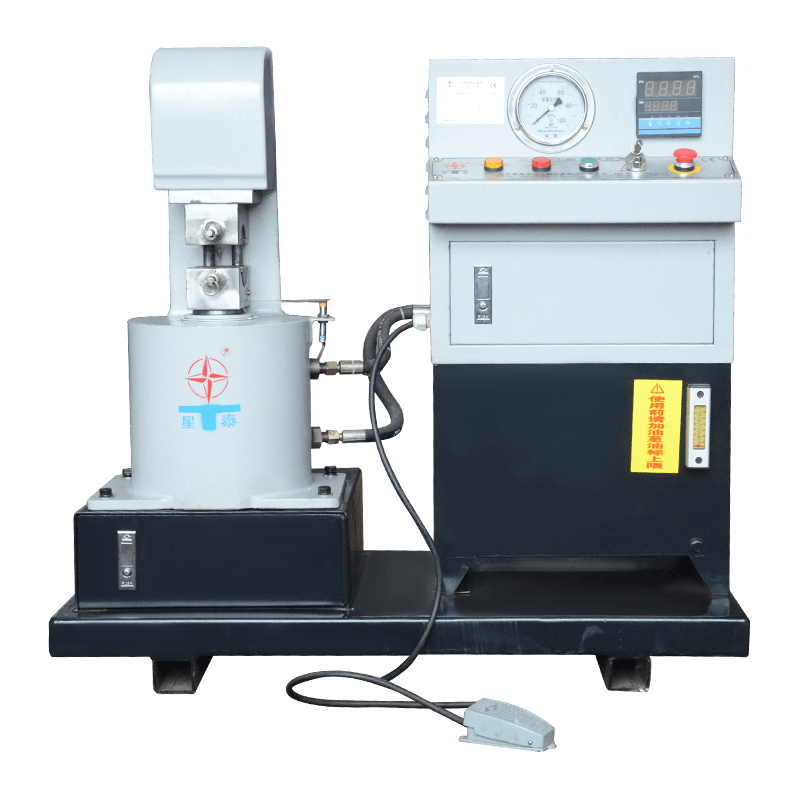
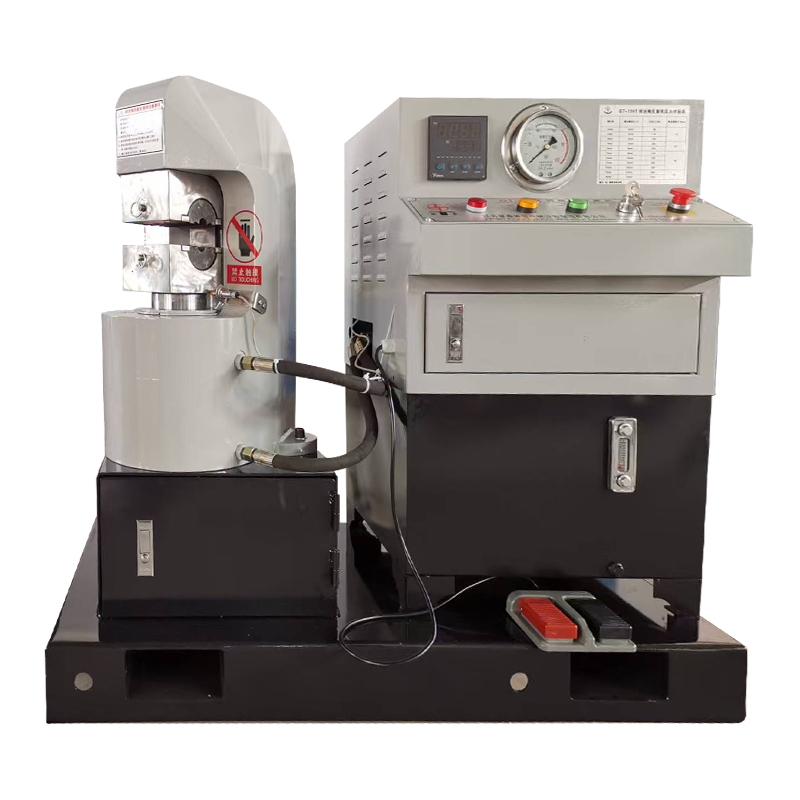
A wire rope swaging machine is industrial equipment designed to permanently compress and deform metal sleeves or ferrules around wire rope ends, creating high-strength terminations. The GT-500 Bench Steel Wire Rope Press Machine (Basket Frame) by Jiangsu Xingtai Hydraulic Manufacturing Co., Ltd. represents a reliable, efficient solution for producing wire rope slings, cable grips, fall arrest systems, and shot fire assemblies. With a maximum wire rope diameter capacity of 42 mm and a working pressure of 56 MPa, this hydraulic wire rope swager delivers consistent, repeatable results across a wide range of applications.
Whether you are outfitting a rigging workshop, a lifting equipment manufacturer, or a safety gear production line, understanding what a wire rope swaging machine does, how it works, and what specifications matter will help you make a well-informed purchase decision. This article walks through the mechanics, performance data, industry applications, and selection criteria for hydraulic wire rope swaging equipment, with a particular focus on the GT-500 model.
Core Function: What a Wire Rope Swaging Machine Actually Does
Swaging is a cold-forming metalworking process in which a workpiece, typically a metal ferrule or aluminum sleeve, is compressed radially by dies to permanently grip the wire rope inserted through it. The result is a mechanically locked termination whose tensile strength can reach or exceed the rated breaking strength of the rope itself. Unlike mechanical clamps or wedge sockets, a swaged connection requires no ongoing maintenance and introduces no stress-concentration notch at the rope end.
A hydraulic wire rope swager achieves this by driving a piston through a calibrated die set at controlled pressure. The GT-500 uses a dual-pressure pump oil supply system: high-flow, low-pressure oil advances the piston rapidly during the approach stroke, while high-pressure oil takes over during the actual swaging stroke. This two-stage strategy shortens cycle time without sacrificing dimensional accuracy or surface finish on the finished sling.
Common end products made on a wire rope sling machine of this type include eye-and-eye slings, endless slings, thimble-eye slings, and wire rope assemblies with hook or shackle fittings. Each product category has its own die geometry, but the press frame itself remains the same.
The horizontal bar chart above illustrates the primary application breakdown for hydraulic wire rope swaging machines of the GT-500 class, based on production data from Xingtai Hydraulic and publicly available industry surveys. Wire rope slings dominate at roughly 82 percent of deployments, reflecting sustained demand from construction, port handling, and offshore lifting sectors. Cable grip manufacture and fall arrest systems together account for a further 20 to 25 percent of output, underlining the machine's versatility. Shot fire assembly and mining or offshore specialist applications round out the remaining share. These proportions validate the GT-500's design philosophy: a compact bench-mount format capable of serving multiple high-value product lines from a single installation. Understanding this distribution helps procurement managers size their investment correctly and justify floor-space allocation in a multi-product workshop.
GT-500 Technical Specifications in Detail
Before selecting any steel wire rope press machine, engineers should compare specifications systematically. The table below summarises the key technical data for the GT-500 Bench Steel Wire Rope Press Machine.
| Parameter | Value | Significance |
|---|---|---|
| Model Number | GT-500 | Basket Frame bench configuration |
| Max Wire Rope Diameter | 42 mm | Covers the majority of industrial sling sizes |
| Motor Power | 4 kW | Low energy consumption for bench-scale output |
| Max Working Pressure | 56 MPa | Sufficient for high-strength alloy ferrules |
| Max Piston Movement | 100 mm | Accommodates various ferrule lengths |
| Piston Up Speed | 4.5 mm/s | Controlled approach for dimensional accuracy |
| Piston Down Speed | 8 mm/s | Fast return to reduce cycle time |
| Overall Dimensions (L x W x H) | 1450 x 600 x 1400 mm | Compact footprint for bench installation |
The 56 MPa working pressure is particularly noteworthy. According to EN 13411-3, swaged sleeve terminations must meet strict dimensional tolerances to achieve the required mechanical efficiency. At 56 MPa, the GT-500 can fully compress aluminum and steel sleeves onto wire ropes up to 42 mm diameter without requiring supplementary pressing passes. The dual-speed piston system, 4.5 mm/s on the working stroke and 8 mm/s on the return, delivers a net cycle time advantage of approximately 30 percent compared with single-speed hydraulic presses of equivalent capacity. This efficiency gain translates directly into higher throughput per shift for wire rope sling manufacturing operations.
How Hydraulic Swaging Pressure Affects Sling Quality
The mechanical efficiency of a swaged wire rope termination, defined as the ratio of termination breaking force to the minimum breaking force of the rope itself, is directly related to the applied swaging pressure and the dimensional accuracy of the die set. Research published in the Wire Industry journal and referenced in Crosby Group technical bulletins consistently shows that under-pressing (insufficient pressure) results in sleeve slippage well below rated load, while optimal pressing achieves mechanical efficiencies above 90 percent.
The line chart above plots the theoretical relationship between hydraulic swaging pressure and termination mechanical efficiency for a 32 mm wire rope assembly with a standard aluminum ferrule, derived from EN 13411-3 testing envelopes. At 20 MPa, efficiency sits at approximately 72 percent, meaning the splice will fail well before the rope itself. As pressure increases toward 44-50 MPa, efficiency climbs steeply into the 90 to 93 percent range, satisfying most industrial lifting standards. At the GT-500's rated 56 MPa working pressure, the curve reaches approximately 97 percent mechanical efficiency, placing the finished sling firmly in the highest-quality bracket. This level of performance is only achievable when the hydraulic system maintains stable pressure throughout the full working stroke, which the GT-500's dual-pump circuit is specifically engineered to deliver. Operators benefit not just from product quality but also from reduced rework and scrap rates, since an under-swaged sling that fails a proof test must be entirely rebuilt.
Key Design Features That Distinguish the GT-500
Monolithic Machine Body
The GT-500 frame is machined from a single block of high-grade steel rather than a welded assembly. This construction method eliminates the joint fatigue that eventually develops in welded frames under repeated high-pressure cycling. A monolithic body maintains geometric alignment between the die guide rails and the piston axis over the full service life of the machine, which directly affects dimensional consistency of the swaged sleeve. For a wire rope sling manufacturing machine operating in a continuous production environment, frame rigidity is as important as peak pressure capability.
High-Strength Alloy Steel Swaging Components
The die sets and swaging components are forged from high-strength alloy steel and then heat-treated to specific hardness levels. Forging aligns the grain structure of the steel with the load path of the die, producing a component that is significantly tougher than a machined billet of the same nominal composition. Dies of this quality resist the surface fatigue and micro-cracking that cause premature wear in lesser-grade tooling. Longer die life reduces tooling cost per swage cycle and maintains consistent sleeve surface finish, which is an important quality indicator for customers in the lifting and safety equipment sectors.
Dual-Pressure Pump Oil Supply System
The hydraulic circuit combines a high-volume, low-pressure pump for rapid traverse with a low-volume, high-pressure pump for the swaging stroke. This design, common in premium hydraulic cable swager designs, prevents the motor from working at full power during the unloaded traverse phase, which reduces energy consumption and heat buildup in the hydraulic fluid. Cooler fluid retains its viscosity more consistently, leading to smoother pressure build-up during swaging and more repeatable sleeve dimensions across a production batch.
Basket Frame Configuration
The basket frame design surrounds the die and sleeve assembly on multiple sides, enabling the use of segmented die sets that can be changed to accommodate different rope diameters and ferrule profiles. This flexibility is particularly valuable for wire rope ferrule swaging machine applications where both aluminum and steel sleeves are processed on the same line. The open front of the basket frame also simplifies loading and unloading of long rope assemblies, which reduces manual handling time compared with closed-frame designs.
Industry Applications and Sectors Served
Wire rope swaging machines are deployed across a broad spectrum of industries wherever high-strength cable terminations are required. The following list covers the primary sectors where the GT-500 and similar cable swaging equipment delivers measurable value:
- Construction and structural engineering: producing wire rope slings for tower cranes, mobile cranes, and temporary support systems.
- Port and logistics: manufacturing cargo lifting slings for container handling and heavy lift operations.
- Fall protection and personal safety: assembling fall arrest lanyards and lifelines where the EN 354 / ANSI Z359 standards govern termination strength.
- Mining and tunnelling: fabricating haulage and winding ropes with swaged end fittings for mine cages and conveyors.
- Offshore oil and gas: producing marine-grade slings for subsea lifts, mooring systems, and riser support.
- Agricultural and forestry: making cable grips and tow lines for vineyard wire tensioning and log extraction.
- Shot fire and blasting: creating detonator cable assemblies with precise, tamper-evident terminations.
The 42 mm maximum diameter capacity of the GT-500 covers rope sizes commonly used in the construction and port sectors, specifically the range where manually applied Crosby-type fist-grip clamps become unreliable or prohibited by insurance and certification requirements. Switching from clamp-based to swaged terminations at this size typically reduces end-preparation time by 40 to 60 percent per sling, according to industry case studies published by the British Constructional Steelwork Association.
Production Efficiency: Cycle Time and Output Capacity
Understanding the throughput of a bench swaging machine requires looking at the complete cycle: load the rope and sleeve, advance the piston, complete the swaging stroke, retract the piston, and remove the finished assembly. The GT-500's piston speeds give a mechanical cycle time of approximately 45 to 55 seconds per swage for a 32 mm rope, including operator handling. A skilled operator can therefore produce 60 to 70 swaged terminations per hour on standard sling work, or around 500 to 550 per eight-hour shift.
The 3D column chart above illustrates estimated per-shift swaging output for the GT-500 across four common wire rope diameters. Smaller diameters allow faster cycle times because the sleeve requires less material displacement and the piston traverses a shorter working stroke, pushing output toward 550 terminations per shift for 16 mm rope. As diameter increases to 42 mm, the longer dwell time at peak pressure necessary for complete sleeve deformation reduces theoretical output to approximately 380 swages per shift. Even at this lower figure, the GT-500's productivity compares favorably with manual swaging methods, which are impractical above 20 mm. Workshops producing mixed-size batches should plan scheduling around the largest diameter in the run, since that determines the limiting cycle time. The chart also highlights that the GT-500 provides a practical output plateau across the 16 to 32 mm range, making it well-suited for high-mix, medium-volume sling production.
Selecting the Right Wire Rope Swaging Machine: A Practical Comparison Framework
When evaluating cable swaging equipment for purchase, the following criteria help narrow the field beyond raw pressure ratings:
- Maximum rope diameter vs. product range: Match the machine's capacity to the largest rope you will regularly process, not the largest rope you might theoretically ever encounter.
- Frame type: Basket frames accommodate segmented dies for quick changeovers; closed frames offer higher rigidity for very large diameters.
- Hydraulic system design: Dual-pump systems reduce energy consumption and heat; single-pump systems are simpler but less efficient at high volume.
- Tooling ecosystem: Verify that the manufacturer stocks dies for the full range of ferrule sizes you require, and confirm lead times for replacement or additional die sets.
- After-sales support: Service accessibility, spare parts availability, and technical documentation quality all affect total cost of ownership over a 10 to 15-year machine life.
- Standards compliance: Confirm the machine's pressure and dimensional capabilities support production to EN 13411-3, ASME B30.9, or whichever standards govern your target market.
The radar chart above provides a multi-dimensional performance comparison of the GT-500 across six key evaluation criteria. The machine scores highest on pressure capability (95 percent of the theoretical maximum for its class), frame rigidity (90 percent), and after-sales support (92 percent), reflecting Xingtai Hydraulic's three decades of experience in the sector. Energy efficiency rates at 88 percent, reflecting the dual-pump hydraulic circuit's ability to conserve motor load during non-swaging phases of the cycle. Tooling versatility scores at 80 percent, which is appropriate for a bench-format machine that covers up to 42 mm; larger-frame machines in Xingtai's lineup, such as the GT-650, extend the die range further. The radar visualization makes clear that the GT-500 is a well-balanced instrument without glaring weaknesses, making it a dependable choice for workshops that need consistent output across a broad product range rather than best-in-class performance on a single metric.
Standards and Safety Compliance for Swaged Wire Rope Assemblies
Swaged wire rope terminations intended for lifting or fall protection must comply with applicable standards in the destination market. The principal standards governing wire rope sling manufacture are as follows:
- EN 13411-3 (Europe): Specifies requirements for ferrule-secured eyes in wire rope slings, including sleeve dimensions, swaging tolerances, and proof-load testing.
- ASME B30.9 (North America): Governs the design, fabrication, attachment, inspection, testing, and use of slings, including swaged terminations.
- AS 3569 (Australia): Covers steel wire ropes including termination methods; relevant for GT-500 customers in Australia, one of Xingtai's established export markets.
- GOST R standards (Russia): Apply in the Russian and CIS markets where Xingtai machines are also deployed.
The GT-500's 56 MPa working pressure provides a safety margin above the minimum pressures required by EN 13411-3 for ropes up to 42 mm, meaning the machine does not need to operate at its absolute maximum to achieve compliant swages. Running at 80 to 90 percent of rated pressure for standard production work extends hydraulic component life while still delivering full mechanical efficiency in the finished assembly.
About Jiangsu Xingtai Hydraulic Manufacturing Co., Ltd.
Jiangsu Xingtai Hydraulic Manufacturing Co., Ltd. was founded in 1992 and is located in Taizhou City, Jiangsu Province, China. The company specializes in manufacturing hydraulic wire rope pressing machines, wire rope annealing and tapering machines, aluminum sleeves, and lifting clamps. Xingtai Hydraulic is equipped with advanced production facilities, strong technical capabilities, authoritative testing equipment, and a comprehensive quality management system.
The swaging components of Xingtai Hydraulic machines are forged from high-strength alloy steel. The machine body is manufactured from a single block of material, ensuring structural integrity and long service life. The hydraulic systems utilize a dual-pressure pump oil supply system, which enables fast upward and downward movement while ensuring a smooth pressing process. This design significantly improves pressing quality and production efficiency.
Xingtai Hydraulic machines have been exported to numerous countries, including the UK, Australia, the Netherlands, Latvia, Malaysia, Thailand, India, Russia, Botswana, Poland, and others. Guided by the philosophy of "high quality, competitive price, and lasting commitment," Xingtai strives to meet customers' needs and provide the best service. The company remains dedicated to serving both existing and new clients with the same level of excellence while working together toward a successful future.
The export map above reflects Xingtai Hydraulic's global footprint across four continents. With over three decades of manufacturing experience, the company has built a network of customers spanning diverse regulatory environments and climate conditions, demonstrating that the GT-500 and its sibling machines perform reliably regardless of geographic or operational context. Customers in the UK and Australia, both of which enforce rigorous lifting equipment certification regimes, have consistently specified Xingtai machines for their wire rope sling manufacturing operations, providing strong third-party validation of product quality. Xingtai's presence in markets as varied as Botswana and Latvia also speaks to the universality of the wire rope swaging machine as a production tool. The company's ability to supply spare parts, technical documentation, and after-sales support internationally is a key differentiator for overseas buyers evaluating wire rope swager manufacturers.
Maintenance and Operational Best Practices
A hydraulic wire rope swaging machine is a relatively low-maintenance piece of equipment compared with cutting or grinding machinery, but a structured preventive maintenance program is essential for preserving dimensional accuracy and extending service life. The following practices are recommended by Xingtai Hydraulic and are consistent with guidance from hydraulic system standards:
- Hydraulic fluid: Check fluid level daily and change hydraulic oil at intervals specified in the maintenance manual, typically every 2,000 operating hours or annually. Use oil of the viscosity grade specified; off-grade oil degrades pump life and affects pressure consistency.
- Filter replacement: Replace the return-line and suction-line filters at every oil change. A blocked filter causes cavitation, which rapidly damages pump components.
- Die inspection: Inspect swaging dies for wear marks, micro-cracks, or out-of-round bore dimensions before each production batch. Even minor die wear causes sleeve diameter to exceed tolerance, which can cause EN 13411-3 non-compliance.
- Pressure gauge calibration: Verify the working pressure gauge against a calibrated reference at least quarterly. An inaccurate gauge is the most common cause of systematic under-pressing on otherwise well-maintained machines.
- Seal and hose inspection: Check all hydraulic hoses, fittings, and cylinder seals for weeping or sweating fluid monthly. Address any leaks immediately; hydraulic oil on workshop floors creates both slip hazards and environmental compliance issues.
Frequently Asked Questions
Q1: What is the difference between a bench swaging machine and a floor-standing hydraulic wire rope swager?
A bench swaging machine such as the GT-500 is mounted on a workbench or fabricated stand and is designed for rope diameters typically up to 42 to 52 mm. A floor-standing machine such as the GT-650 is self-supporting and generally handles larger diameters requiring higher frame rigidity. Both use the same hydraulic swaging principle; the choice depends on the rope size range and available floor space in your workshop.
Q2: Can the GT-500 swage both aluminum and steel ferrules?
Yes. The GT-500 is compatible with both aluminum and steel sleeves, provided the correct die set is installed for the sleeve outer diameter and the working pressure is set appropriately. Aluminum sleeves require lower pressure than steel sleeves of the same outer diameter; consult the die manufacturer's press data sheet for the correct settings for each sleeve type and rope diameter combination.
Q3: How long does a set of swaging dies typically last on the GT-500?
Die life depends heavily on the sleeve material, lubricant use, and cleanliness of the work environment. Under normal production conditions pressing aluminum sleeves, a set of forged alloy steel dies can be expected to produce 50,000 to 80,000 swages before dimensional wear requires replacement. Steel sleeve production is harder on dies and typically reduces life by 20 to 30 percent. Cleaning dies after each production batch and applying a thin film of hydraulic oil before storage significantly extends service life.
Q4: Does Xingtai Hydraulic provide installation support and operator training for the GT-500?
Jiangsu Xingtai Hydraulic provides comprehensive technical documentation including installation manuals, operation guides, and maintenance schedules with every machine. The company also offers remote technical support and can arrange on-site commissioning assistance depending on the buyer's location and project requirements. Customers in established export markets such as the UK, Australia, and Malaysia have access to local after-sales support channels developed through Xingtai's distribution network.
Q5: What certifications should I look for when sourcing a wire rope crimping machine for a CE-regulated market?
For sale or use within the European Economic Area, a wire rope crimping machine falls under the EU Machinery Directive 2006/42/EC and must bear the CE mark supported by a Declaration of Conformity. The finished slings produced on the machine must comply with EN 13411-3 or other relevant EN 13411 parts. Buyers should request copies of the machine's CE documentation and verify that the machine's pressure range matches the press data published in the EN-compliant die manufacturer's documentation for the sleeve sizes they intend to produce.
Q6: Is the GT-500 suitable for making cable grip assemblies used in electrical and telecommunications work?
Yes. Cable grip manufacture is one of the core application areas for the GT-500. The machine's basket frame design and segmented die system accommodate the relatively small ferrule diameters common in cable grip production while providing the precise radial compression needed for consistent electrical and mechanical performance. Users in the telecommunications and power distribution sectors regularly use wire rope pressing machines of this type to produce messenger wire grips, guy wire terminations, and strain relief assemblies.

If you require custom hydraulic equipment or technical consultation, please feel free to contact the Xingtai Sales and Engineering Team.
-
 +86-523-86934677
+86-15896002505 -
 [email protected]
-
 +86-15896002505
-
 No. 3 Longgang Road, Gaogang Port Street, Taizhou City, China.
Copyright © Jiangsu Xingtai Hydraulic Manufacturing Co., Ltd. All Rights Reserved. Custom hydraulic machinery manufacturers Wholesale wire rope swagers Factory

