 English
 русский
 Français
 Español
 Português
 Deutsch
 عربى
عربى Türk
Türk
The connection strength of wire rope shall not be less than 80% of its breaking force. When using wire rope clips, select the clip specifications and quantity according to the wire rope diameter. The clip base plate should be on the live (long) end of the rope. When using a spliced connection, the length of the splice shall not be less than 15 times the rope diameter and not less than 300mm.
Safety Precautions for Using Lifting Slings and Appliances:
I. Lifting and Hoisting Wire Rope:
1. When calculating the allowable load for wire rope, select the appropriate safety factor from the table below based on its specific application.
2. The connection strength of wire rope shall not be less than 80% of its breaking force. When using wire rope clips, select the clip specifications and quantity according to the wire rope diameter. The clip base plate should be on the live (long) end of the rope. When using a spliced connection, the length of the splice shall not be less than 15 times the rope diameter and not less than 300mm.
3. If wire rope shows signs of wear or broken wires, reduce the load applied. Replace with qualified wire rope immediately once the wear or broken wires reach the discard criteria.
4. Slings should be fabricated appropriately based on the weight, length, and lifting points of the load. During operation, the horizontal angle between the legs of a sling should ideally be between 45° and 60°, and must not be less than 30°.
5. Lifting appliances (e.g., spreader beams) must be designed and manufactured with sufficient strength and rigidity, determined by the load weight, shape, lifting points, and method. The appliance should ensure合理 load distribution and even force on the slings.
6. Use hooks correctly. Never use welded hooks or rebar hooks. A hook must be discarded if the wear at the rope contact point exceeds 10% of its original height.
7. Select pulleys (sheaves) according to the wire rope diameter and duty. The ratio of the pulley diameter to the wire rope diameter must not be less than 15.
II. Jacks:
1. The base of the jack must be placed on a level surface, with wooden pads under both the base and the load contact point.
2. Do not exceed the rated load capacity. The lifting height must not exceed the marked line on the ram or 3/4 of the total ram height.
3. During lifting, use timber blocking to secure the load as it rises. Prevent the jack from tilting or the ram from suddenly dropping due to release of pressure.
4. When using multiple jacks simultaneously, use jacks of the same model and maintain synchronization. The capacity of each jack must be not less than 1.2 times the calculated load share.
III. Chain Hoists (Hand-Pulled):
1. Check under no-load before use. After attaching the load, pull slowly for a load check. Continue use only after confirming proper operation.
2. The pulling direction should align with the chain wheel. Pull evenly. If it becomes difficult to pull, investigate the cause; do not force it by adding more people.
3. If hoisting is interrupted for an extended period, secure the hand chain to the load chain on the sprocket.
IV. Lever Hoists:
1. Use steel core wire rope for lever hoists. The rope must not have kinks or joints.
2. Do not operate by extending the lever handle.
3. If a lever hoist intended for pulling loads is used for a personnel lifting basket, its working load limit must be reduced to one-third of the rated capacity, and it must be equipped with a self-locking clamp device.
V. Capstans:
1. The capstan must be securely anchored. It must not tilt or become ungrounded under load. The hoisting rope must be wound around the drum for at least four turns. During operation, assign a dedicated person to maintain tension on the rope tail behind the drum.
2. The capstan must be equipped with a brake. Use the brake to lock the drum when the capstan is temporarily stopped, and the operators must not leave their posts.
3. To lower the load, control it by rotating the push bars in the reverse direction. Never release the load by simply letting go of the tail rope.
VI. Anchor Installation:
1. Anchors can be installed based on empirical practice or engineering design. The ground where the anchor is buried must not be waterlogged.
2. Wooden anchors should be made of solid timber like larch or fir. Brittle or rotten wood is prohibited. Before burial, treat with preservative and protect the area where the wire rope is attached using steel pipes or angle steel.
3. Critical anchors or existing anchors must be load tested before use. To increase the safety factor, methods such as adding ballast (e.g., iron weights) on the ground can be employed.
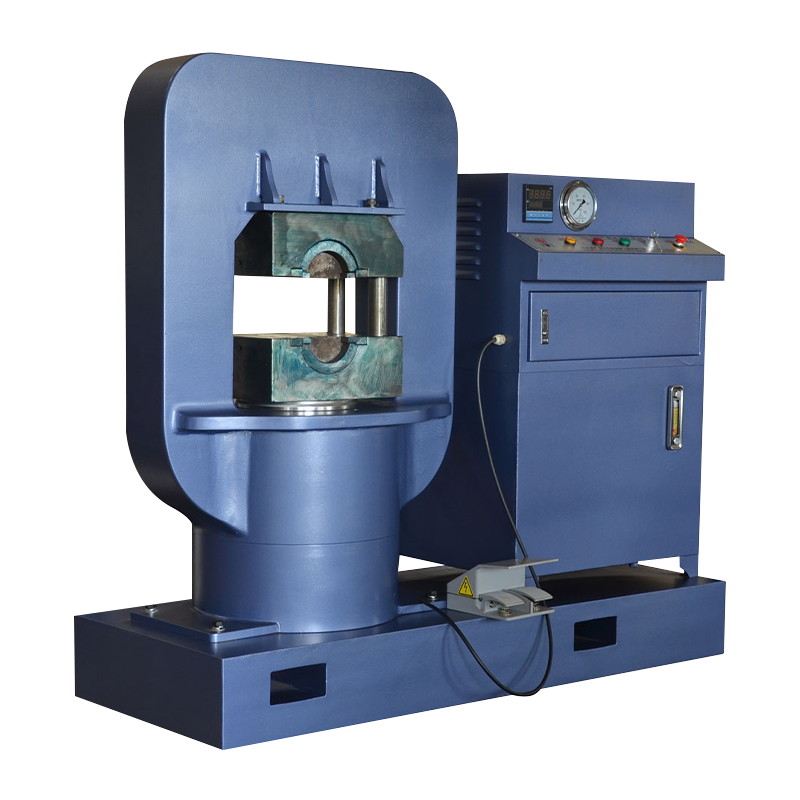

If you require custom hydraulic equipment or technical consultation, please feel free to contact the Xingtai Sales and Engineering Team.
-
 +86-523-86934677
+86-15896002505 -
 [email protected]
-
 +86-15896002505
-
 No. 3 Longgang Road, Gaogang Port Street, Taizhou City, China.
Copyright © Jiangsu Xingtai Hydraulic Manufacturing Co., Ltd. All Rights Reserved. Custom hydraulic machinery manufacturers Wholesale wire rope swagers Factory

