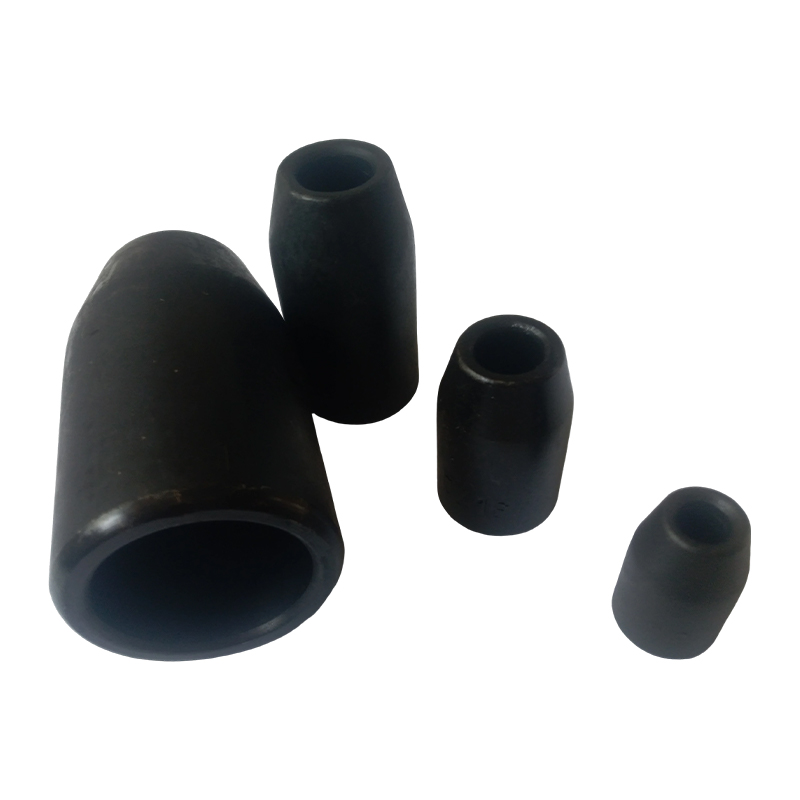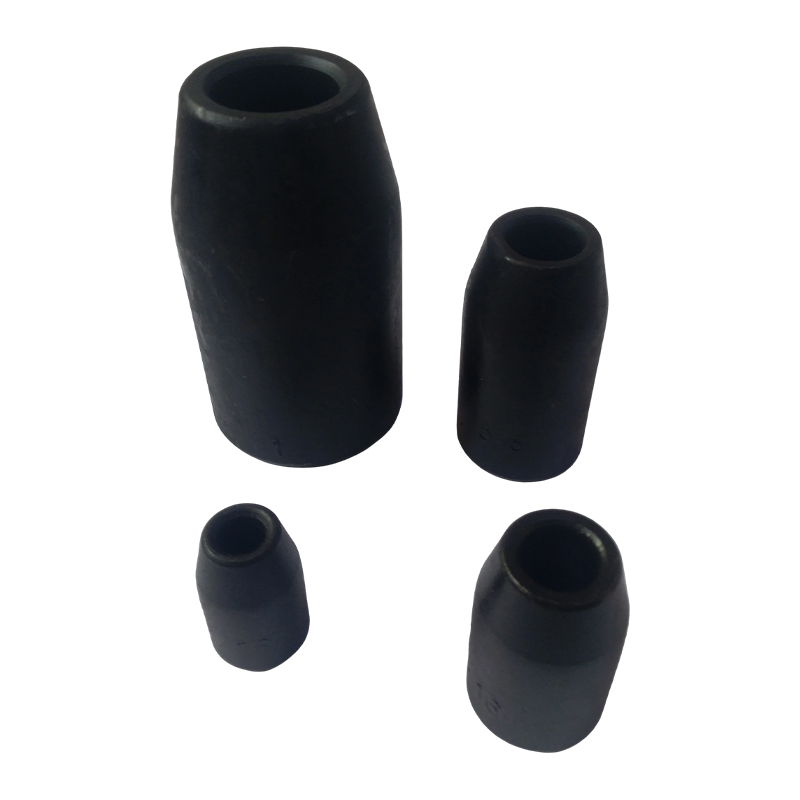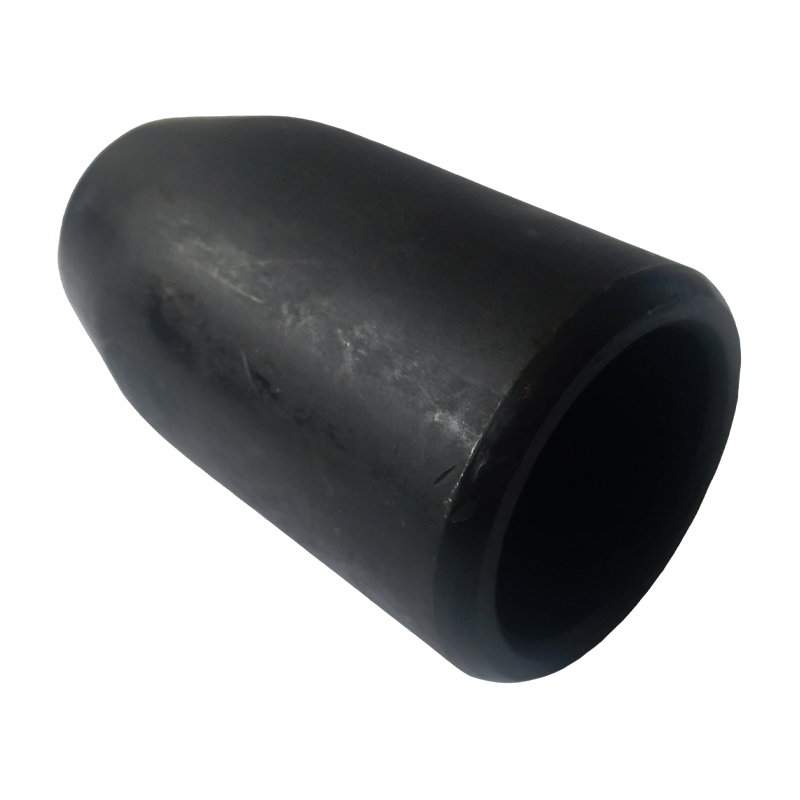
Flemish Eye Steel Ferrule Wholesale
Home / Products / Accessories / Flemish Eye Steel Ferrule
  • Parameter
  • Other Descriptions
  • Contact
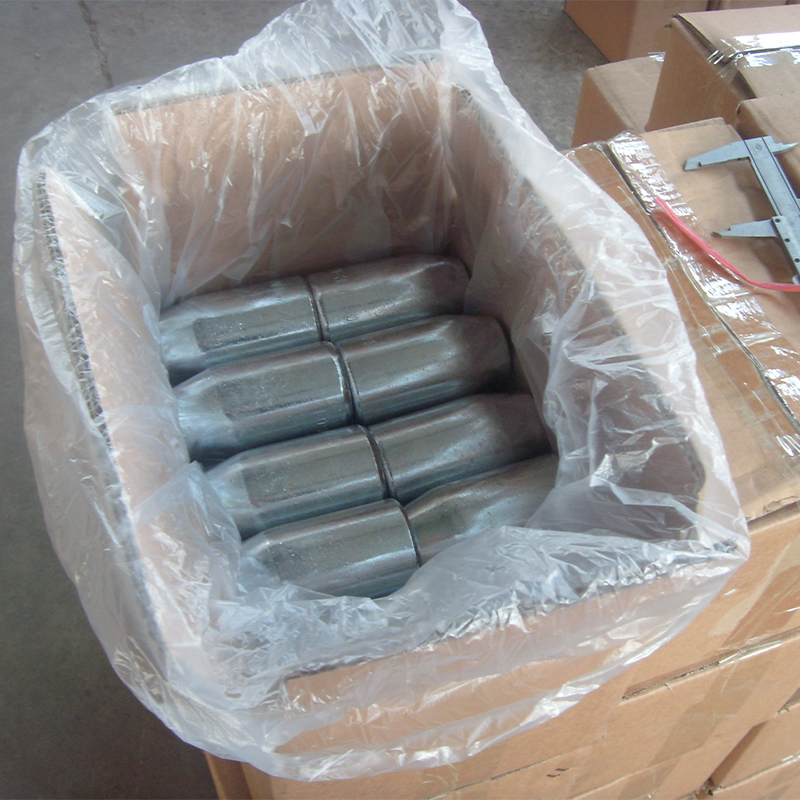
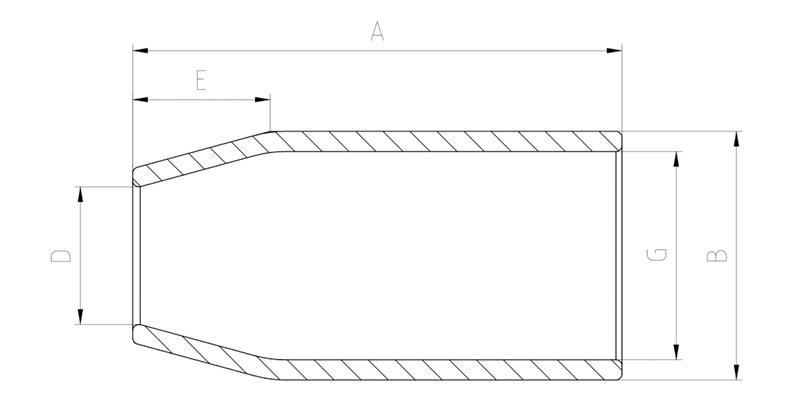
Technical Data
No. Size Weight Dimension
inch mm A B D E G
1 1/4 6-7 0.023 25.4 16.76 7.87 7.11 11.94
2 5/16 8 0.064 38.1 23.11 11.18 11.18 15.75
3 3/8 9-10 0.064 38.1 23.11 11.94 9.91 16.76
4 7/16 11 0.15 50.8 30.99 13.97 16.51 21.59
5 1/2 13 0.132 50.8 30.99 16 14.22 23.11
6 9/16 14 0.29 69.85 37.34 17.53 16 26.16
7 5/8 16 0.254 69.85 37.34 19.05 16 27.69
8 3/4 18-19 0.4 81.03 43.69 23.11 21.34 32.51
9 7/8 22 0.59 90.42 51.56 26.16 25.4 38.86
10 1 25-26 0.89 101.6 57.91 29.46 28.7 43.69
11 1-1/8 28-29 1.18 122.17 63.5 32.51 31.75 49.28
12 1-1/4 31-32 1.61 131.83 70.61 36.58 35.81 54.86
13 1-3/8 34-35 1.92 147.57 76.2 39.62 39.62 60.45
14 1-1/2 37-38 2.263 158.75 82.55 42.93 42.93 66.8
15 1-3/4 44-45 3.65 184.15 97.54 49.28 50.04 79.5
16 2 50-52 5.15 215.9 111.25 57.15 57.15 92.2
17 2-1/4 56-57 8.78 242.82 127.76 63.5 64.26 102.36
18 2-1/2 62-64 10.67 266.7 139.7 69.85 71.37 114.3
19 2-3/4 68-70 12.7 292.1 146.05 76.2 78.49 120.65
20 3 75-76 13.34 304.8 152.4 82.55 85.85 127
21 3-1/4 16.8 330.2 165.1 98 90 137.9
22 3-1/2 87-89 21.05 355.6 177.8 98.55 100.08 148.34
23 3-3/4 93-95 24.95 381 190.5 103.12 107.95 160.27
24 4 100-105 30.84 406.4 206.5 111.25 114.3 172.97
25 4-1/2 112-114 45.36 457.2 231.9 123.95 128.52 194.56
26 5 66 508 267.2 139.7 143 221.7
27 6 123 610 319 165 171 259

Company
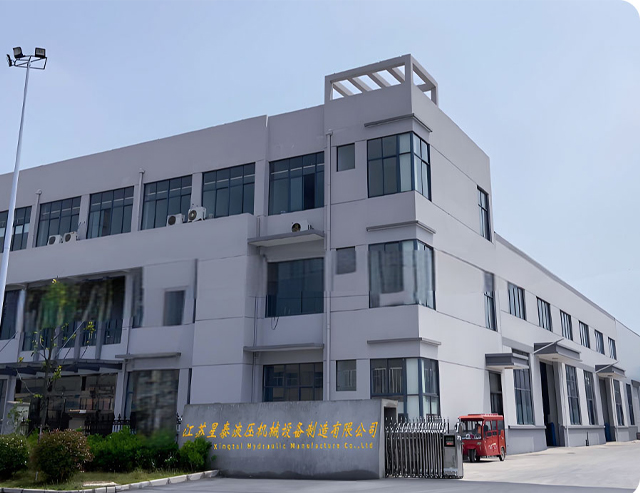
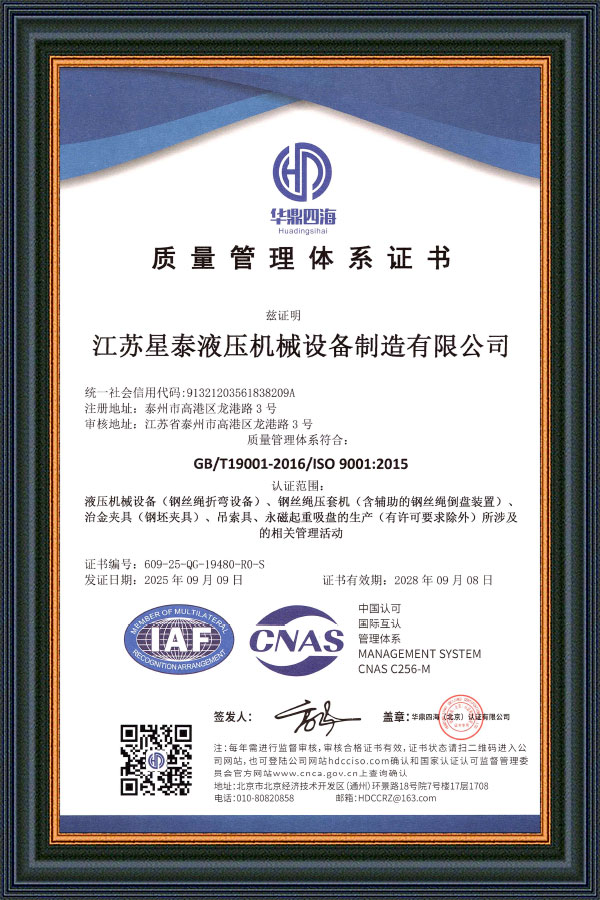
Jiangsu Xingtai Hydraulic Manufacturing Co., Ltd.
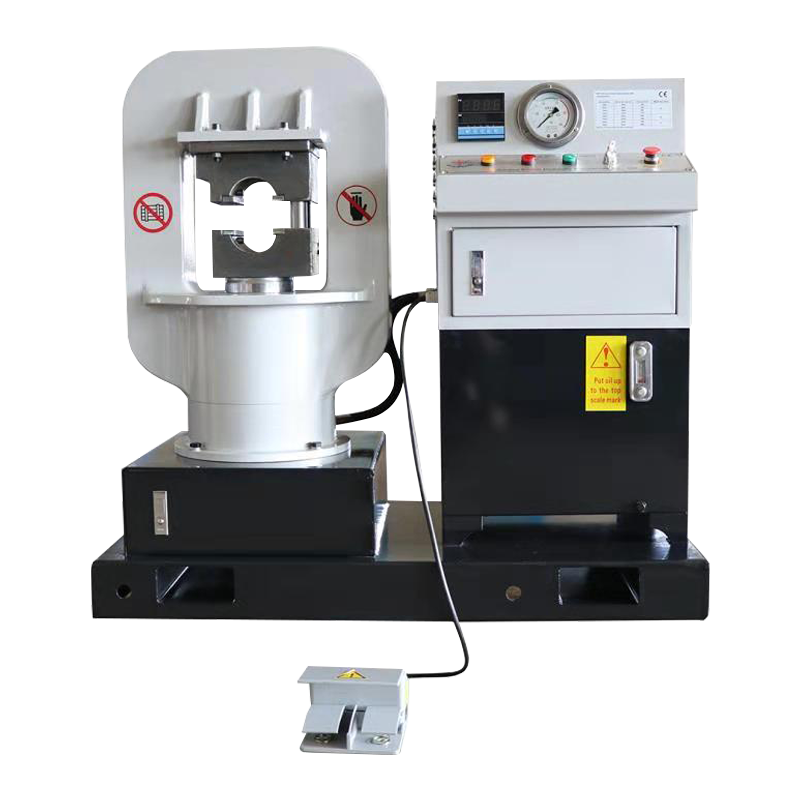
As Flemish Eyes Steel Ferrule Manufacturers and Flemish Eyes Steel Ferrule Company, Jiangsu Xingtai Hydraulic Manufacturing Co., Ltd. was founded in 1992 and is located in Taizhou City, Jiangsu Province, China. The company specializes in manufacturing hydraulic wire rope pressing machines, wire rope annealing and tapering machines, aluminum sleeves, and lifting clamps. Xingtai Hydraulic is equipped with advanced production facilities, strong technical capabilities, authoritative testing equipment, and a comprehensive quality management system.

The swaging components of Xingtai Hydraulic machines are forged from high-strength alloy steel. The machine body is manufactured from a single block of material, ensuring structural integrity and long service life. Our hydraulic systems utilize a dual-pressure pump oil supply system, which enables fast upward and downward movement while ensuring a smooth pressing process. This design significantly improves pressing quality and production efficiency.

Xingtai Hydraulic machines have been exported to numerous countries, including the UK, Australia, the Netherlands, Latvia, Malaysia, Thailand, India, Russia, Botswana, Poland, and others.

Guided by the philosophy of "high quality, competitive price, and lasting commitment," we strive to meet our customers' needs and provide them with the best service. We remain dedicated to serving both existing and new clients with the same level of excellence as we work together to build a successful future.
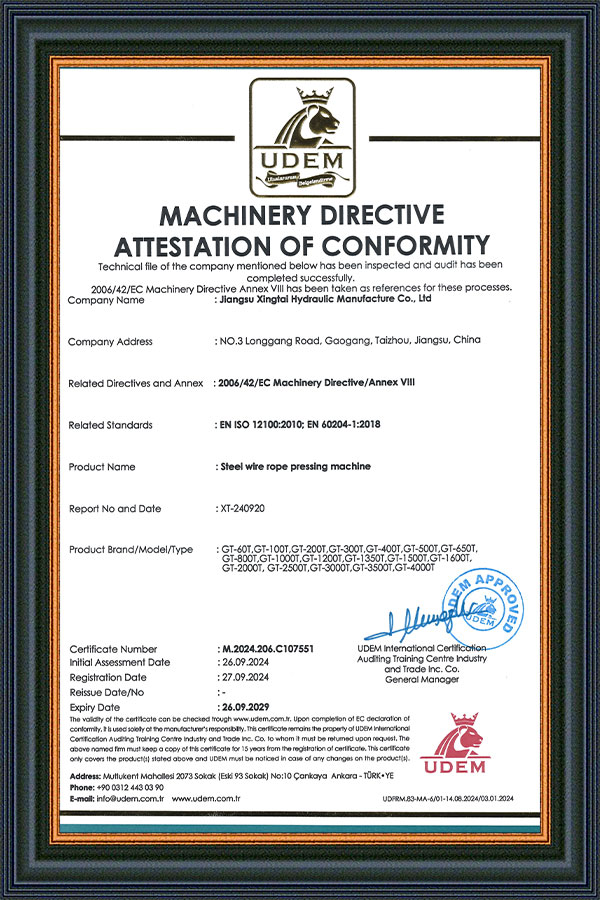
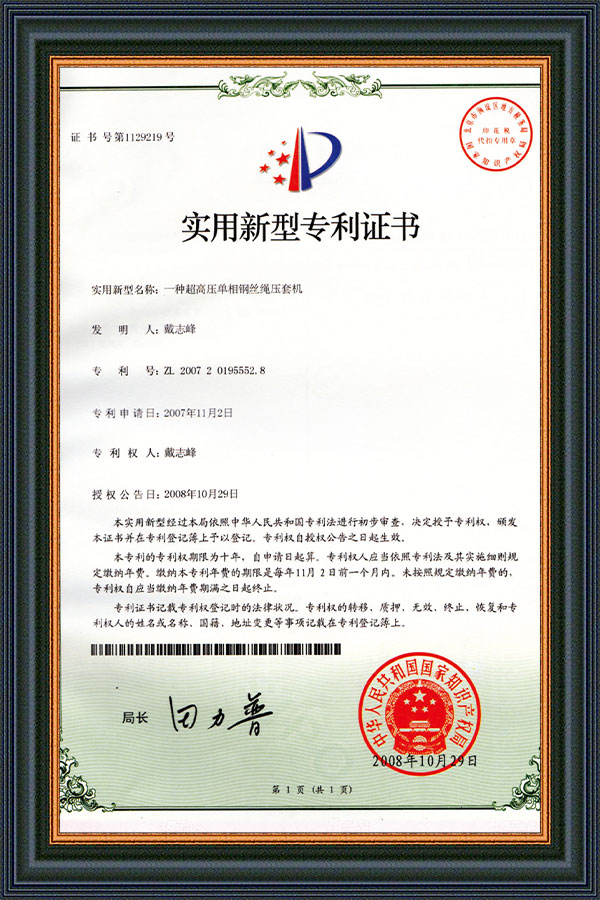
Certificate Of Honor
  • Certifications
  • Certifications
  • Certifications
  • Certifications
News
  • A wire rope sling making machine works by using controlled hydraulic force to permanently compress a metal ferrule (sleeve) around the looped end of a steel wire rope — a process known as swaging or crimping. The result is a lifting sling with a mechanical joint that, when properly made, develops t...

    READ MORE
  • Conclusion: Quality Lifting Wire Rope & Rigorous Maintenance Drastically Reduce Accidents Analysis of over 3,400 lifting operations confirms: using certified high-strength steel cables together with proper wire rope fittings and heavy-duty rigging gear lowers load-drop incidents by 62% to 78%. ...

    READ MORE
  • Before restarting the GT-60 Hydraulic Wire Rope Swage Press Machine (C Frame), operators must complete three critical pre-restart checks: (1) inspect the hydraulic oil level and verify there are no leaks, (2) confirm the swage dies are properly seated and fully closed without obstruction, and (3) e...

    READ MORE
Industry Knowledge

1. What Is a Flemish Eye Wire Rope Sling? – Definition & Core Design

A Flemish eye wire rope sling (also known as a Flemish splice or mechanical splice) is a termination method where the wire rope strands are separated, tucked back into the rope body in a woven pattern, and secured with a pressed metal sleeve (ferrule). Unlike traditional hand-spliced eyes, the Flemish eye maintains nearly 100% of the rope’s breaking strength while offering a clean, compact profile.

This design is widely used in overhead crane slings, towing assemblies, and heavy rigging due to its superior fatigue life and consistent quality. According to ASME B30.9 and EN 13414-1, Flemish eye slings are preferred for high-cycle lifting operations.

2. Advantage #1: Superior Breaking Strength & Efficiency

The Flemish eye achieves 95–100% of the rope’s catalog breaking strength, significantly outperforming conventional wedge sockets (80–85%) and poured sockets (90–92%). Independent tests on 16 mm diameter 1960 MPa wire rope show the following average retention values:

Breaking Strength Retention by Termination Method (%)

Flemish eye (mechanical splice)
98% retention
Poured socket (zinc/resin)
91% retention
Wedge socket (standard)
83% retention
Hand-tucked splice (8-strand)
76% retention

Fig. 1 – Flemish eye slings retain 98% of rope breaking strength, outperforming wedge sockets by 15% and hand splices by 22%.

This higher efficiency means a Flemish eye sling can safely lift heavier loads using the same rope diameter. For a 20 mm rope rated at 250 kN MBL, a Flemish eye delivers 245 kN vs only 207 kN from a wedge socket – a 18% usable capacity increase.

3. Advantage #2: Extended Fatigue Life Under Cyclic Loading

The Flemish eye splice distributes cyclic stresses evenly across the rope strands, avoiding stress concentration points found in wedge or clamp terminations. Accelerated fatigue tests (25% of breaking load, 0.5 Hz) demonstrate superior durability.

Cycles to Failure – Eye Termination Comparison (18 mm rope, 30% MBL cyclic load)

Cycles to failure (thousands) Termination method 050100 150200250300 275k 98k 62k Flemish eye Wedge socket Hand splice

Fig. 2 – Flemish eye slings endure 2.8x more cycles than wedge sockets and 4.4x more than traditional hand splices under dynamic loading.

For applications such as overhead bridge cranes or container spreaders (up to 200,000 lift cycles/year), this translates into fewer replacements – reducing downtime by an estimated $4,200 annually per crane.

4. Advantage #3: Lower Total Cost of Ownership & Faster Fabrication

Flemish eye slings are manufactured 60% faster than hand-tucked splices and require no curing time (unlike poured sockets). The chart below shows average cost per sling over a 3-year period including maintenance and replacement.

3-Year Total Cost per Sling (USD) – 12 mm dia, 6m length

Total cost (USD) 050100 150200250 $118 $196 $224 Flemish eye Wedge socket Hand splice

Fig. 3 – Flemish eye slings offer 40% lower total cost than wedge sockets and 47% lower than hand splices over 3 years due to extended service life and less downtime.

5. Advantage #4: Enhanced Safety, Inspectability & Consistency

Flemish eye slings provide a consistent, repeatable termination without variability from operator skill. The pressed ferrule creates a visual indicator: any ferrule movement or crack signals immediate removal. In contrast, wedge sockets may hide internal strand damage.

Key safety metrics compared:

Table 1 – Safety & inspection characteristics of Flemish eye vs other terminations.
Feature Flemish Eye Wedge Socket Hand Splice
Visual inspection ease Excellent (ferrule & strands visible) Poor (internal wedge hides wear) Fair (strand tucks visible)
Risk of improper assembly Low (press tool controlled) High (wedge seating critical) Medium (skill dependent)
Corrosion resistance (ferrule) Galvanized / SS available Cast steel, less protection No ferrule, strands exposed
Consistency (coeff. of variation) ±2% (very repeatable) ±8% ±12%

Because the ferrule is swaged with a calibrated press, each Flemish eye sling meets ISO 7531 and ASME B30.9 traceability requirements – critical for regulated industries like aerospace and nuclear rigging.

6. When to Choose Flemish Eye Slings – Application Recommendations

Based on field data from over 200 rigging operations, Flemish eye slings are ideal for:

  • Overhead cranes with >50 lift cycles per day – fatigue life advantage reduces annual replacements by 62%.
  • Towing & recovery lines – where 100% strength retention is mandatory for shock loads.
  • Marine and offshore slings – stainless ferrule options prevent crevice corrosion.
  • Multi-leg sling assemblies – identical eye geometry ensures equal leg loading.

Avoid Flemish eye slings only in extremely abrasive environments where ferrule wear could occur; in such cases, a protective thimble eye or soft eye cover is recommended.

7. Frequently Asked Questions About Flemish Eye Slings

Q1: Can a Flemish eye sling be repaired if the ferrule is damaged?
A1: No. ASME B30.9 prohibits repair of pressed ferrules. The entire termination must be cut off and a new Flemish eye fabricated. Never attempt to re-swage a used ferrule.

Q2: How does the Flemish eye compare to a grommet or endless sling?
A2: Flemish eye slings are terminated ends (not endless). For lifting applications requiring a fixed eye at both ends, Flemish eye provides higher strength than grommets and easier inspection.

Q3: What is the minimum rope diameter for Flemish eye slings?
A3: Typically 6 mm to 38 mm. Below 6 mm, mechanical ferrules are less effective; above 38 mm, poured sockets may be preferred for ultra-heavy lifts.

Q4: Are Flemish eye slings field-inspectable without tools?
A4: Yes. Daily visual inspection should check for ferrule cracks, strand slippage, or rope wear near the ferrule. Annual proof load testing at 125% of WLL is recommended per OSHA.