 English
 русский
 Français
 Español
 Português
 Deutsch
 عربى
عربى Türk
Türk
Content
- 1 What a Cut to Length Machine Does in a Production Line
- 2 Core Components and How a Cut to Length Machine Makes the Cut
- 3 Main Types of Cut to Length Machines and Where Each One Fits
- 4 Length Accuracy vs Throughput: What the Numbers Show
- 5 Selection Points: How to Specify a Cut to Length Machine
- 6 Cut, Taper and Press: A Wire Rope Workflow
- 7 Maintenance and Safety for Cut to Length Equipment
- 8 Buying a Cut to Length Machine: Cost, Risk and Supplier Checks
- 9 Frequently Asked Questions About Cut to Length Machines
- 9.1 What is a cut to length machine used for?
- 9.2 What length tolerance can a cut to length machine hold?
- 9.3 Can one machine cut both sheet metal and wire rope?
- 9.4 Why does my cut length vary from piece to piece?
- 9.5 Do I need a separate machine to taper the rope end?
- 9.6 How often should the blade or die be replaced?
- 9.7 Is a hydraulic cutter better than an abrasive saw for wire rope?
- 9.8 What should I check before accepting delivery?
- 9.9 Can a cut to length machine be integrated with a press?
- 10 Explore More
Twelve millimetres of wire rope, a 4.5 metre finished sling, and a 10 mm error at the cut. That is the sequence many sling shops meet on a Monday morning: the eye does not land where the drawing says it should, the ferrule has to be cut off, and a piece of rope that took three minutes to prepare goes into the scrap bin. The cut itself takes less than a second, and everything after it depends on the result.
Here is the short version of what this article argues. A cut to length machine is a measuring device first and a cutting device second. Buyers who compare machines on blade shape or tonnage alone often pay for that choice later in scrap, rework and rejected slings, while buyers who start from length tolerance and end condition end up with a line that runs quietly for a decade. Length accuracy, not cutting force, is the specification that decides your real cost per piece.
The term covers two fairly different families of equipment. One is the coil cut to length line used in metal processing, where a decoiler feeds sheet or plate through a leveller and a shear produces flat blanks. The other is the cut to length machine used for wire rope, cable, hose and similar long products, where material arrives on a reel or a coil and leaves as measured, end-prepared lengths. Both families do the same three jobs: feed the material, measure it, and cut at the right point. What changes is how the material behaves, and therefore which tolerance you can realistically hold.
The sections below cover components, working principle, machine types, the numbers behind length accuracy, selection questions worth asking, and the maintenance routines that keep a cutter honest. Where the topic turns to wire rope processing, we draw on the experience of a manufacturer in Jiangsu, China, that has been building hydraulic presses, annealing and tapering units and reeling machines for this industry since 1992 and ships to buyers in Europe, Southeast Asia, Africa and beyond.
Key takeaway: a cut to length machine is only as good as its measuring system, so tolerance and repeatability should be written into the quotation before cutting force and blade type are discussed.
What a Cut to Length Machine Does in a Production Line
Strip away the sheet metal and the hydraulics and a cut to length machine performs three simple functions: it pulls material from a supply, it tracks how much has passed a reference point, and it fires a cutting head when the target length is reached. The supply may be a 10 tonne steel coil on a mandrel, a 500 metre wire rope reel on a pay-off stand, or a bundle of bar stock on a roller table. The cutting head may be a swing shear blade, a guillotine, a rotating disc, a hydraulic knife, or a thermal unit that melts and tapers the rope end.
The complexity sits in the measurement, not in the cut. Sheet metal moves in a straight, predictable band, so a leveller plus a set of feed rolls plus an encoder gives a reliable length. Wire rope is a twisted, elastic, slightly compressible structure. It rotates as it unwinds, it stores twist energy, it stretches under tension, and it springs back when tension is released. A measuring wheel that works perfectly on 1 mm steel sheet can be three or four percent out on a 20 mm rope if the tension is not controlled.
A typical coil line and a typical rope cutting station share the same building blocks:
- Pay-off or decoiler: a mandrel, reel stand or coil car that releases material without backlash.
- Tension or levelling stage: feed rolls, a straightener, or a dancer roller that removes slack and coil set.
- Measuring stage: an encoder-coupled wheel or roll, sometimes with a mechanical end stop as a backup.
- Cutting head: shear, guillotine, saw, hydraulic cutter or fusing unit, chosen for the material and the required end finish.
- Discharge and support: a run-out table, catch tray, stacking unit or take-away conveyor that stops long material from bending.
- Control: a PLC and HMI that hold the recipe, count pieces, log deviations and feed the next process step.
There is one habit that separates accurate shops from busy ones: they never confuse cut length with finished length. Take a two-leg sling, 4,500 mm between bearing points, with a pressed eye at each end and a thimble inside each eye. The eye consumes rope, the thimble adds diameter, and pressing the ferrule elongates the assembly by a small but repeatable amount, typically a few millimetres on a 16 mm rope. The cut length written on the work order must include those allowances. Shops that treat the drawing length as the cut length lose the difference as reject rate, and the reject rate grows as rope diameter grows.
Key takeaway: always define whether the length on the drawing is the finished length or the cut length, because eye geometry and ferrule pressing will absorb several millimetres before the sling is complete.
Core Components and How a Cut to Length Machine Makes the Cut
Feeding and measuring
Three measuring approaches dominate the market. The simplest is a mechanical end stop: the operator feeds material until it touches a fixed plate, then cuts. It is cheap, robust and surprisingly accurate on short, stiff material, but it is slow and depends on operator feel. The second is a feed roll with an encoder. A hardened roll presses against the material, counts revolutions and converts them into length. Accuracy depends on roll diameter, wear and slip, which is why high duty machines grind and re-certify their measuring rolls rather than simply replacing the encoder. The third is a servo feed with closed-loop correction, where the controller compares the commanded length with the measured length and trims the next piece automatically.
Wire rope adds a fourth variable: tension. If the rope is pulled hard to straighten it, the measured length is a stretched length. Release the tension and the piece is short. Consistent tension, applied by a brake on the pay-off stand or a dancer roller, matters more than a higher resolution encoder.
The cutting head options
The cutting head determines both the length you can hold and the condition of the end you hand to the next station. The table below compares the methods seen most often in sheet metal and rope processing workshops. Values are indicative planning ranges; confirm them with your machine supplier against your own material and diameter.
| Cutting method | Material | Typical length tolerance | End condition | Best fit |
|---|---|---|---|---|
| Swing shear blade | Sheet, strip, plate up to moderate thickness | ±0.5 to ±2 mm | Clean, slight burr, minimal deformation | Coil cut to length lines with high throughput |
| Guillotine shear | Plate, heavy strip | ±1 to ±3 mm | Straight edge, burr on the underside | Thicker plate, lower speed, robust duty |
| Rotary or flying shear | Continuous strip | ±0.5 to ±1.5 mm | Good edge at speed | Lines that cannot stop for each cut |
| Abrasive disc saw | Wire rope, cable, bar | ±5 to ±20 mm | Burr, heat, possible strand damage | Low volume, mixed diameters, general workshop |
| Hydraulic rope cutter | Wire rope, cable | ±2 to ±5 mm | Clean cut, ends must be seized or fused | Production sling shops |
| Cut and taper unit | Wire rope | ±2 to ±5 mm plus a repeatable tip | Compact conical tip that resists fraying | Slings, terminations, pull-through applications |
Two details in that table have a direct cost effect. First, a burr is not just cosmetic. A burr on a rope end damages the inside of a ferrule and can cut the sealing sleeve, so a deburring or fusing step may be needed. Second, heat matters. An abrasive disc heats the strands locally, and on galvanised or high carbon rope that heat can reduce local strength or damage the zinc layer. A hydraulic cutter shears at ambient temperature, which is one reason it is preferred where the cut is close to the working part of the sling.
Control, counting and traceability
Modern controls are less about the cut and more about proof. A good HMI stores recipes per product, counts good and rejected pieces, warns when the deviation on the last ten cuts drifts beyond a set band, and can export a log for a customer audit. If your customer asks for traceability on lifting accessories, that log is far easier to produce from a machine controller than from a paper traveller.
Key takeaway: buy the measuring and tension control you need first, then choose the cutting head, because a good shear behind a slipping feed roll still produces scrap.
Main Types of Cut to Length Machines and Where Each One Fits
Coil cut to length lines for sheet and plate
This is the classic interpretation of the keyword. A coil line combines a decoiler, a leveller with multiple rolls, a loop pit or dancer, a servo feed, a shear and a stacker. Line speeds range from a few metres per minute on thick plate to well over sixty on thin gauge. The machine is judged on flatness, squareness, length accuracy and surface quality. Investment is significant, and the payback depends on volume: these lines belong in service centres, appliance manufacturers and construction panel producers rather than in job shops.
Wire rope and cable cut to length machines
Rope cutting stations are compact by comparison. A pay-off stand releases the reel, a brake or dancer holds tension, a measuring wheel tracks length, and a cutter or cut-and-taper unit produces the piece. Because rope is flexible, long cut lengths need support rather than restraint: a run-out trough or table prevents the piece from whipping and keeps the end accessible. These machines are usually specified by rope diameter range, length range, tolerance and cycles per hour.
Combined cutting and end-preparation machines
A growing share of sling production uses a single unit that cuts to length and shapes the end in one cycle. The end may be fused into a compact tip, tapered for easier insertion into a ferrule or a socket, or annealed to relieve stress before further processing. Combining the two steps removes a handling operation and, more importantly, removes the chance of the rope end fraying between stations.
Reeling and pay-off equipment
The least glamorous part of the line is often the one that limits it. A powered reeling machine that winds rope evenly onto a drum or spool, and unwinds it without twist, keeps the downstream cutter supplied at a steady tension. Uneven spooling creates tension spikes, and tension spikes create short pieces.
| Class | Material handled | Typical length range | Automation level | Where it pays back |
|---|---|---|---|---|
| Full coil cut to length line | Steel, aluminium, coated coil | 300 mm to 12,000 mm | High, with stacking and packaging | High volume service centres |
| Compact coil line | Thin gauge coil, narrow strip | 200 mm to 6,000 mm | Medium | Small fabrication workshops |
| Rope cutting station | Wire rope, cable, hose | 500 mm to 100,000 mm | Medium, often manual handling | Sling and rigging production |
| Cut and taper unit | Wire rope | 500 mm to 60,000 mm | Medium to high | Shops with repeat sling orders |
| Reeling and pay-off unit | Wire rope, cable | Any, supports the cut station | Low to medium | Any shop handling large reels |
Key takeaway: match the machine class to your material and volume rather than your budget, because a rope cutting station and a coil cut to length line solve genuinely different problems.
Length Accuracy vs Throughput: What the Numbers Show
Length accuracy is the number that decides whether a cut to length machine is cheap or expensive over its working life. A cutter that holds ±1 mm and a cutter that holds ±20 mm can look similar on a quotation, yet they produce very different scrap rates on the same order. Throughput matters just as much, because a slow machine pushes labour cost into every piece and lengthens the delivery lead time. To make the trade-off visible, the chart below plots indicative throughput against length deviation for five cutting setups found in sling shops and light metal workshops. The figures are planning values compiled from typical machine specifications and ordinary shop practice, not guaranteed performance for any specific model, so use them as a starting point for your own trials. Compare the shape of the bars rather than the exact numbers, and then ask which bar your current process sits on.
The first bar shows why manual cutting survives only in mixed, low volume work. At roughly twenty-five cuts per hour with a tape measure and an abrasive saw, the labour cost per piece is high, and the deviation band of about twenty millimetres means any sling with a tight length requirement will need rework. The second bar shows the first real step up: a mechanical stop behind a swing shear removes the tape measure from the loop, roughly quadruples output, and cuts deviation to single-digit millimetres. Many small workshops find this the point where accuracy stops being the bottleneck.
The third bar is where production sling shops tend to sit. An encoder-fed measuring wheel combined with a hydraulic rope cutter reaches around two hundred and fifty cuts per hour and holds roughly three millimetres, which is enough for most general purpose slings and terminations. The fourth bar represents the ceiling on a coil line: a servo feed with a rotary shear can pass four hundred cuts per hour and hold around one millimetre, but that accuracy assumes flat, consistent strip, controlled tension and a clean shear, conditions that rope rarely provides. The fifth bar shows a deliberate compromise. Adding a cut and taper station costs some throughput, because every piece needs a second operation inside the same cycle, yet deviation stays inside about one and a half millimetres and the rope end arrives at the press ready to use.
Read together, the bars make three practical points. First, accuracy and speed are not a straight trade. The jump from bar one to bar three multiplies output tenfold while tightening tolerance, because both gains come from removing manual judgement rather than from cutting harder. Second, the biggest single improvement for most shops is not a faster blade but a better measuring and tension system, since that is what converts bar one behaviour into bar three behaviour. Third, the last bar shows that end preparation should be counted as part of the cutting operation. A shop that cuts accurately and then frays the end during handling has simply moved the scrap downstream, usually to the most expensive station in the plant.
Where the deviation actually lands in your cost sheet depends on how many eyes the sling has. A single-leg sling with one pressed eye absorbs a few millimetres without complaint. A two-leg or four-leg sling assembly multiplies the error: two legs cut at plus eight millimetres and two at minus eight millimetres can put the master link out of square and force a re-make of the whole assembly rather than a single piece. For assemblies, the useful rule is to hold the cut tolerance at roughly one quarter of the permitted finished length tolerance, so that the downstream pressing, settling and measurement steps have room to move without breaching the drawing. That rule alone explains why assembly shops pay for encoder feed even when a mechanical stop would technically pass a first article inspection.
Key takeaway: improving the measuring and tension system usually buys more accuracy and more throughput at the same time, while a bigger blade alone buys neither.
Selection Points: How to Specify a Cut to Length Machine
Material, diameter and construction
Start with the worst case you will ever run, not the average. Rope construction matters as much as diameter: a 6x19 fibre core rope behaves differently from a 6x36 compacted strand or a rotation-resistant rope, and a machine sized for the easiest one will struggle with the hardest. On coil lines, yield strength and thickness decide shear tonnage, and springy high strength strip demands more hold-down force than mild steel of the same gauge.
Length range and tolerance
Write the tolerance as a band, not a single figure, and state whether it applies to the cut length or the finished length. A useful specification reads something like: cut length from 800 mm to 12,000 mm, tolerance ±3 mm on lengths above 2,000 mm, first article inspection on every new product code. Vague wording such as "accurate cutting" is impossible to accept or reject at commissioning.
End condition and what happens next
Ask the next station what it needs. A press operator fitting an aluminium ferrule wants a compact, non-fraying end that slides in without snagging. A socketing operation may want a tapered end. A welding or swaging operation may want a square, burr-free face. Specifying the end condition at the purchasing stage is far cheaper than discovering it during commissioning.
Throughput, automation and footprint
Calculate the throughput you actually need by dividing annual pieces by available hours, then add thirty percent headroom. Decide how much handling you want to automate: automatic length setting, automatic counting, automatic stacking or coiling, and automatic rejection of out-of-tolerance pieces all reduce labour but add cost and maintenance obligations. Check the footprint and the foundation requirements early, because a long run-out table needs floor space that a compact station does not.
Service, spares and documentation
A cut to length machine is a long-life asset judged over a decade. Ask for the wear parts list, the expected life of blades or dies, the lead time for a replacement measuring roll or hydraulic valve, and whether the control software can be backed up and restored locally. A short checklist for the enquiry stage:
- Material and worst-case diameter or thickness.
- Cut length range and tolerance band.
- Required end condition and the downstream process.
- Pieces per hour and hours per shift.
- Operator skill level and preferred control language.
- Power supply, floor space and lifting equipment available.
- Spare parts, training and warranty terms in writing.
Key takeaway: specify the worst case material, the tolerance band and the required end condition in writing, because those three clauses decide whether the machine passes acceptance.
Cut, Taper and Press: A Wire Rope Workflow
For sling and rigging production, the cut to length machine is one link in a short chain, and the chain only works when each link is designed for the others. A practical workflow, using equipment built by a specialist manufacturer of wire rope processing machinery, looks like this.
Step one: pay off and reel
Large reels need controlled unwinding. A powered reeling machine winds rope evenly onto a drum or spool and pays it out without introducing twist, which keeps tension steady at the measuring wheel. Shops that handle several rope sizes often keep one reeling and pay-off unit as the buffer between the store and the cutting station.
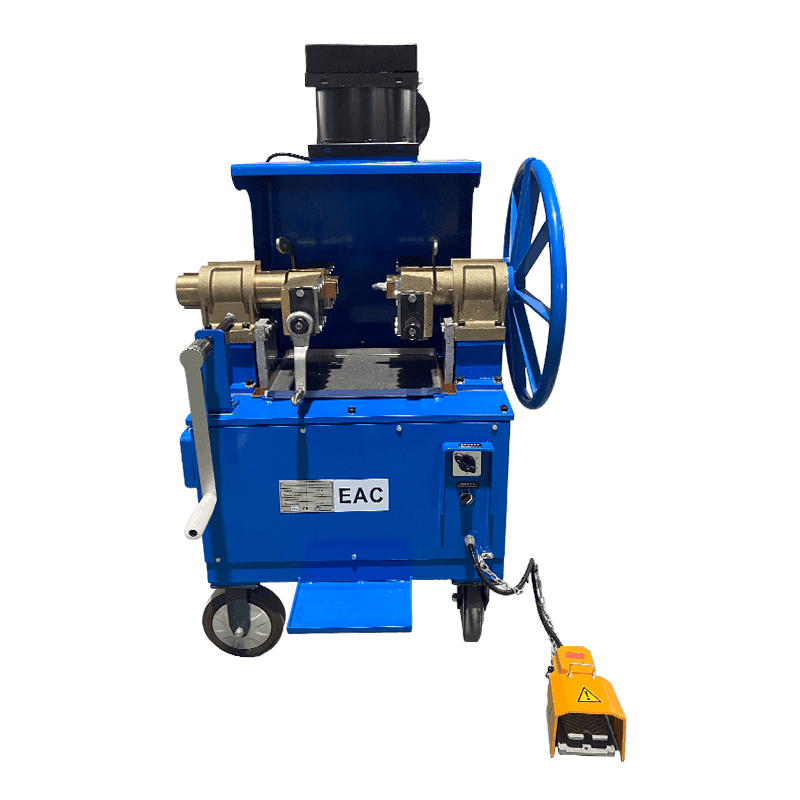
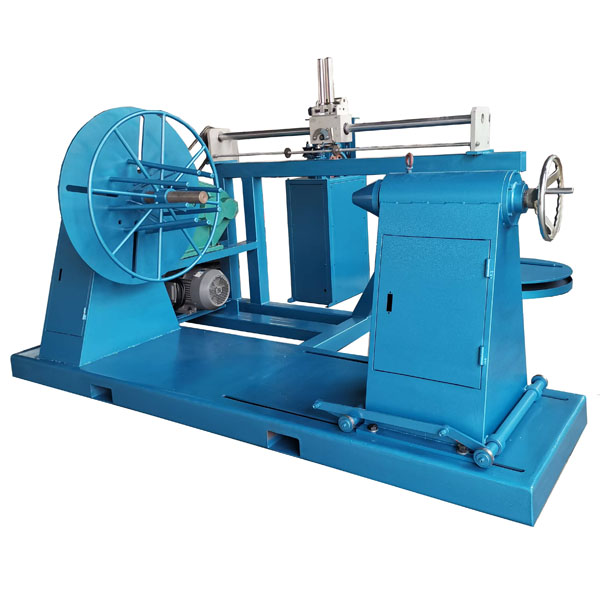 XT-1600 Wire Rope Reeling MachinesWire Rope Winding Machine is a device used for winding or unwinding ropes. It enables the mechanical operation of coiling or releasing steel wire ropes, improving work...View Product →
Step two: cut to length and taper the end
The cutting station measures the rope, shears it cleanly and shapes the end. Cutting and tapering in one machine removes a handling step and produces a compact tip that resists fraying, which matters when the end has to pass through a ferrule, a socket or a tight eye. Length settings are stored per product, so a repeat order can be produced without re-measuring from scratch.
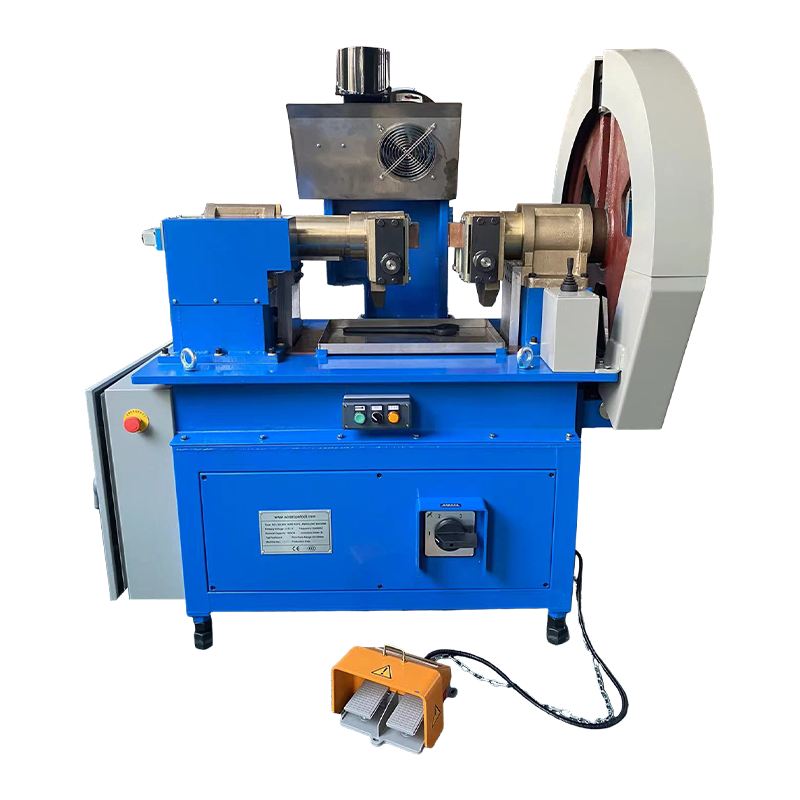
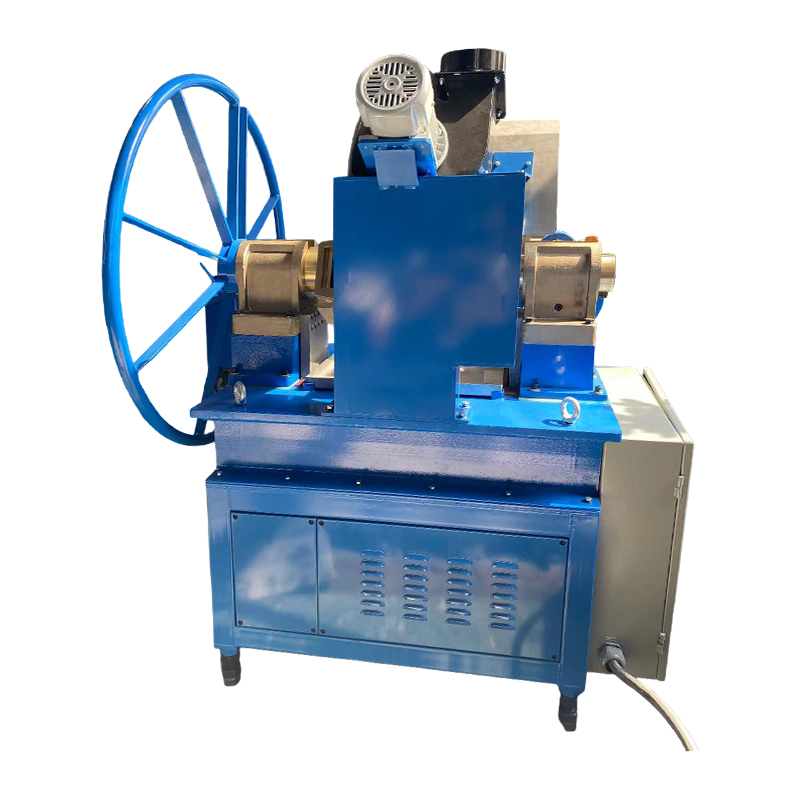 RDQ-1012 Wire Rope Cutting and Tapering MachineRDQ series steel wire rope cutting and tapering machines, with high melting speed and easy to operate, are applicable for melting steel ropes of various dimensions, es...View Product →
Step three: fit the hardware and press
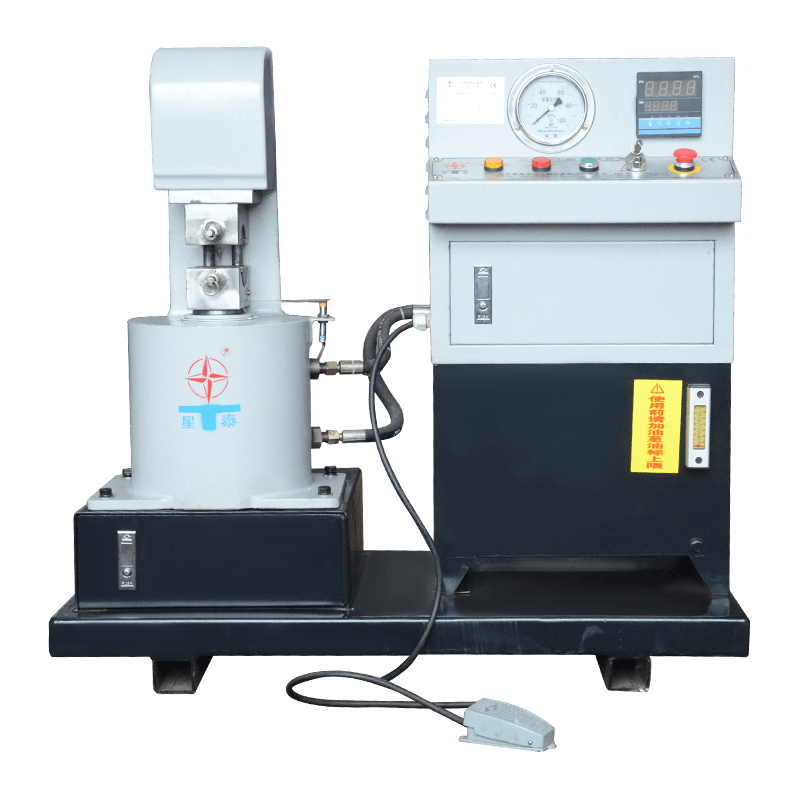
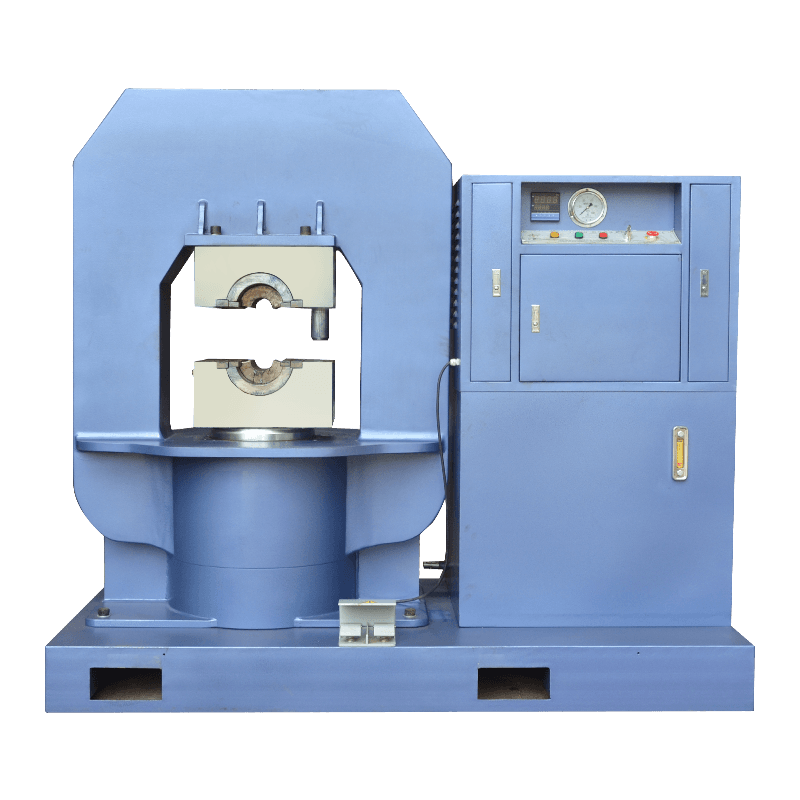
With the length correct and the end prepared, the rope goes into a press together with an aluminium ferrule, a steel ferrule, a thimble or a swage terminal. Press tonnage must be matched to the fitting and the rope diameter; too little pressure leaves the connection loose, too much deforms the rope. A basket frame press is normally chosen for heavier sling work, while a C frame machine suits smaller diameter and tighter workstations.
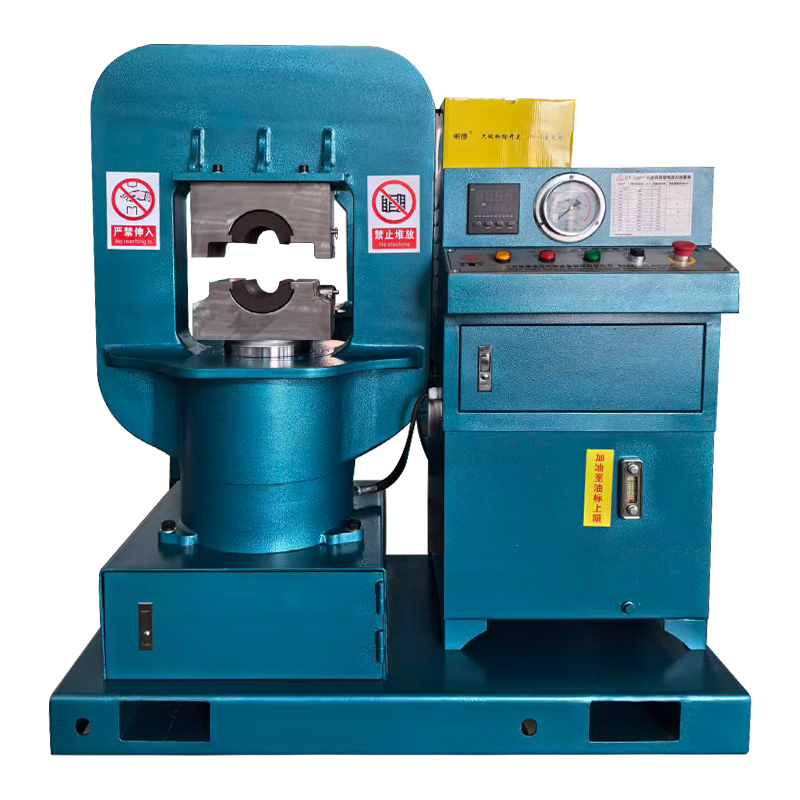 GT-300 Press Machine For Wire Rope Sling(Basket Frame)GT-300 wire rope press machine is to press small size of wire rope from 6 mm to 30mm.View Product →
Step four: inspect, mark and log
The finished piece is measured against the drawing, the connection is inspected, and the serial number, length and date go onto a tag or into the production log. Because cut lengths were recorded at the cutting station, any deviation found at final inspection can be traced back to a specific machine setting rather than to a general question of operator skill.
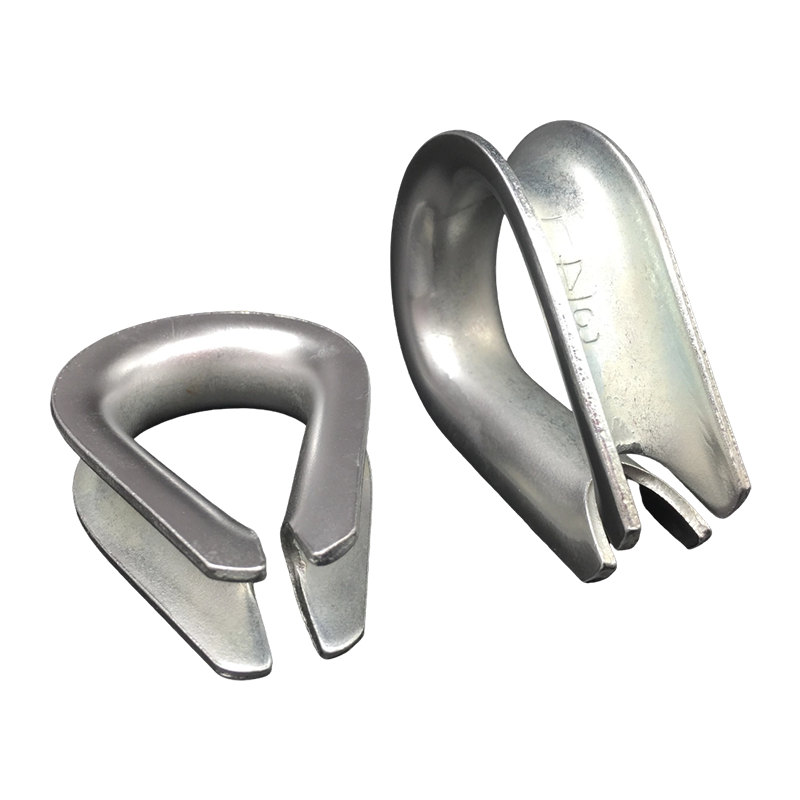
Two accessories deserve a mention because they are where the cut meets the load path. Aluminium ferrules such as the DIN 3093 pattern and hourglass sleeves are the consumables most sling shops buy continuously, and thimbles protect the eye from wear. When the cutting machine, the pressing machine and these fittings all come from the same source, the tolerances are already matched, which removes a common source of rejected first articles.
Key takeaway: treat cutting, tapering and pressing as one process rather than three purchases, because connection quality depends on the length and end condition produced upstream.
Maintenance and Safety for Cut to Length Equipment
Daily and weekly checks
Most length drift is preventable and cheap to stop. A short routine covers nearly all of it:
- Check the measuring wheel for wear, embedded debris and correct contact pressure at the start of every shift.
- Verify the first piece of each new order against a tape or calliper, and record the reading.
- Inspect the blade, die or shear for chips, rounding and correct clearance once a week.
- Check hydraulic oil level, temperature and filter condition weekly; replace filters to the manufacturer's interval.
- Confirm the pay-off brake or dancer is holding steady tension, not just holding the reel still.
- Test the emergency stop and all guards before the shift begins, not once a month.
Blade, die and hydraulic care
Cutting edges wear in a predictable way: the burr grows, the cut takes longer, and the length spread widens. Replace or resharpen before the spread reaches the tolerance band, not after a customer complaint. On hydraulic machines, oil cleanliness is the single largest factor in valve life, so keep the filler point clean, use the specified oil grade, and avoid running the pump at high temperature for long periods. Press brake style dies used in rope pressing should be inspected for cracking at the radius, since a cracked die transfers that shape into every subsequent connection.
Safety essentials
Cut to length equipment stores energy twice over, in the material and in the hydraulics. Keep hands behind guards, use hold-downs rather than a second operator to control the material, and never reach into the shear path for a short offcut. Rope adds its own hazards: cut ends can whip, stored twist can release suddenly, and an abrasive cut produces sparks and dust that need extraction. Loose clothing and gloves near a rotating measuring roll or a reeling drum are a recognised injury source. Lock out the power and release stored pressure before any blade change, and keep the area behind the run-out table clear so long pieces cannot strike a bystander.
Key takeaway: measuring roll condition, blade clearance and hydraulic oil cleanliness account for most of the accuracy and reliability you will ever get from a cut to length machine.
Buying a Cut to Length Machine: Cost, Risk and Supplier Checks
Purchase price is the smallest number in the whole calculation. The real cost of a cut to length machine is the purchase price plus scrap, rework, downtime, spare parts and the labour needed to run it at the accuracy your customers demand. A machine that is twenty percent cheaper but holds half the tolerance can cost more within a year on order sizes above a few hundred pieces.
Decide first who you are buying from and what that means for support. A manufacturer controls the design, the hydraulic package and the wear parts, and can usually answer tolerance questions with test data from its own floor. A trading wholesaler may offer a lower headline price and a wider catalogue, but the technical answer you get may be one step removed from the people who build the machine. Neither route is automatically wrong, yet the questions you ask should differ. From a manufacturer, ask for a first article test report on material similar to yours, the tolerances held, and the machine's repeatability over a shift. From a wholesaler, ask which factory builds the unit, who supplies the control system, and where spare parts are stocked.
Before signing, agree on an acceptance test. The cleanest version is simple: send your own material to the supplier, specify three lengths, ask for fifty consecutive pieces per length, and require the deviation report with mean and range. If the supplier will not run the test, that silence is an answer. Alongside the test, fix the following in the contract: wear part prices for the first three years, delivery of a full parts manual and wiring diagram, training hours for two operators, warranty terms including hydraulic components, and the response time for a service visit.
Finally, plan the integration. Cut length data is most valuable when it flows into the next station, whether that is a press, a taper unit or a packing list. Shops that record cut lengths and finished lengths separately for the first three months usually discover a systematic offset, often of two to eight millimetres, that can be compensated once and then forgotten. That single measurement exercise frequently pays for itself well before any warranty period ends.
Key takeaway: require a first article test on your own material with a written deviation report, because that single document reveals more about a supplier than any catalogue specification.
Frequently Asked Questions About Cut to Length Machines
What is a cut to length machine used for?
It converts continuous material into measured pieces. On sheet and plate, a coil cut to length line unrolls, levels and shears blanks. On wire rope, cable or hose, a cut to length machine measures the length and produces a prepared end ready for a ferrule, socket or terminal.
What length tolerance can a cut to length machine hold?
Roughly, a manual setup with an abrasive saw holds plus or minus twenty millimetres, a mechanical stop with a shear holds around eight millimetres, an encoder feed with a hydraulic cutter holds around three millimetres, and a servo feed with a rotary shear can hold about one millimetre on consistent strip. Rope generally sits at the looser end of that range because tension and twist affect measurement.
Can one machine cut both sheet metal and wire rope?
Not well. Sheet lines rely on flat strip running through rolls and a shear, while rope stations need tension control, a round measuring surface and a cutter that seizes strands rather than flattening a band. Buying a compromise unit usually means holding a loose tolerance on both materials.
Why does my cut length vary from piece to piece?
The usual causes are measuring roll slip or wear, inconsistent tension between the pay-off and the cutter, material stored on the reel with twist, and blade wear that lets the rope move before the cut completes. Check tension and roll condition first, since those two account for most variation.
Do I need a separate machine to taper the rope end?
Not necessarily. Combined cut and taper units perform both operations in one cycle, which saves handling and prevents the end from fraying between stations. If you already own a cutter, a standalone annealing or fusing and tapering unit can be added as a second step.
How often should the blade or die be replaced?
Replace or resharpen when the burr grows noticeably, when cutting time increases, or when the length spread on a run of pieces reaches roughly half of the tolerance band. For high duty production, that typically means a scheduled inspection every week rather than waiting for a failure.
Is a hydraulic cutter better than an abrasive saw for wire rope?
For production sling work, usually yes. A hydraulic cutter shears at ambient temperature and leaves a cleaner end without local heat damage to galvanised or high carbon rope. An abrasive saw remains useful for mixed diameters, one-off pieces and materials where a burr can be removed afterwards.
What should I check before accepting delivery?
Run a first article test on your own material, measure fifty consecutive pieces per specified length, verify the deviation report, check that guards and emergency stops work, confirm the spare parts and manuals have arrived, and train at least two operators before the supplier leaves the site.
Can a cut to length machine be integrated with a press?
Yes, and it is often worth doing. Feeding cut lengths directly into a pressing station reduces double handling and keeps the end condition controlled. The main requirement is a buffer so that a short stop at either machine does not halt the other.
Key takeaway: most cut length problems trace back to tension control and measuring roll condition, not to the blade itself.
Explore More
If you are planning a cutting station or replacing a machine that no longer holds tolerance, it helps to work backwards from the finished assembly. Define the finished length, subtract the allowances for eyes and pressing, set the cut tolerance at roughly a quarter of the drawing tolerance, and only then choose the machine. That sequence keeps the decision on measurable ground and makes the acceptance test straightforward.
Key takeaway: start from the finished assembly, work back to the cut length, and let that number drive the machine specification.
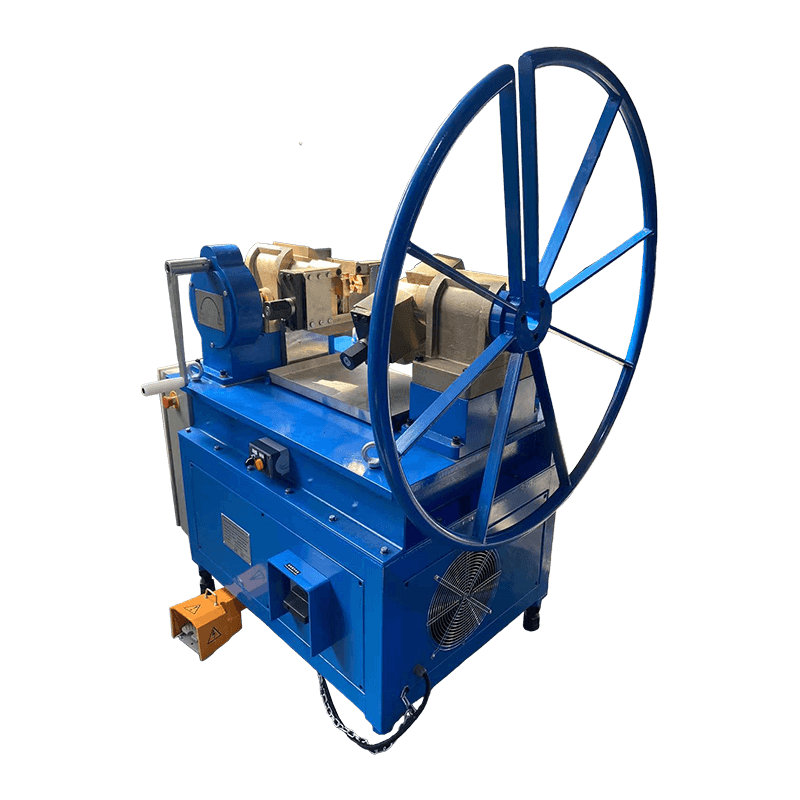

If you require custom hydraulic equipment or technical consultation, please feel free to contact the Xingtai Sales and Engineering Team.
-
 +86-523-86934677
+86-15896002505 -
 [email protected]
-
 +86-15896002505
-
 No. 3 Longgang Road, Gaogang Port Street, Taizhou City, China.
Copyright © Jiangsu Xingtai Hydraulic Manufacturing Co., Ltd. All Rights Reserved. Custom hydraulic machinery manufacturers Wholesale wire rope swagers Factory

